

The latest exchange between Iran’s leadership and U.S. President Donald Trump has revived an old and unresolved question in global politics: where does moral concern end, and foreign interference begin?
Public warnings issued from Washington in response to protests in Iran were framed as an effort to deter repression and signal support for demonstrators. Tehran’s reaction—denouncing the statements as arrogance and meddling—was equally predictable. What makes the moment significant is not the rhetoric itself, but what it reveals about a long-standing pattern in how power is exercised and contested on the global stage.
A long-standing pattern of U.S. involvement abroad
For decades, the United States has positioned itself as both a defender of values and an active shaper of political outcomes beyond its borders. This role has taken many forms: military intervention, covert operations, sanctions, diplomatic pressure, and, increasingly, highly visible public messaging. The impulse to influence events abroad is not new. What has evolved is the manner in which that influence is asserted.
Rhetoric, visibility, and the politics of spectacle
Recent U.S. political rhetoric, particularly under President Donald Trump, has relied heavily on immediacy and spectacle. Warnings are delivered publicly and forcefully, aimed not only at foreign governments but also at domestic audiences and global opinion. Supporters see such statements as clarity and resolve. Critics see them as a departure from measured diplomacy. Both views overlook a deeper complication.
How external pressure reshapes internal unrest
In countries facing internal unrest, external warnings often serve unintended purposes. In Iran’s case, protests driven by inflation, currency collapse, and political frustration are easily recast as foreign-inspired unrest. This framing allows authorities to delegitimise dissent and justify repression as an act of national defence. The louder the foreign intervention appears, the more useful it becomes to those seeking to suppress opposition at home.
Also Read: 2025 and Pakistan’s Hard Truth on Terrorism
The paradox of international attention
This creates a paradox. International attention can raise the cost of repression and offer protesters a sense of visibility. At the same time, it can harden state responses and expose demonstrators to accusations of foreign allegiance, often with severe consequences. The line between solidarity and interference becomes increasingly difficult to draw.
Credibility, deterrence, and diminishing returns
There is also the problem of credibility. Deterrence depends not only on words but on consistency and follow-through. When public threats are issued repeatedly, across multiple crises and regions, they risk becoming background noise. Over time, this inflation of rhetoric weakens its own power, eroding trust among allies and emboldening adversaries who doubt that words will translate into action.
History’s judgment on intervention
Iran is not unique in this regard. From Latin America to the Middle East, U.S. involvement in foreign political crises has frequently produced outcomes at odds with stated intentions. Strategic interests—energy security, regional influence, domestic political calculations—have always shaped decisions, even when policies are framed in the language of human rights. History ensures that such actions are rarely judged in isolation.
Patterns beyond personalities
The exchange with Tehran, then, is less about personalities and more about patterns. It reflects a cycle in which public warnings provoke nationalist resistance, resistance justifies repression, and repression invites further pressure. Each turn reinforces the next, while the underlying grievances that drive unrest remain unresolved.
Speaking responsibly in an age of constant visibility
In an era of instant communication and constant visibility, the challenge for global powers is no longer whether to speak, but how to do so responsibly. Restraint, credibility, and an awareness of historical consequences may ultimately matter as much as the ability to project strength. For those who wield influence, the hardest lesson remains the oldest one: not every warning deters, and not every intervention stabilises.



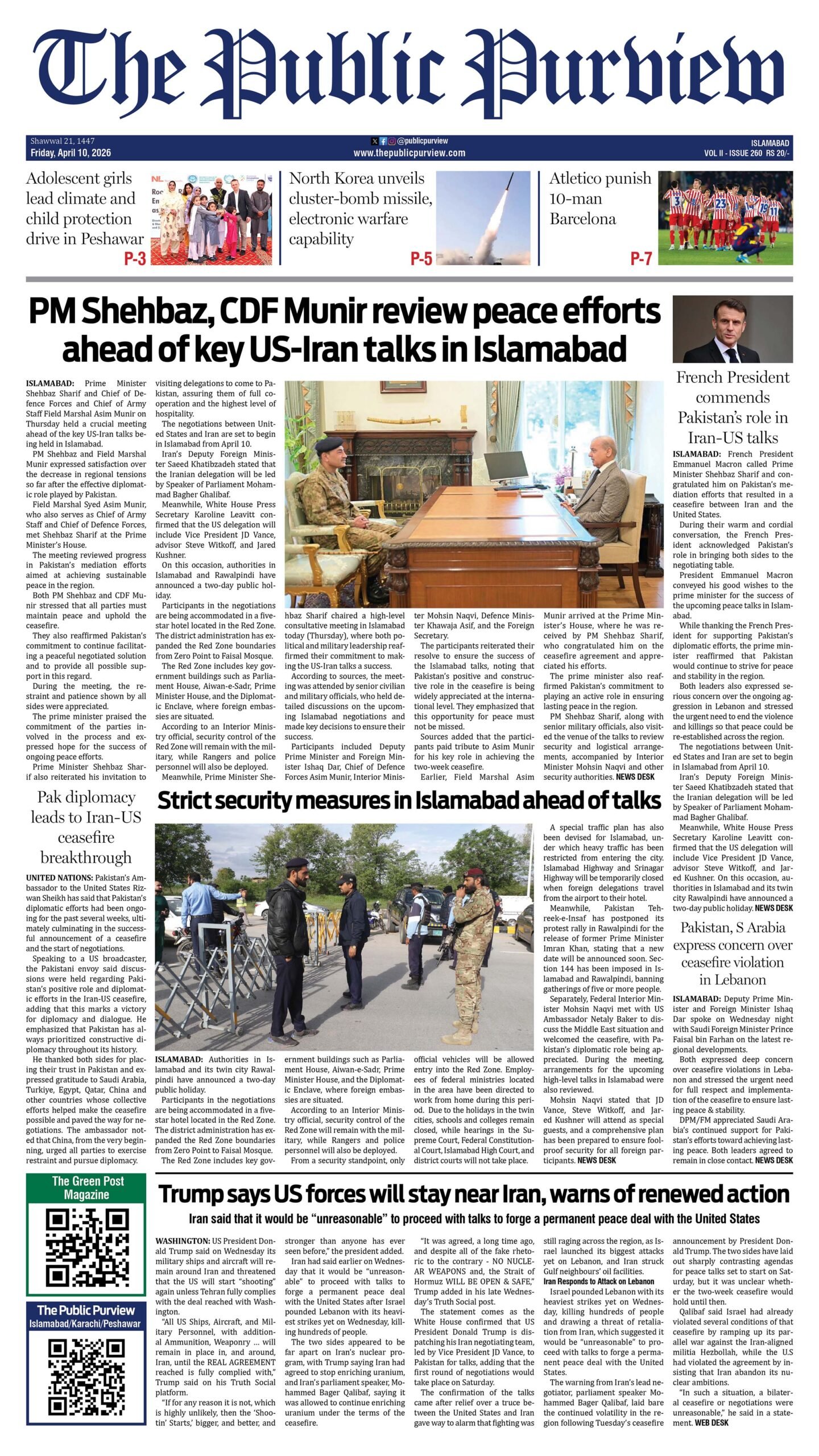 Today's E-Paper