
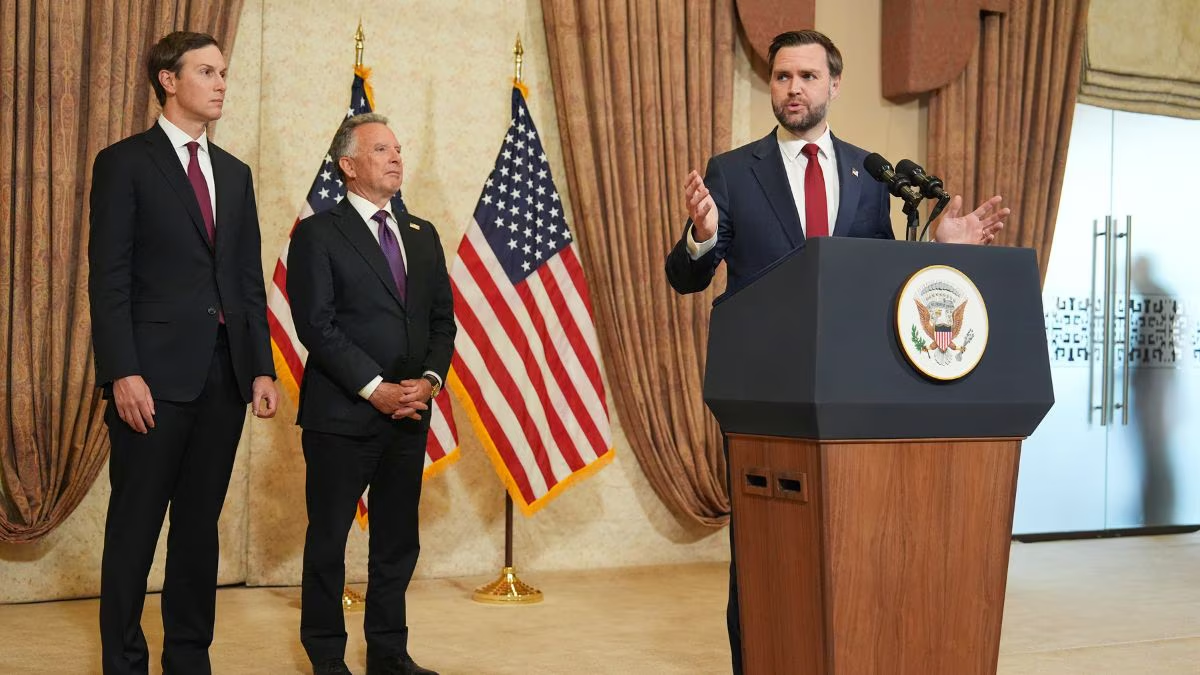
ISLAMABAD — The US delegation leaves after inconclusive talks with Iran in Pakistan, as high-level negotiations in Islamabad ended without a formal agreement on key issues, including Tehran’s nuclear programme and security in the Strait of Hormuz. The marathon discussions, facilitated by Pakistan, marked a rare instance of direct engagement between the two countries.
Speaking after the talks, US Vice President JD Vance said the United States participated in the negotiations “in good faith” but emphasized that Iran did not commit to refraining from the development of nuclear weapons. He added that Washington requires a “fundamental commitment of will” from Tehran before any agreement can be reached.
Also read: Pakistan Navy rescues 18 crew members in North Arabian Sea operation
Iranian officials described the negotiations as “intensive,” acknowledging Pakistan’s mediatory role while stressing that progress depends on mutual trust and respect. Esmaeil Baqaei, spokesperson for Iran’s Foreign Ministry, stated that the talks continued uninterrupted for more than 24 hours and involved the exchange of numerous messages and proposals between the two sides.
Key issues: Nuclear programme and Strait of Hormuz
According to Iranian officials, the discussions covered several critical areas, including Tehran’s nuclear programme, the future of sanctions, war reparations, and the complete cessation of hostilities in the region. Control and security of the Strait of Hormuz—one of the world’s most vital energy transit routes—emerged as a major sticking point, contributing to the stalemate.
Foreign media reports, citing Pakistani sources, indicated that while the overall atmosphere of the negotiations was positive, differences persisted on strategic and security matters. A White House official confirmed that trilateral engagement continued for several hours, underscoring the complexity of the diplomatic process.
Rare direct engagement
The meeting in Islamabad represented a significant diplomatic moment, as US and Iranian officials typically conduct high-level discussions through intermediaries. Pakistan’s facilitation of the talks highlighted its role as a mediator seeking to promote regional stability and dialogue between the two longstanding adversaries.
Iranian state media also reported the arrival of senior military personnel, including members of the Islamic Revolutionary Guard Corps (IRGC), to provide logistical and consultative support to the Iranian delegation during the negotiations.
Broader geopolitical context
Separately, US President Donald Trump warned that China would face “big problems” if it proceeded with plans to supply weapons to Iran, following intelligence assessments reported by international media. The remarks underscore the broader geopolitical implications surrounding the negotiations and the fragile security environment in the region.
Despite the absence of a final agreement, officials from both sides signaled that diplomatic engagement remains ongoing, leaving the door open for future negotiations.


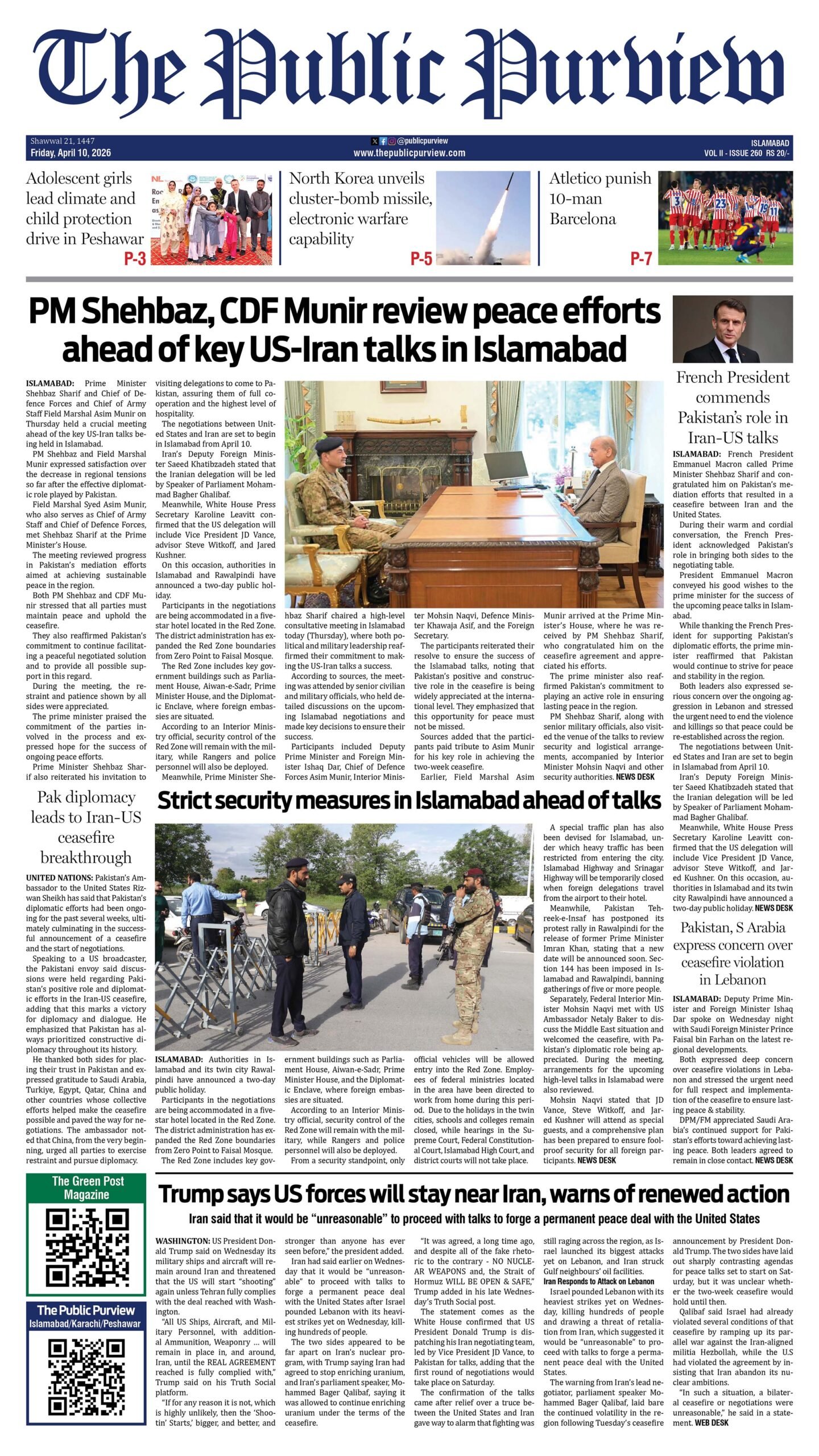 Today's E-Paper