
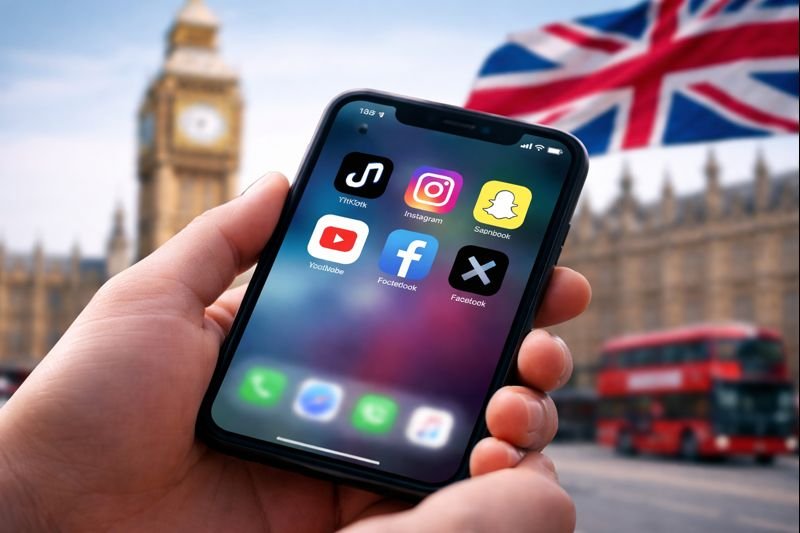
LONDON: The United Kingdom has launched a formal consultation on restricting access to social media platforms for children under the age of 16, signalling a potential shift in digital policy aimed at addressing online safety, mental health concerns, and addictive platform design.
The consultation, announced in January 2026, comes weeks after Australia became the first country to implement a nationwide ban on social media use for under-16s. UK ministers say the review will examine whether to raise the digital age of consent from 13 to 16 and how age limits could be more effectively enforced.
Officials cite growing concern over the impact of excessive social media use on children, particularly links to anxiety, attention disorders, and online harm. The consultation will also explore the use of age-assurance technologies and the possibility of limiting design features such as infinite scrolling and engagement-based rewards that critics argue encourage prolonged use.
The government had previously resisted calls for a ban but shifted its position following pressure from MPs, child-safety advocates, and education professionals. Separately, guidance issued by the Education Secretary includes school-level restrictions on mobile phone use, scheduled to take effect in the summer term.
Ministers are expected to visit Australia to study enforcement mechanisms, as the UK aligns itself with a broader international movement toward stricter child online safety regulation. Any policy change could have implications for major technology companies, including Meta, TikTok, and Snapchat, which may face tighter compliance requirements.
Enforcement remains a central challenge. Critics note that most platforms rely on self-declared ages, while stronger verification methods raise concerns about privacy and data protection. There is also debate over whether restrictions could push children toward unregulated platforms or the use of virtual private networks, complicating oversight.
Unlike Australia, the UK must also navigate a European human rights framework. Legal experts warn that any blanket ban could face challenges related to freedom of expression and access to information, adding a constitutional dimension to the debate.
Parents and schools have largely welcomed the prospect of stronger safeguards, while children’s rights groups remain divided over whether restrictions strike the right balance between protection and autonomy. Observers say the outcome of the consultation could influence similar policy discussions across Europe.




 Today's E-Paper