
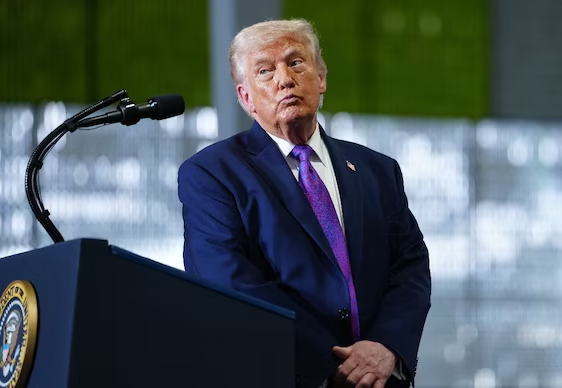
WASHINGTON/CAIRO, April 2: Hopes for a quick end to the Iran war faded after U.S. President Donald Trump signaled an escalation in military operations, sending oil prices higher and shaking global financial markets.
In a televised address, Trump said U.S. forces would intensify strikes on Iran over the next two to three weeks, offering no clear timeline for ending the conflict. The statement disappointed investors who had been expecting signs of de-escalation after weeks of fighting.
Brent crude surged about 6% to $107.69 per barrel, reflecting renewed fears over disruptions in global energy supplies, particularly through the Strait of Hormuz — a key route for nearly one-fifth of the world’s oil and liquefied natural gas.
Markets fall as uncertainty grows
Global markets reacted sharply to the escalation signals. U.S. stock futures dropped around 1.3%, while European futures fell more than 2%. Asian markets also declined, with Japan’s Nikkei losing 2.4%.
Analysts said the absence of a clear endgame has increased uncertainty, with investors closely watching how long the conflict may continue and whether it could expand further.
Fighting continues across multiple fronts
Hostilities showed no signs of easing. Israel reported incoming missiles from Iran, while Gulf states said they intercepted drones and missiles near key economic zones. The U.S. embassy in Baghdad urged its citizens to leave, warning of possible attacks in the coming days.
The conflict, which escalated in late February following U.S. and Israeli strikes on Iran, has since spread across the region, involving multiple countries and armed groups.
Energy supply fears intensify
The Strait of Hormuz remains central to global concerns. Iran has effectively restricted access to the vital shipping lane, pushing up energy prices and raising fears of prolonged supply disruptions.
Also read: IEA warns oil shock may worsen in April as 12m barrels a day vanish from global supply
International bodies including the IMF, World Bank and International Energy Agency warned the conflict is having “substantial” global economic effects and said coordinated responses may be needed.
No clear path to de-escalation
Both sides have issued strong warnings, with Iran signaling further retaliation if its conditions are not met. While mediation efforts are ongoing, there has been no confirmed breakthrough toward a ceasefire.
The situation remains fluid, with markets, energy supplies and regional stability closely tied to developments in the coming weeks.





 Today's E-Paper