
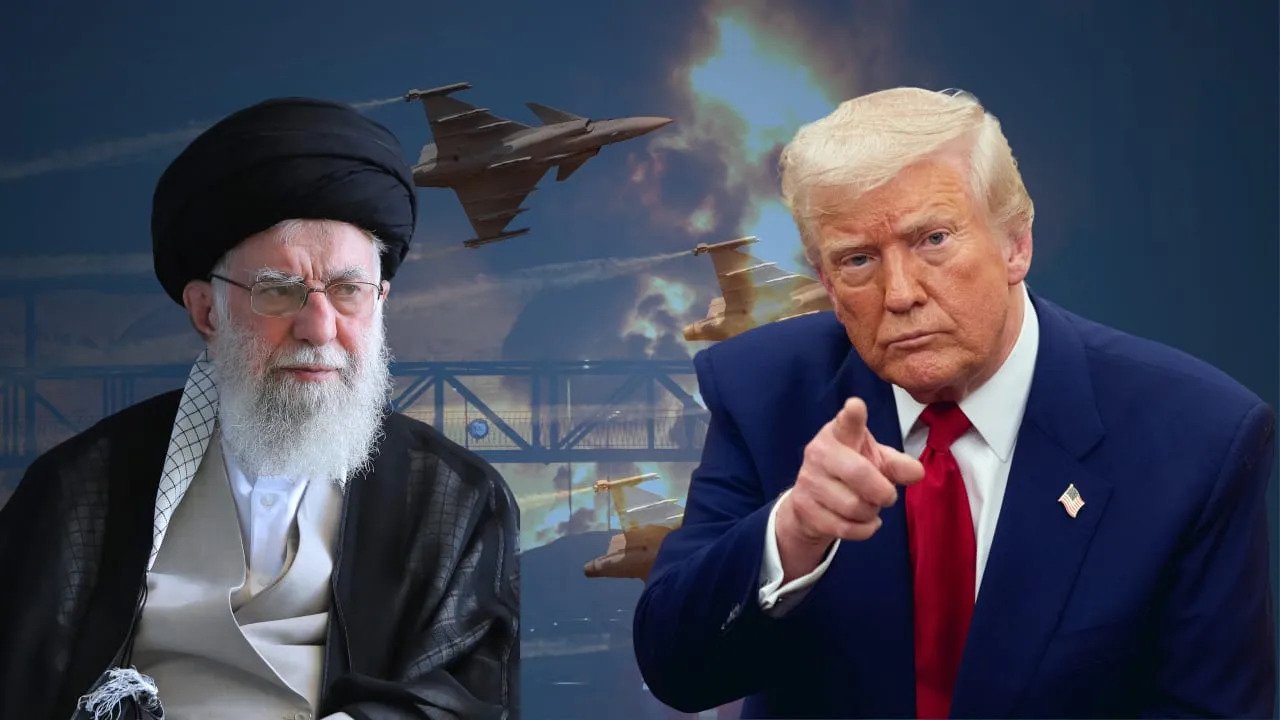
TEL AVIV/JERUSALEM/WASHINGTON — The United States and Iran sharply escalated their rhetoric on Sunday, raising fears of a wider regional conflict after both sides threatened to target critical energy infrastructure in the Gulf.
U.S. President Donald Trump warned that Washington could “obliterate” Iran’s power facilities if Tehran failed to fully reopen the Strait of Hormuz within 48 hours, marking a significant shift in tone as the conflict entered its fourth week.
Iran responded by cautioning that any U.S. strike on its energy sector would trigger retaliatory attacks on American infrastructure across the region, including energy, information technology, and desalination facilities.
Air raid sirens sounded across Israel early Sunday as Iranian missiles targeted multiple areas, with dozens reported injured overnight in attacks on southern towns including Arad and Dimona. The Israeli military said it later carried out strikes in Tehran in response.
The exchange of threats has heightened concerns about global energy supplies, as the Strait of Hormuz — a key maritime chokepoint handling around 20% of the world’s oil and liquefied natural gas — faces severe disruption.
Oil prices surged to near four-year highs amid the escalating tensions, while European gas prices spiked sharply last week. Analysts warned that markets remain on edge as uncertainty deepens.
“President Trump’s threat has effectively placed a 48-hour clock on an already volatile situation,” said market analyst Tony Sycamore, predicting further pressure on global stocks.
Iranian officials said the strait remains accessible but warned that vessels linked to “enemy states” could face restrictions. Some ships, including those from regional countries, have reportedly negotiated safe passage under specific security arrangements.
Meanwhile, Iran expanded the scope of the conflict by deploying long-range missiles, including strikes reportedly aimed at a U.S.-British military base in the Indian Ocean. Israeli officials also said an ایرانی missile landed near a sensitive nuclear site in Dimona.
The broader conflict has already caused significant casualties and economic disruption. More than 2,000 people have reportedly been killed since hostilities began in late February, with the violence spreading across multiple fronts, including clashes between Israel and Iran-backed Hezbollah in southern Lebanon.
Hezbollah claimed responsibility for rocket attacks into northern Israel, while Israeli forces said they had intensified operations against the group’s positions. At least one fatality was reported near the border.
International concern continues to grow, with calls for de-escalation mounting. Pope Leo urged an end to the violence, describing the human toll as “a scandal to the whole human family.”
A recent Reuters/Ipsos poll indicated that public support in the United States for military action against Iran remains divided, adding domestic political pressure as the conflict unfolds.


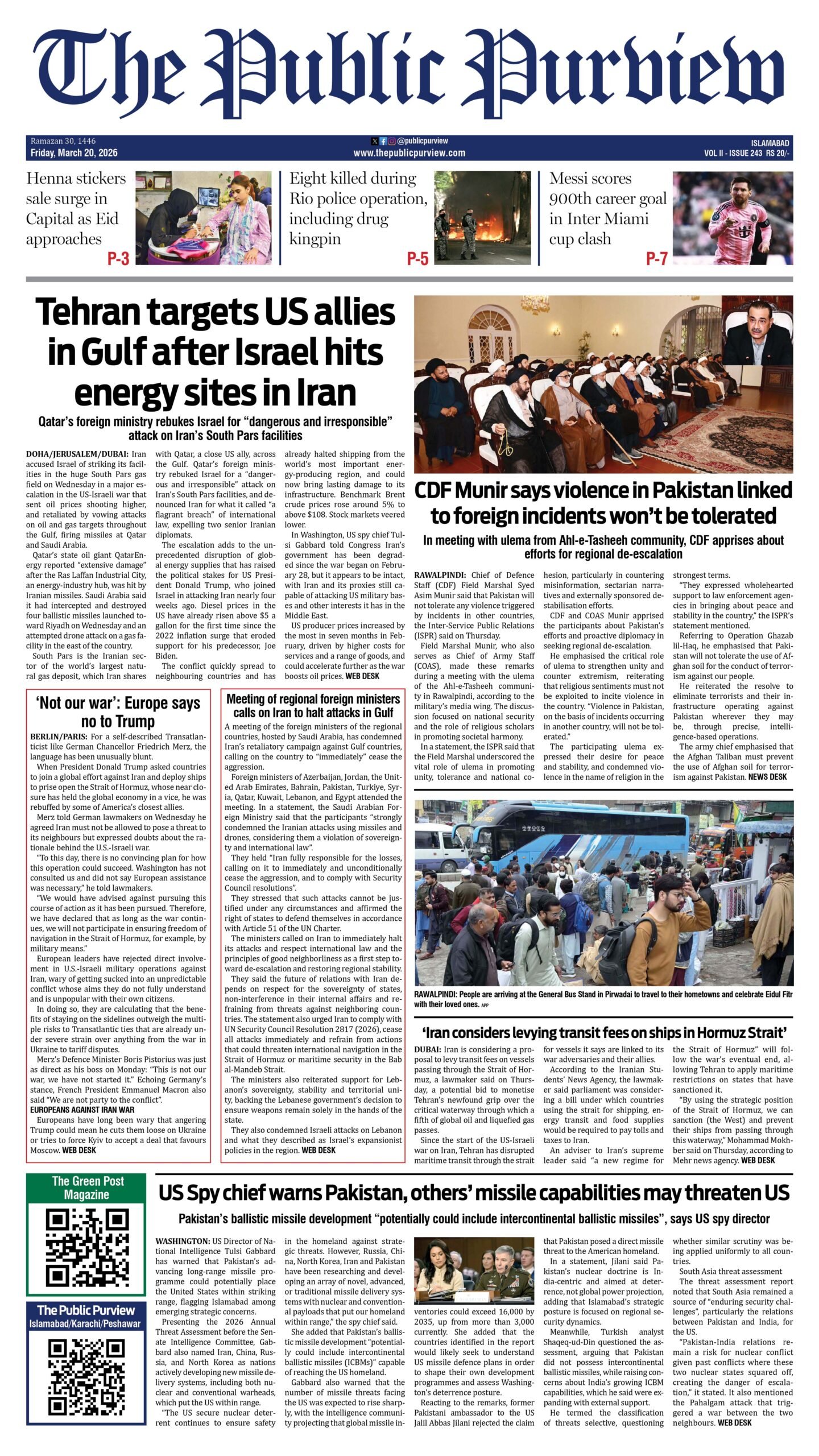 Today's E-Paper