
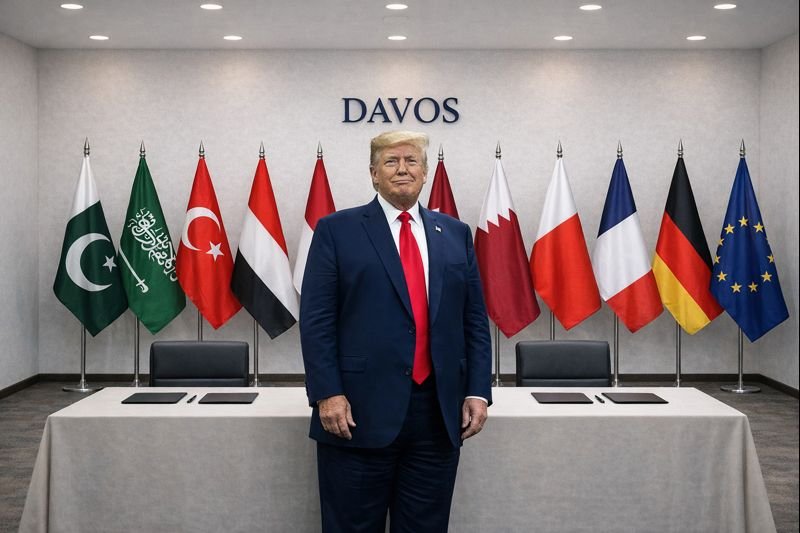
DAVOS — U.S. President Donald J. Trump on Thursday hosted the formal launch and signing ceremony for the Board of Peace, a sprawling international initiative intended to oversee post-conflict reconstruction — beginning with Gaza — and potentially act as a broader conflict-resolution body. The event at the World Economic Forum drew both support and significant criticism from world capitals.
Trump described the Board as a platform for lasting peace and cooperation, originally rooted in his 20-point Gaza peace plan backed by United Nations Security Council Resolution 2803. Critics, however, fear it could rival or undermine the UN’s established peace mechanisms.
Broad Coalition of Supporters
A coalition of predominantly Muslim-majority and other nations has agreed to participate in the board, emphasizing its potential to promote reconstruction, stability, and a permanent ceasefire in Gaza:
-
Saudi Arabia, United Arab Emirates, Egypt, Jordan, Indonesia, Pakistan, Turkey and Qatar formally accepted invitations.
-
Morocco also confirmed acceptance, becoming a significant African and Arab contributor.
-
Argentina, Armenia, Azerbaijan, Bahrain, Belarus, Hungary, Kazakhstan, Kosovo, Uzbekistan and Vietnam have been reported as joining.
Israel’s Prime Minister Benjamin Netanyahu agreed to join despite earlier objections over the board’s composition — particularly the inclusion of Turkey and Qatar — though he did not attend the signing in Davos.
Supporters argue the Board could bolster ceasefire implementation, coordinate humanitarian relief, and assist reconstruction, framing participation as constructive engagement with a global peace effort.
Rejections and Hesitations from Western Nations
Several Western powers have publicly declined to join the initiative, often citing concerns over its structure, mandate and potential impact on existing multilateral frameworks:
-
France, Norway, Sweden and Slovenia outright rejected invitations, stating the board could weaken the United Nations’ role.
-
Britain (UK) and Germany have not committed and are reviewing the proposal; UK officials specifically raised concerns about including Russian President Vladimir Putin in a peace body.
-
Italy has signalled constitutional or legal barriers to participation.
-
Other major players like China, Russia, Canada, Ukraine, and the EU’s executive branch have so far remained non-committal.
Global Reactions and Notable Statements
Trump reiterated that the Board is not intended to replace the United Nations, despite critics’ assertions that it could evolve into a parallel structure. He also said the initiative had attracted interest from dozens of countries and aimed to address wider global challenges beyond Gaza.
While Russian President Vladimir Putin has been invited and is reported to be considering participation — including a willingness to meet financial requirements for permanent membership — Moscow has not issued a firm acceptance.
European leaders, including officials from France and the UK, voiced scepticism. British Home Secretary Yvette Cooper said London would not sign the board’s charter, questioning the appropriateness of Putin’s potential involvement in a peace-oriented grouping.
Ukrainian President Volodymyr Zelenskyy has also weighed in, suggesting he cannot sit on the same council as Russia’s leader amid the ongoing war in Ukraine.
Institutional Implications and Criticism
Analysts and diplomats in Europe and beyond say the board’s evolving scope — from Gaza-centric to a general conflict-resolution body with significant financial obligations for permanent seats — could weaken the United Nations’ authority if not clearly tethered to existing multilateral mechanisms.
UN experts and human rights officials have expressed concern that RSA-endorsed elements of the peace plan may not fully uphold international law or self-determination principles, potentially challenging established norms.


 Today's E-Paper