
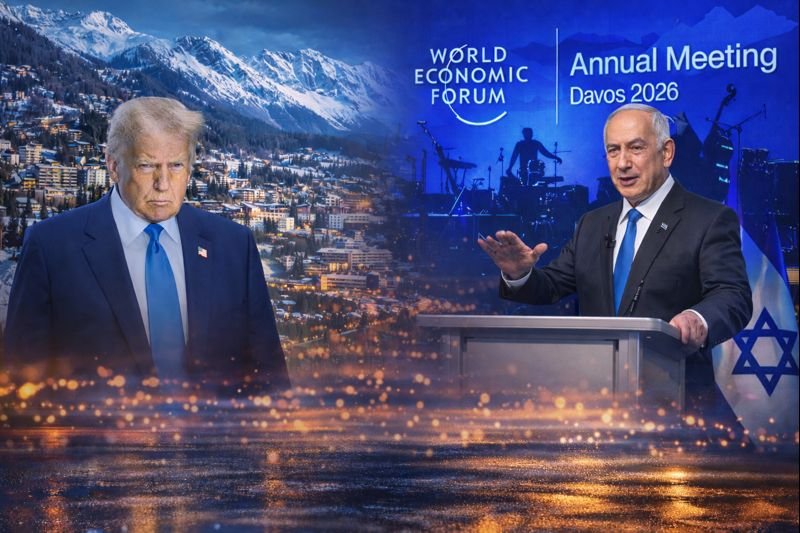
DAVOS: Former U.S. President Donald Trump is set to formally launch his proposed Board of Peace at the World Economic Forum in Davos this Thursday, positioning the U.S.-led body as an alternative mechanism to the United Nations for overseeing Gaza’s reconstruction and broader conflict resolution.
The move gained momentum this week after Israeli Prime Minister Benjamin Netanyahu confirmed his participation in the board’s top tier, while Pakistan has also agreed to become part of the Gaza-focused arm of the initiative, according to officials familiar with the matter. Early support has also come from the United Arab Emirates, Azerbaijan, Hungary, and Morocco.
The initiative has drawn mixed reactions from key Western powers, with France and the United Kingdom expressing reservations over its U.S.-led structure and funding model.
Davos signing and Trump’s challenge to the UN
At a White House briefing earlier this week, Trump criticized the United Nations for what he described as a poor record in enforcing peace agreements, saying the Board of Peace would implement the second phase of his 20-point Gaza peace plan. That phase, he said, builds on UN Resolution 2803, which provided an international framework for post-conflict stabilization.
The charter signing at Davos is intended to give the board international visibility and legitimacy. Under the proposed structure, Trump would serve as lifelong chair of the body.
Membership terms have also attracted attention. Participation reportedly requires a significant upfront financial contribution—estimated at around $1 billion for long-term membership—prompting questions among diplomats about transparency and equity. Supporters argue the funding model could allow faster decision-making, while critics warn it risks excluding poorer states and concentrating influence.
Netanyahu’s role and Israel’s stance
Netanyahu confirmed on Wednesday that he would join the Supreme Peace Council, the board’s highest decision-making tier. However, Israel has declined to participate in the separate Gaza Executive Board, objecting to the inclusion of Turkey and Qatar, two regional players with whom Israel has strained relations.
Israeli officials say joining the top council allows Israel to influence strategic decisions without endorsing operational arrangements it considers problematic. The move is seen as reinforcing close U.S.–Israel coordination on Gaza’s post-war future.
Pakistan’s participation and diplomatic balancing
Pakistan’s decision to join the Gaza Executive Board adds a distinct regional dimension to the initiative. Officials say Islamabad views participation as a way to remain engaged in international efforts concerning Gaza while continuing to emphasize the central role of UN resolutions and humanitarian access.
Pakistan invited to proposed Gaza Peace Board, MoFA confirms
Analysts note that Pakistan’s involvement could give the board broader representation from the Muslim world, but also places Islamabad in a delicate position as it balances ties with the UN system, key Western partners, and regional allies.
Supporters, skeptics, and global implications
Trump has extended invitations to leaders from Russia, Canada, Brazil, Egypt, and Argentina, though several have yet to confirm participation.
Supporters say the board could overcome bureaucratic delays that have hampered UN-led initiatives. Skeptics, particularly in Europe, caution that creating a parallel institution could weaken multilateral norms and complicate aid coordination. Trump’s recent remarks about potential trade pressure on reluctant partners have further highlighted political tensions surrounding the project.
What comes next
The Board of Peace represents Trump’s most ambitious attempt to reshape global diplomacy by creating a U.S.-centered alternative to existing multilateral structures. Its credibility will depend on whether major powers formally join, how the Gaza Executive Board resolves internal disagreements, and whether the initiative can deliver tangible reconstruction and security outcomes.
For now, the Davos launch, Netanyahu’s acceptance, and Pakistan’s participation mark a significant escalation in the project’s scope—one that has introduced new uncertainty into Middle Eastern diplomacy and the future role of the United Nations in conflict resolution.


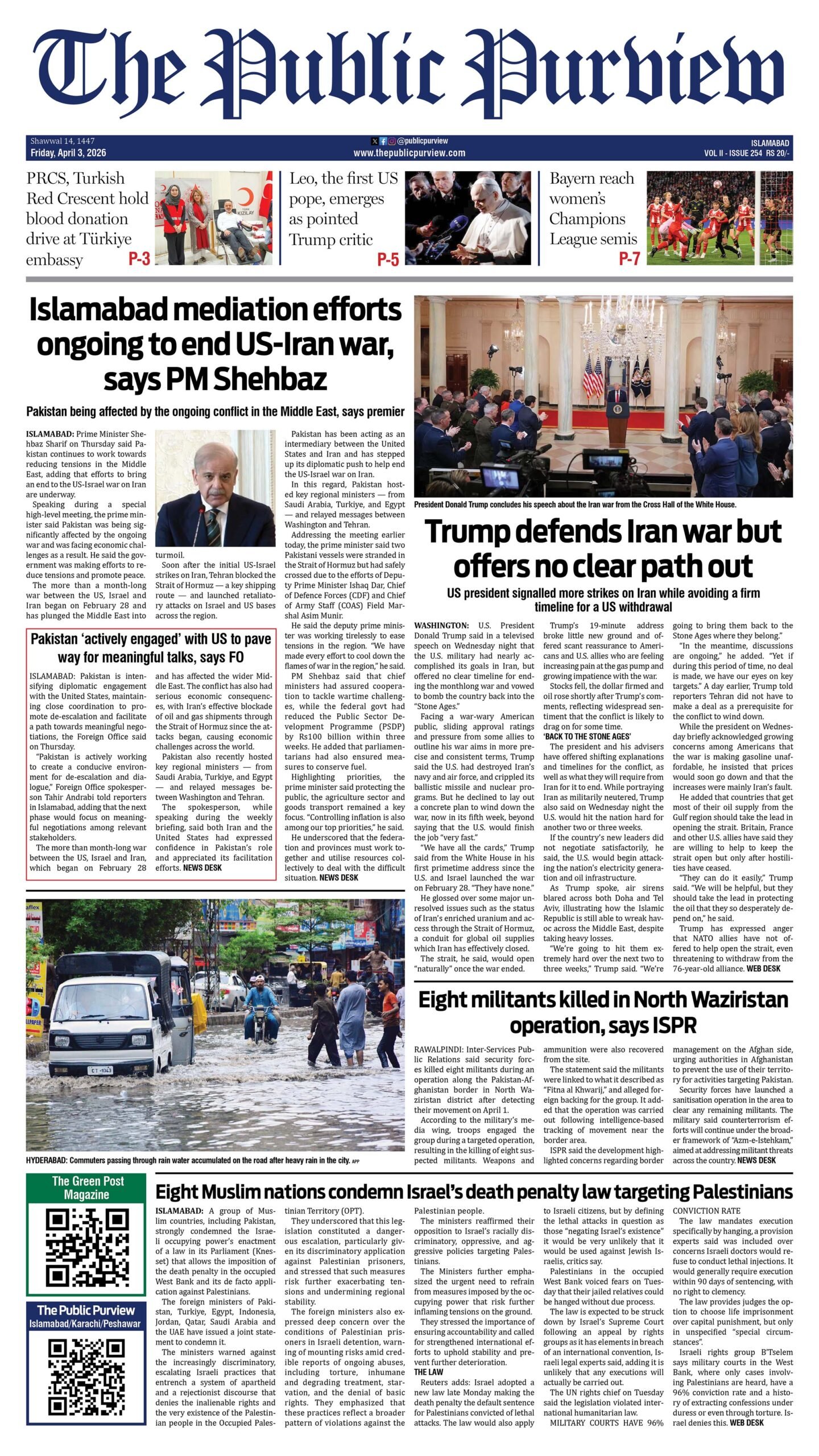 Today's E-Paper