
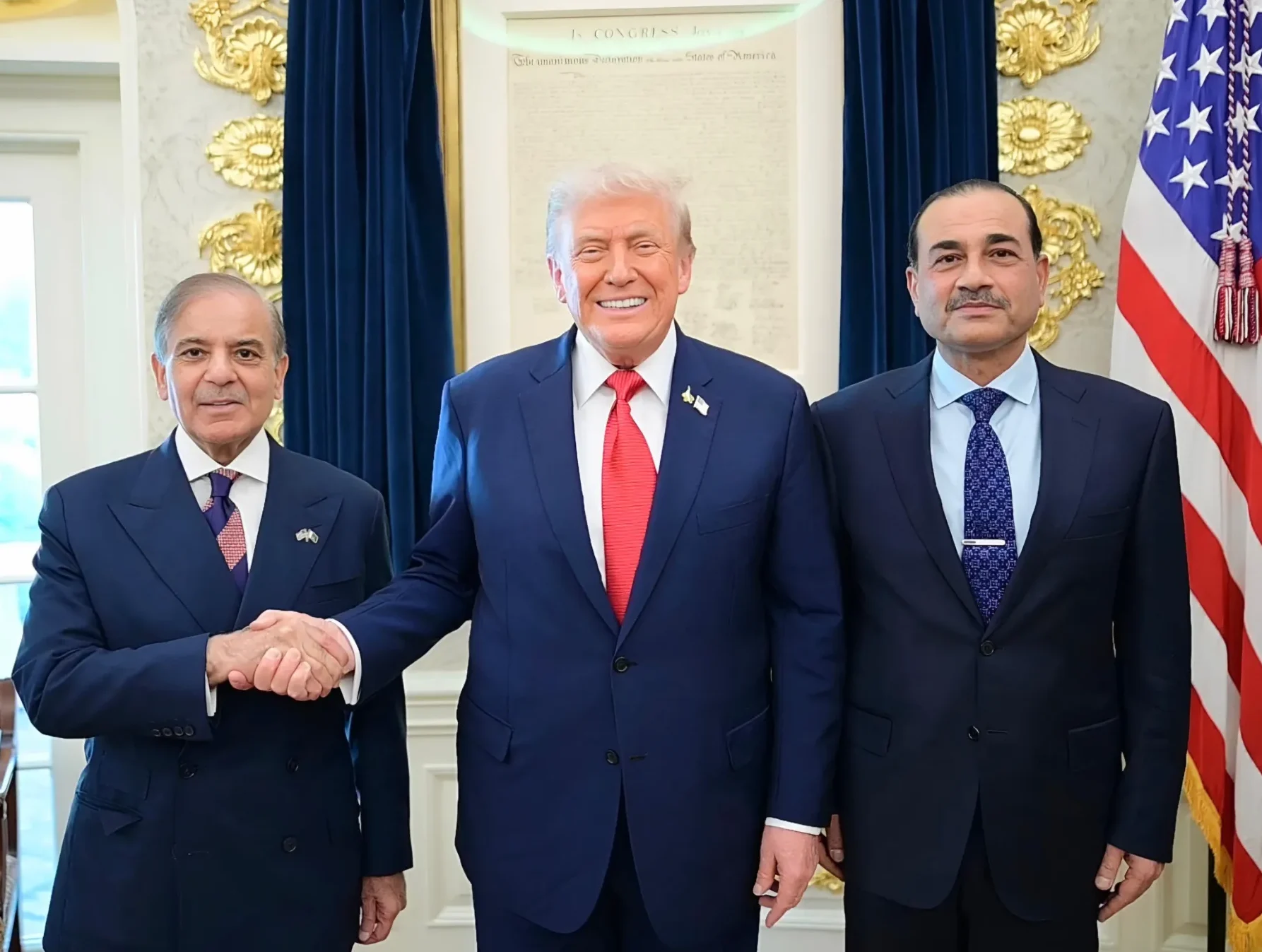
Washington, D.C. — U.S. President Donald Trump on February 19 convened the first operational meeting of the Board of Peace, announcing a $10 billion U.S. contribution and publicly praising Pakistan’s Prime Minister Shehbaz Sharif and Army Chief General Asim Munir during the high-level diplomatic session.
The Board of Peace, introduced earlier this year as a multilateral platform to coordinate conflict stabilization and reconstruction efforts—initially focused on Gaza—held its inaugural working session with leaders from several countries in attendance. The initiative is designed to mobilize international funding, streamline humanitarian coordination, and support long-term rebuilding strategies in conflict-affected regions.
$10 billion pledge and international commitments
President Trump announced that the United States would commit $10 billion to support the Board’s initiatives. He said additional financial pledges had been secured from several participating countries to fund humanitarian relief and reconstruction efforts.
Discussions at the meeting also included the potential formation of a multinational International Stabilization Force (ISF), though no immediate troop deployments were confirmed. Officials indicated that operational structures, oversight mechanisms, and funding frameworks are still being developed.
The initiative was first introduced earlier this year at the World Economic Forum in Davos and has since been positioned as a U.S.-led diplomatic platform aimed at accelerating peacebuilding and reconstruction efforts.
Pakistan’s role and Trump’s remarks
During his address, Trump referred to Prime Minister Shehbaz Sharif and General Asim Munir as “great guys.” He described General Asim Munir separately as “tough” and a “serious fighter.” Trump also acknowledged Pakistan’s strategic importance in broader diplomatic engagements and regional stability discussions.
Prime Minister Shehbaz Sharif, addressing the gathering, reiterated Pakistan’s support for a sustainable ceasefire in Gaza and emphasized the need for a long-term political resolution alongside reconstruction efforts. He stressed that durable peace would require stability, humanitarian relief, and progress toward statehood.
Also Read: Pakistan at the Board of Peace: Why it matters
On the sidelines of the meeting, Pakistani officials held discussions with international counterparts on regional security cooperation and economic engagement. Islamabad is assessing the scope of any potential participation in future stabilization arrangements, with officials indicating that any involvement would align with peacekeeping principles and established legal frameworks.
Broader implications
The inaugural session of the Board of Peace places Pakistan prominently within a new U.S.-led diplomatic initiative focused on Middle East reconstruction and regional coordination. While significant funding commitments were announced, questions remain regarding governance structures, oversight, and coordination with existing international institutions.
As pledges move toward implementation, the effectiveness of the Board will likely depend on international consensus, operational clarity, and sustained diplomatic engagement among participating states.

 Today's E-Paper