

By Hassan Nazir
Since the Taliban takeover of Kabul in August 2021, Pakistan’s leaders have often pointed to Afghan soil being used by the TTP, to cross-border attacks, and to unhelpful messaging from Kabul. All of that is real, but it is not the full story. The crisis has also been shaped by choices made in Islamabad, especially the choice to delay hard decisions. Policy drift, slow adjustments, and reluctance to revise assumptions allowed a manageable security problem to grow into a much deeper strategic challenge.
The early expectation in Pakistan was simple and optimistic: a friendly government next door would rein in the TTP, prevent cross-border attacks, and cooperate on border security. The Taliban movement is divided, still consolidating power, and reluctant to confront an ideologically aligned group that has fought alongside it. As militant attacks inside Pakistan began to rise, policy did not keep pace. Instead of revisiting its assumptions, Islamabad largely waited. It waited for quiet assurances to turn into action, for internal debates to settle into a single line, and for the situation to stabilise on its own. The TTP used that time well. The costs of delay were immense. It reorganised on Afghan soil, rebuilt networks, stepped up recruitment, strengthened logistics, and attacked with growing confidence. What was described as strategic patience gradually became a form of paralysis, closing the window for low-cost correction.
The way foreign and security policy is made inside Pakistan deepened this drift. Civilian leaders, the military, and intelligence agencies did not always read the threat in the same way or move in step. Key questions remained unresolved: How far was Pakistan willing to go to pressure Kabul? What would trigger a visible shift in policy? How long would it rely on persuasion alone? In the absence of clear answers, inaction became the path of least resistance. There were visits, meetings, and press briefings, but there was no early, unified strategy capable of stopping the TTP from embedding itself across the border.
There was also a serious misreading of leverage. Pakistan overestimated how much influence its geography, past support and linkages would give it over the Taliban. It assumed cooperation would come naturally, rather than having to be actively built and constantly reinforced. At the same time, there was a strong instinct to cling to the status quo even as field reports and casualty figures pointed elsewhere. Each attack was treated as an episode, not as a sign of a shifting balance on the ground. A degree of wishful thinking survived far longer than it should have, encouraging the belief that goodwill and quiet engagement would eventually produce results without serious diplomatic or strategic costs.
Under growing domestic pressure, Islamabad eventually moved beyond pure inaction. Diplomatic engagement was stepped up. Pakistani officials repeatedly raised concerns with the Taliban leadership, demanded that action be taken against the TTP, and sought specific assurances. Border management was tightened through accelerated fencing, stricter controls at crossings, and more robust security posts. These steps reduced some risks but could not fully contain a threat that moves through rough terrain, local facilitators and sympathetic networks that no fence can fully block.
Inside Pakistan, intelligence-based operations were expanded. Security forces disrupted TTP cells, killed or captured operatives, and foiled plots, preventing many attacks. These efforts saved lives and signalled resolve, but they dealt more with symptoms than with causes. Leadership hubs and training infrastructure across the border remained largely beyond reach, giving the group room to regenerate after every setback. At moments of acute tension, Pakistan appears to have used limited cross-border strikes and heavy signalling. These actions displayed capability and anger, but they also triggered strong reactions from Kabul and risked further escalation in a fragile relationship.
Taken together, these measures arrived late and carried limited effect. By the time they were fully in motion, the TTP had already strengthened, mistrust between Islamabad and Kabul had already hardened, and the strategic cost of any decisive move had increased. The crisis that Pakistan faces today is therefore not just the product of hostile actors outside its borders; it is also the product of slow, divided decision-making at home.
Avoiding a repeat will require more than tactical changes. Decision-making on critical neighbours must be more unified and institutionalised, with standing mechanisms where civilian and military stakeholders share information, test assumptions and agree on clear lines of action before a crisis peaks. Assumptions need to be revisited early, especially when field data challenges initial hopes. Pakistan also needs a long-term approach to cross-border militancy that links internal operations with consistent external pressure, instead of moving in short, reactive bursts. Diplomacy must shift from vague reassurance to precise messages about expectations, timelines and consequences, while gradually building regional arrangements that narrow the TTP’s access to funding, movement and propaganda space.
This phase of Pakistan–Afghanistan tension did not appear from nowhere. It grew out of delays, mixed signals and missed opportunities that gave non-state actors room to shape realities on both sides of the border. Pakistan can no longer afford to treat hesitation as a neutral stance. Pakistan is still living with those decisions today. In a region where armed groups move faster than states, where borders are porous and diplomatic space is easily lost, delayed decisions shift the balance of advantage towards those who thrive in disorder. The lesson of recent years is clear: doing nothing is also a choice, and in this case it has been a choice whose price is being paid in blood, mistrust and shrinking room for manoeuvre.
How have Pakistan’s delayed and fragmented decisions after the Taliban’s 2021 takeover contributed to the worsening of Pakistan–Afghanistan relations and the resurgence of the TTP threat?



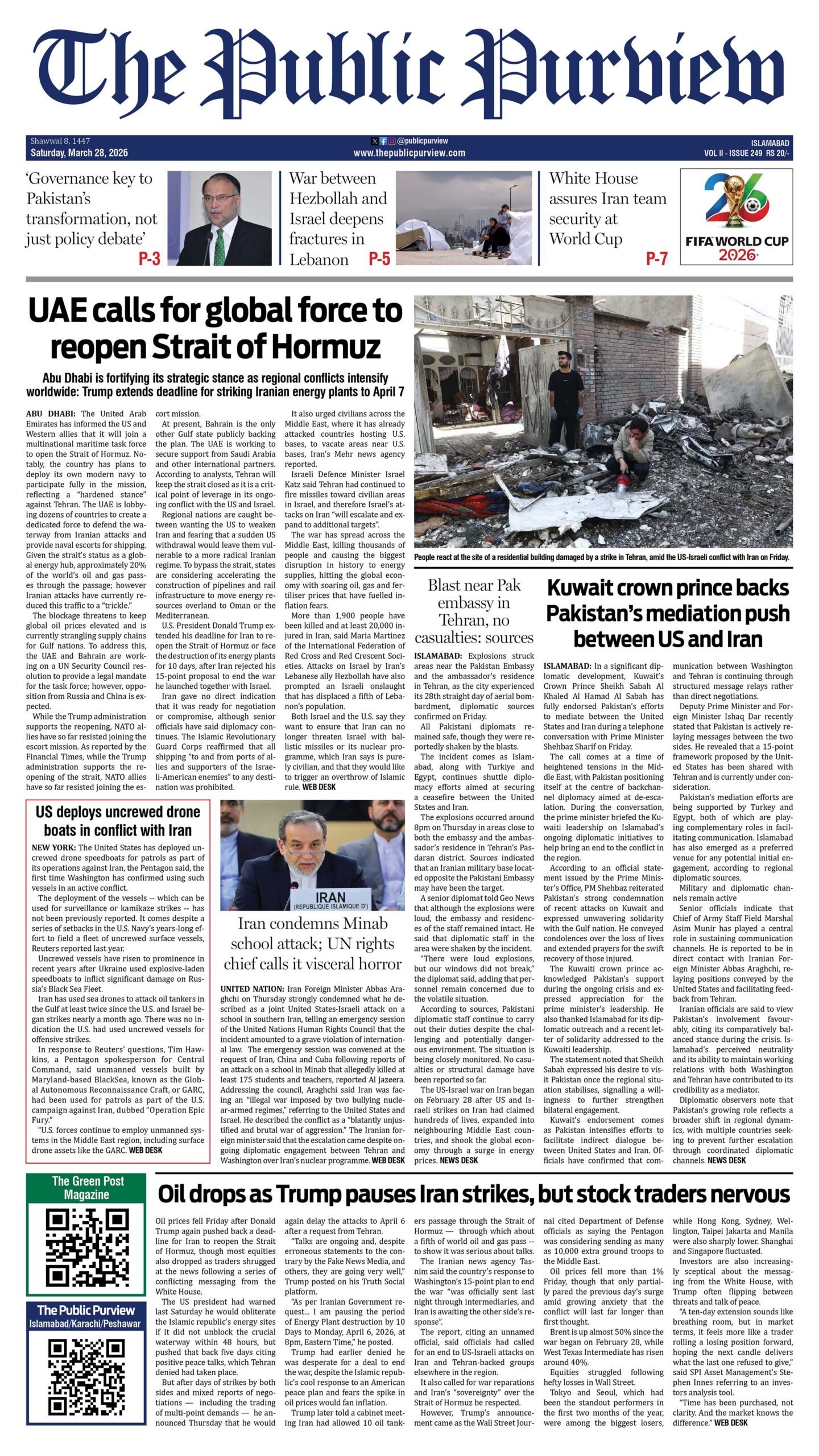 Today's E-Paper