
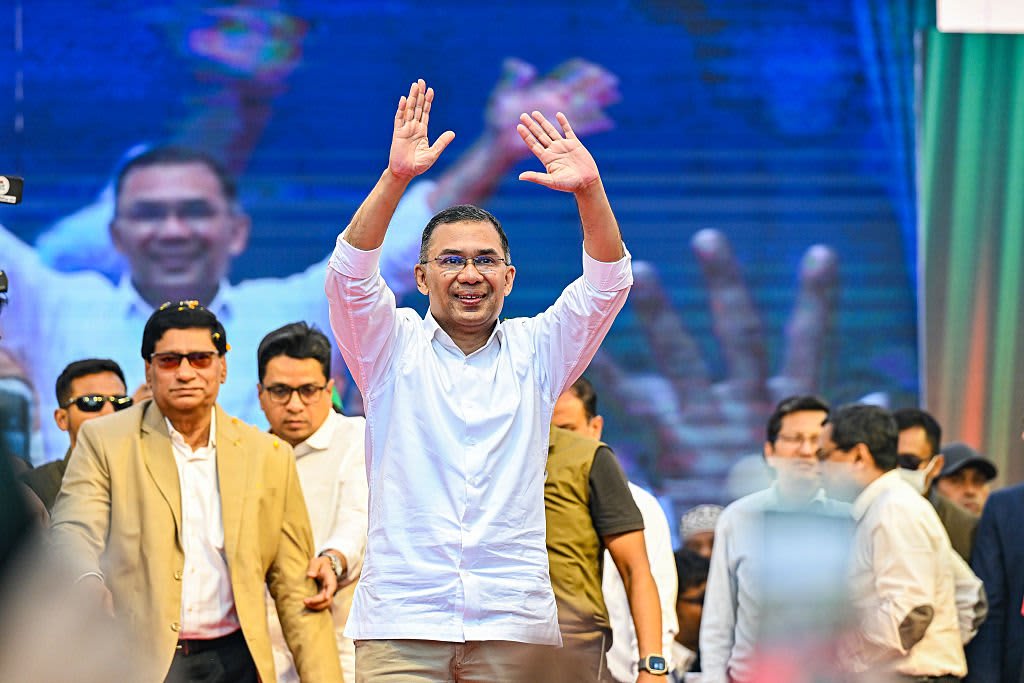
DHAKA — The Bangladesh Nationalist Party (BNP) has secured a two-thirds majority in the country’s parliamentary elections, paving the way for Tarique Rahman to become prime minister in the first national vote held after a Gen Z-led uprising reshaped the political landscape.
Official results released by the Election Commission show the BNP won more than 200 of the 300 contested seats, giving it a commanding majority in the 350-member parliament. Voter turnout was reported at around 59–60 percent. The election was overseen by an interim administration led by Nobel Peace Prize laureate Muhammad Yunus and was conducted largely peacefully, according to authorities and observers.
The vote marks Bangladesh’s first parliamentary election since mass youth-driven protests in 2024 ended the long tenure of former prime minister Sheikh Hasina and led to a transitional governance framework.
Rahman, who returned to Bangladesh in late 2025 after 17 years in London exile, led the BNP campaign on pledges of political stability, economic reform and minority protections. He assumed leadership of the party following the passing of his mother, former prime minister Khaleda Zia.
Begum Khaleda Zia Dies at 80: From Housewife ‘Putul’ to Bangladesh’s First Woman Prime Minister
A political transition after years of turbulence
The election represents a significant shift in Bangladesh’s political trajectory. For more than a decade, national politics was dominated by the Awami League under Hasina. The 2024 unrest and subsequent transition opened the way for competitive national elections under interim oversight.
Election officials said voting took place across the country without major disruptions. Observers noted orderly polling and counting processes in most constituencies.
With a two-thirds majority, the BNP is positioned to form government without relying on coalition partners. The new parliament is expected to convene in the coming weeks, after which Rahman is likely to be formally sworn in.
Domestic priorities and international reactions
Bangladesh, a nation of more than 170 million people, faces ongoing economic and governance challenges, including inflation management, employment generation and institutional reform. The incoming administration is expected to outline its policy agenda once in office.
International leaders responded swiftly to the results. Indian Prime Minister Narendra Modi congratulated Rahman and the BNP leadership, expressing hope for continued cooperation between the neighboring countries. Other regional and global stakeholders also acknowledged the outcome, underscoring the strategic importance of political stability in South Asia.
The peaceful conduct of the vote and the decisive outcome mark a new chapter in Bangladesh’s post-uprising political transition.




 Today's E-Paper