
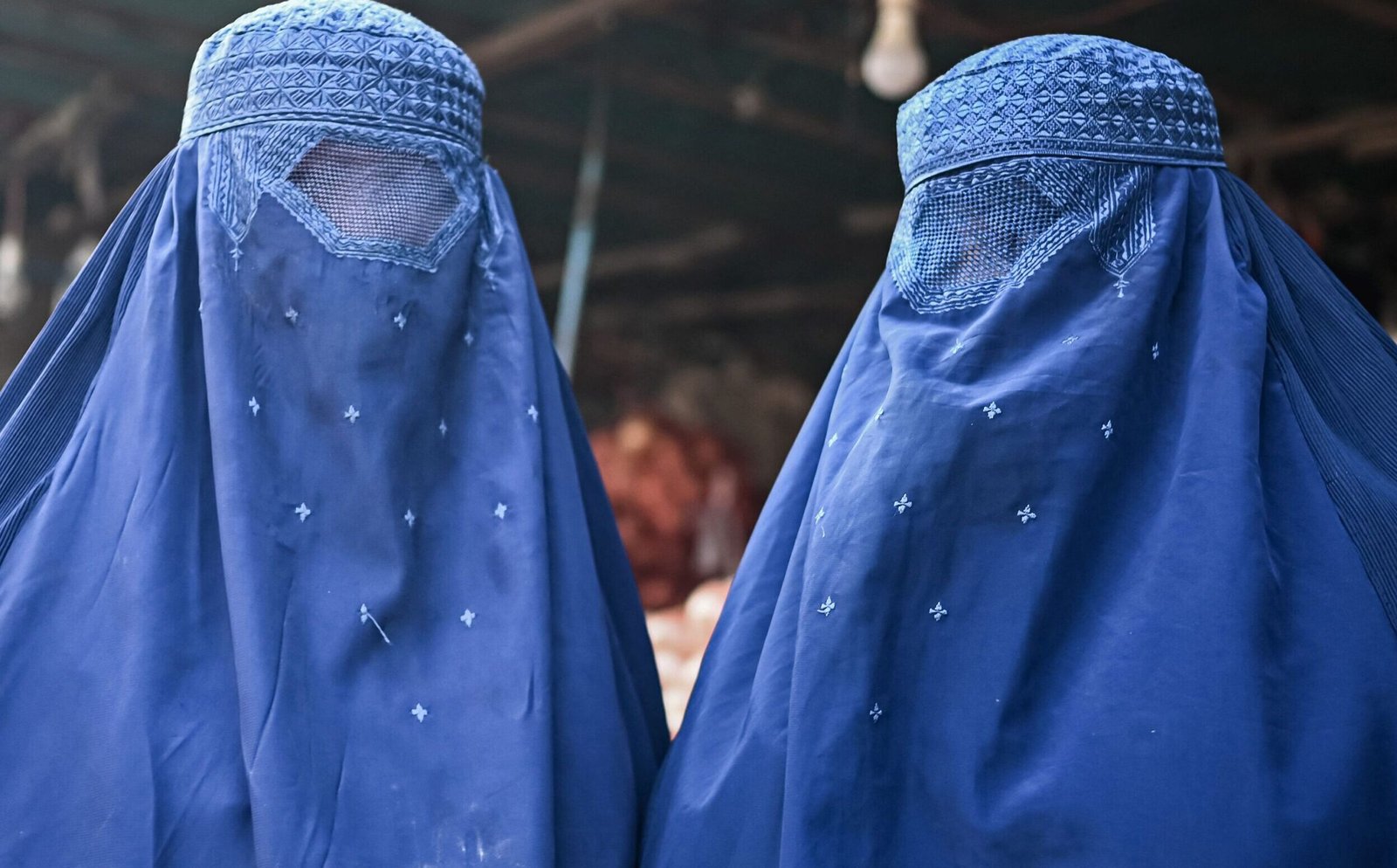
Taliban authorities have stepped up enforcement of face-covering rules for women and girls in the western Afghan city of Herat, preventing some from entering hospitals, seminaries and public transport if they do not comply with dress requirements.
Residents and rights groups say the renewed crackdown began in November, with officials from the Ministry for the Promotion of Virtue and Prevention of Vice inspecting government departments, schools and health facilities to ensure adherence to the Taliban’s interpretation of Islamic dress codes.
Restrictions at hospitals and public spaces
Initially, enforcement agents reportedly required women to wear the full Afghan burka — typically blue with a netted eye covering. After what residents described as pushback, authorities allowed women to wear a traditional chaddar, a loose cloak, along with a face mask.
At Herat’s main hospital, one health worker said female staff waited outside for colleagues finishing night shifts to hand over burkas so they could gain entry. Human Rights Watch reported that a female surgeon was detained for several hours for not wearing a burka.
Human Rights Watch researcher Sahar Fetrat said forcing women to cover their faces is part of a broader policy aimed at restricting women’s visibility in public life. Afghan women and UN human rights experts have described such measures as “gender apartheid,” according to the group.
Legal basis and enforcement patterns
The Taliban issued an edict in May 2022 requiring women who have reached puberty to either wear a burka or a black robe with headscarf, face veil and gloves, leaving only a narrow slit for the eyes. Male guardians — fathers, husbands, brothers or sons — were made responsible for ensuring compliance and warned of punishment if female relatives violated the rules.
More detailed regulations were introduced in August 2024 under the Law on the Promotion of Virtue and Prevention of Vice. Implementation has varied across regions, with some women reportedly detained for days for non-compliance.
Kate Clark, co-director of the Afghanistan Analysts Network, said enforcement often occurs in waves, intensifying in certain locations before easing again. She noted that changes in local leadership or public backlash can influence how strictly the rules are applied.
A shift in a relatively liberal city
Herat, near the border with Iran, has traditionally been viewed as one of Afghanistan’s more socially open cities. Before the Taliban returned to power in August 2021, women and girls participated in sports teams and were active in universities and public institutions.
It remains unclear what prompted the latest round of inspections in early November. Residents interviewed by international media said they feared reprisals and requested anonymity when describing recent incidents.
The Taliban have not publicly detailed the reason for the renewed enforcement campaign in Herat.




 Today's E-Paper