
SWAT: Swat accounts for around 80 per cent of Pakistan’s persimmon production, with experts calling for greater investment in processing, value addition and marketing to unlock the fruit’s domestic and export potential.
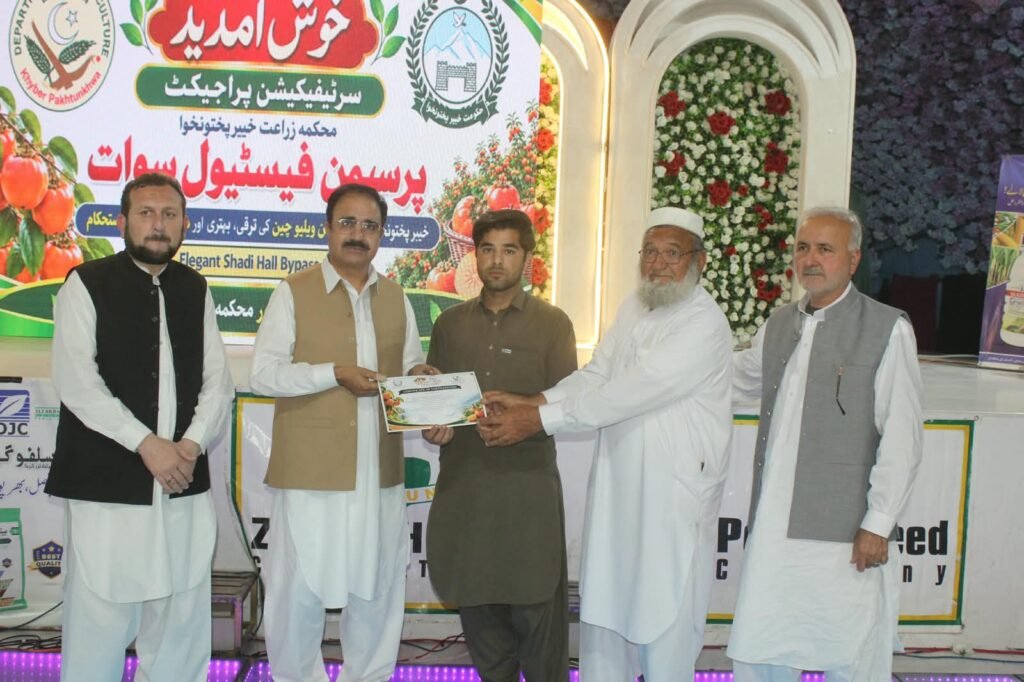
The Agriculture Department’s Extension Wing organised a persimmon festival in Mingora to promote the cultivation, processing and marketing of Japanese persimmon, locally known as Amlook, and encourage growers to expand production.
Additional Commissioner Malakand Division Noor Alam Khan attended the event as chief guest. District Director Agriculture Swat (Extension) Dr Iftikhar Ahmed, District Director Agriculture Upper Swat (Extension) Dr Adalat Khan, Dr Mohammad Naseem Khan, District Director Agriculture Shangla Dr Shah Alam Khan, Dr Tariq Khan and Director Agricultural Research Institute Mingora Dr Roshan Ali were among the officials and experts present.
Agriculture officials, researchers, growers and farmers also participated in the festival.
Seven varieties of persimmon grown in Swat were displayed at the event. Various stalls showcased dried fruits, agricultural produce, beverages, new fruit varieties, plants and locally manufactured products. Participants visited the stalls and reviewed the products and produce on display.
Agriculture experts said Swat’s climatic and geographical conditions were highly suitable for persimmon cultivation. They said persimmon orchards currently covered approximately 5,000 acres in the district, with annual production reaching up to 55,000 tonnes.
According to the experts, Swat contributes around 80 per cent of Pakistan’s total persimmon production, making the district a major centre for the fruit’s cultivation.
The speakers stressed that greater attention should be given to value addition, processing, packaging and marketing rather than relying primarily on the sale of fresh persimmons.
They discussed different techniques for drying the fruit, including mechanical processing and traditional sun-drying methods. Properly processed and packaged persimmon products, they noted, could have a longer shelf life and greater potential for export.
Experts also called for improved facilities for grading, processing, cold storage and packaging to help local growers gain better access to domestic and international markets. They emphasised the need for stronger technical support and modern orchard management practices.
Local growers said improved marketing arrangements, access to quality planting material, processing facilities and better prices could encourage further expansion of persimmon cultivation in Swat.
Participants also proposed developing Swat’s persimmon as a distinctive local product and promoting it in national and international markets.