

The word sportsmanship was once spoken with reverence, not as a slogan but as a lived tradition, especially on the playing fields of South Asia. In earlier decades, when tempers between neighbouring states often ran high, sport still retained a rare dignity.
Pakistan and India, despite wars, diplomatic breakdowns and enduring political hostility, continued to meet in hockey, cricket and other games under tense circumstances, yet the tension seldom poisoned the spirit of play. Teams travelled to each other’s countries, crowds watched with passion but restraint, and the field itself remained a neutral ground where humanity quietly prevailed over hostility.
Those who witnessed that era still recall small but telling gestures that defined sportsmanship. Fielders tying the shoelaces of an opposing batsman, sharing a laugh after a fierce contest, or applauding a good shot regardless of the flag on the jersey were not seen as acts of weakness. They were expressions of confidence, of a belief that sport was larger than politics. A particularly luminous example occurred on December 22, 1989, during a ODI match between Pakistan and India at Lahore’s Gaddafi Stadium.
Waqar Younis appealed to Indian batsman Srikanth to be given out LBW on an in-swing ball, to which umpire Shakoor Rana raised his finger in the air. Srikanth protested and hesitated to leave. At that moment, Pakistan’s captain Imran Khan did something almost unthinkable by today’s standards; he invited the Srikanth to continue despite the decision of Umpire. Srikanth resumed his innings, only to be dismissed on the very next delivery, caught behind the wicket by Salim Yousaf. The scorecard recorded an ordinary dismissal, but history recorded an extraordinary act of grace.
Contrast that ethos with more recent scenes, where even the courtesy of a handshake after the toss has been denied. When an Indian captain declined to shake hands with his Pakistani counterpart, it signaled more than personal discourtesy; it marked the visible entry of state politics into the arena of sport. What was once a sanctuary from power games has increasingly become an extension of them.
International sport is always governed by federations and councils, each claiming independence, neutrality and adherence to rules that transcend borders. Yet doubts about their impartiality grow louder with each selective decision. The International Olympic Committee provides a striking illustration. Following Russia’s invasion of Ukraine in February 2022, the IOC suspended the Russian Olympic Committee in October 2023, barring Russia from competing as a nation, including at the 2026 Winter Olympics.
Funding was withdrawn and athletes were denied the right to participate under their national banner. The message was unambiguous: state actions would carry sporting consequences, regardless of the individual athlete’s stance.
Yet in another theatre of human tragedy, after nearly two years of devastating violence in Gaza, the IOC adopted a markedly different tone. It maintained that athletes should not be held responsible for the actions of their governments, a principle that suddenly regained prominence when applied to Israeli athletes.
This contrast has fuelled accusations of hypocrisy and bias, with critics arguing that moral principles appear flexible when aligned with Western interests. The IOC insists on complexity and case-by-case judgment, but to many observers, the inconsistency has tarnished its moral authority.
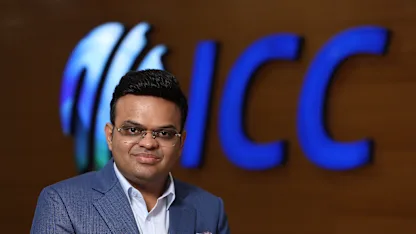
Cricket, too, has not been spared. The International Cricket Council has repeatedly adjusted venues and formats in ways widely perceived as accommodating political pressure from powerful boards, particularly India’s. During the 2025 Champions Trophy hosted by Pakistan, India refused to travel, citing security and political reasons. The ICC responded by shifting India’s matches to neutral venues in the UAE under a hybrid model.
Similar dynamics have shaped several Asia Cups, relocated or restructured due to India’s reluctance to engage bilaterally with Pakistan, even if those tournaments formally fall under the Asian Cricket Council.
The controversy deepened during the ICC Men’s T20 World Cup 2026, co-hosted by India and Sri Lanka. Bangladesh requested that its group-stage matches be moved from Indian venues to Sri Lanka, citing security and political concerns amid strained relations. The ICC rejected the request after assessments found no credible threat.
When Bangladesh refused to travel, it was replaced by Scotland, effectively excluding Bangladesh from the tournament. No penalties were imposed, and as a conciliatory gesture, Bangladesh was promised hosting rights for an additional ICC event in the future. Yet comparisons were inevitable: why was India accommodated with neutral venues, while Bangladesh was shown the door?
The episode exposed the fragile intersection of power, politics and principle in modern sport. Pakistan’s response, however, stood out. By initially expressing solidarity with Bangladesh and questioning the apparent double standards, Pakistan sought to free the game from monopoly and moral selectivity. Though it later agreed to play for the broader stability of the tournament, the gesture of support was widely acknowledged by Bangladesh as an act rooted in fairness rather than expediency.
Sport, at its best, is a civilising force. It teaches restraint in victory, dignity in defeat, and respect across divides that politics often deepens. When politics colonises the playing field, the game loses not only its innocence but its credibility. The lesson from Lahore in 1989 still resonates; rules matter, but spirit matters more. If international sport wishes to retain its moral claim, it must rediscover the courage to apply principles evenly and allow the game, once again, to breathe free of influence.



 Today's E-Paper