
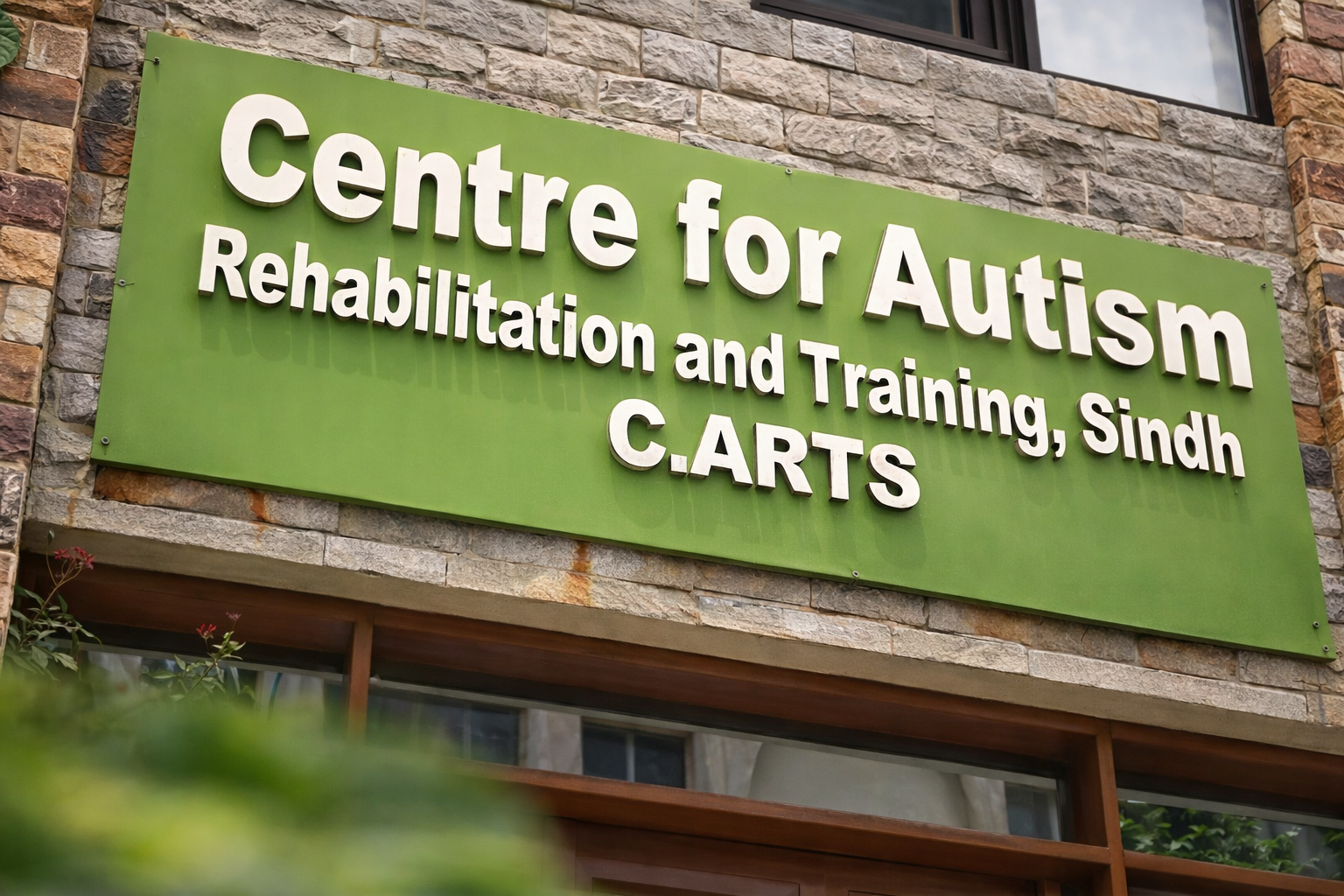
The Sindh government has expanded its public autism support network to seven free Centres for Autism Rehabilitation and Training (C-ARTS) across the province, widening access to specialised therapy, education and vocational services for children and adults on the autism spectrum.
Launched in 2018 as Pakistan’s first government-run autism care institute, C-ARTS now operates multiple facilities, including its flagship centre in Karachi and a dedicated adult-focused unit in Korangi. Officials say the expansion is aimed at strengthening inclusive healthcare and bridging long-standing gaps in specialised services.
What C-ARTS provides
The Centres for Autism Rehabilitation and Training offer speech therapy, behavioural therapy, special education, occupational therapy and vocational training at no cost to families.
The programme is designed to support early intervention for children while also providing skill development and employment-focused services for adults. According to officials and programme supporters, nearly 600 individuals are currently benefiting from services across the network.
Leadership and expansion
The initiative has been publicly supported by Pakistan Peoples Party Chairman Bilawal Bhutto Zardari. The Karachi facility is described by officials as one of the largest public-sector autism centres in South Asia.
The newer Korangi centre focuses on adult diagnostics and job readiness programmes, reflecting a shift toward long-term inclusion beyond childhood support.
Why the expansion matters
Autism care in Pakistan has historically been limited and largely concentrated in private institutions, often placing services out of reach for lower- and middle-income families.
By expanding free, government-run facilities province-wide, Sindh aims to improve accessibility, early diagnosis and long-term rehabilitation outcomes.
Officials say the goal is to integrate therapy, education and vocational pathways under one structured system, making autism services more consistent and widely available.

 Today's E-Paper