
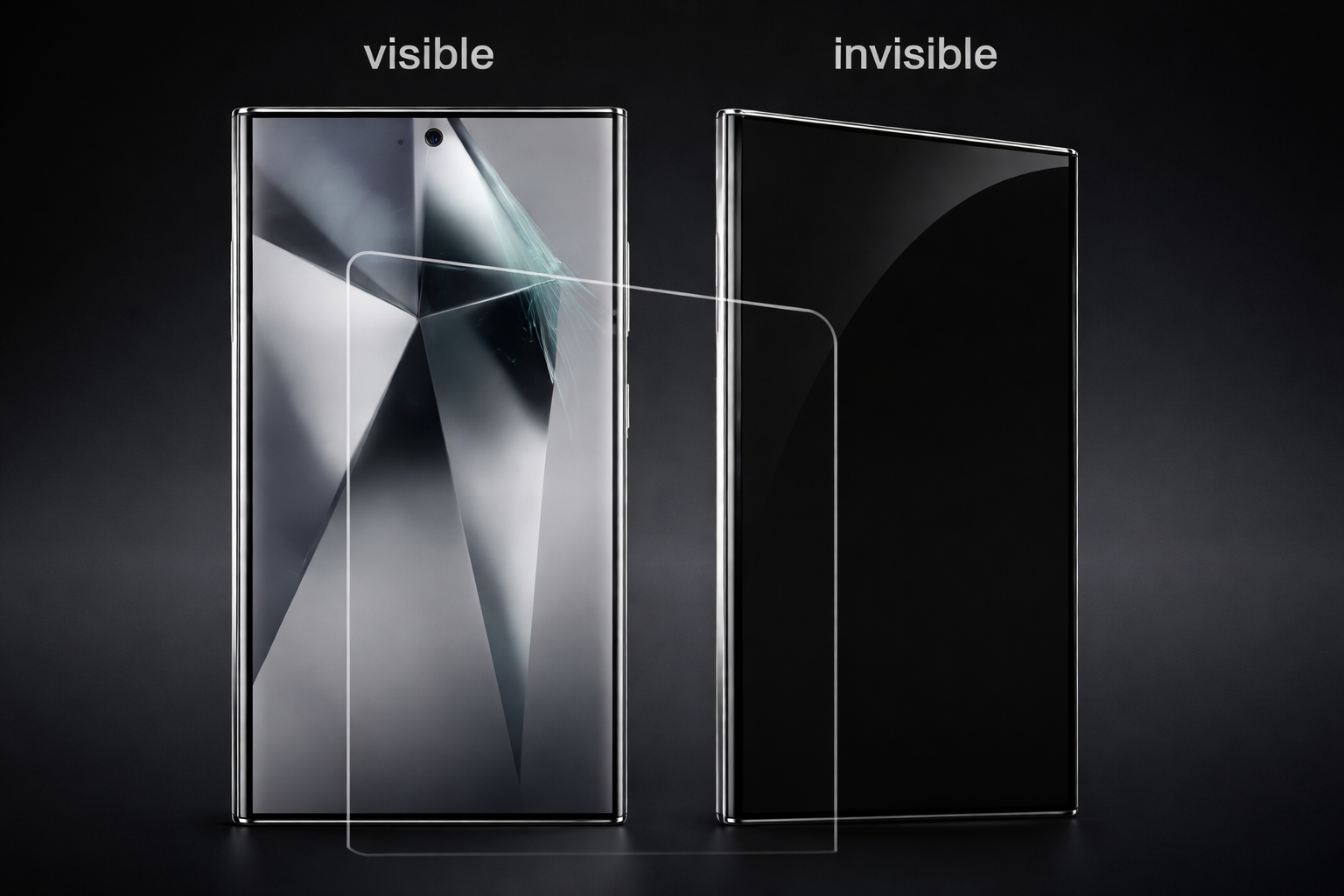
Samsung has confirmed a new privacy-focused display technology for its upcoming Galaxy smartphones, introducing an app-level privacy system that goes beyond traditional screen filters and addresses growing concerns over on-screen data exposure in public spaces.
In a blog post released ahead of the expected 2026 Galaxy launch cycle, Samsung said the feature — described as a new “privacy layer” — will debut on future Galaxy devices and is designed to electronically control what content is visible on the screen, depending on viewing angle, app usage, and user settings. The capability is widely expected to arrive first on the Galaxy S26 Ultra.
Smartphone privacy has become a practical security issue as devices are increasingly targeted not just for their hardware value, but for access to personal data, financial apps, and authentication credentials. Physical privacy screen protectors currently offer some protection, but they often reduce usability and make it difficult to share content intentionally.
Samsung’s new system replaces physical filters with a hybrid software-and-hardware solution. Instead of blurring the entire screen when viewed from an angle, users can choose which apps or screen elements are protected and when the privacy mode activates. The feature can be enabled manually or configured to operate automatically during specific activities, such as entering passwords or opening sensitive applications.
According to early reports from technology publications, the display remains fully visible when viewed head-on, but dims or obscures content when viewed from the sides, top, or bottom. Because the system is electronically controlled, users can toggle the privacy effect on and off, avoiding the permanent limitations of physical filters.
Also Read: Samsung signals AI-first smartphone push for 2026 after record earning
The privacy controls are expected to be integrated into the device’s Display settings, with a Quick Settings toggle and optional app-based automation. This approach could allow users to keep lock-screen notifications enabled while reducing the risk of shoulder-surfing in public environments.
Samsung has not confirmed whether the feature will extend to other Galaxy models. Current indications suggest the privacy display relies on specialized hardware, making the Galaxy S26 Ultra the most likely launch device. If confirmed, the move would position Samsung’s flagship line at the forefront of smartphone privacy innovation as concerns over data exposure continue to rise.





 Today's E-Paper