
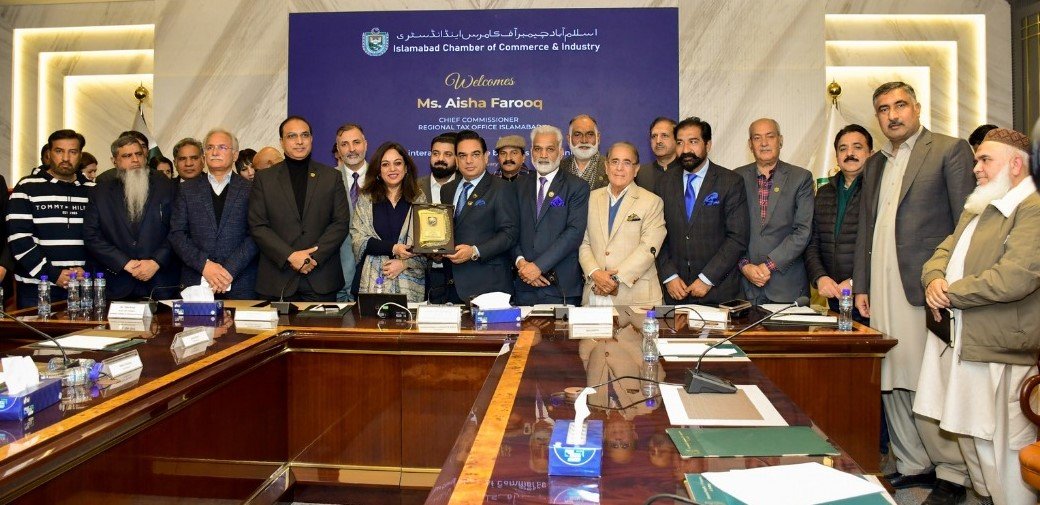
ISLAMABAD, Jan 13 — Chief Commissioner Regional Tax Office (RTO) Islamabad, Ms. Ayesha Farooq, visited the Islamabad Chamber of Commerce and Industry (ICCI) for an interactive session with business leaders to address tax-related challenges and explore avenues for improved cooperation. The meeting focused on easing compliance, enhancing facilitation, and strengthening institutional engagement between tax authorities and the business community.
Ms. Farooq acknowledged the economic contributions of traders and industrialists, emphasizing the importance of sustained dialogue for resolving taxpayer concerns. She announced that RTO Islamabad will initiate sector-specific consultations to address industry challenges and reaffirmed her office’s commitment to resolving genuine issues through collaborative efforts.
During the session, the Chief Commissioner briefed participants on the Federal Board of Revenue’s digital initiatives, including the integration of Point of Sale (POS) systems. She noted that POS would streamline return filing and improve transparency. She also assured that the business community would be consulted on the finalization of the Valuation Table and that the process for including non-residents in the Active Taxpayers List (ATL) would be expedited.
ICCI–DRAP session highlights importance of 2-D barcoding for safe medicines
ICCI President welcomed the delegation and presented key proposals aimed at improving tax facilitation and the ease of doing business. He highlighted difficulties faced by overseas Pakistanis in obtaining non-resident certificates, claiming refunds, and filing returns to maintain ATL status. He proposed the appointment of Inland Revenue Service attachés at Pakistani embassies in Saudi Arabia, UAE, UK, USA, and major EU countries to assist the diaspora with tax matters.
The Chamber also called for the restoration of the Commissioner (Appeals) office, citing its absence as a barrier to timely resolution of tax disputes. ICCI recommended designating the Additional Commissioner (Headquarters) at RTO Islamabad as the focal point for grievance redressal to streamline communication and improve responsiveness.
Small traders raised concerns about the pace of POS integration, urging a phased and consultative approach due to financial and operational constraints. ICCI leadership echoed these views, stressing that enforcement measures should be aligned with ground realities, particularly for small and medium enterprises.
Chairman ICCI Founder Group Sheikh Tariq Sadiq emphasized the need for business-friendly reforms. Senior Vice President Tahir Ayub and Vice President Irfan Chaudhry expressed optimism that continued engagement would lead to improved compliance and a stronger partnership between stakeholders.
The RTO delegation included senior officials from the Inland Revenue Service, while the session was attended by ICCI office bearers, former presidents, executive members, and representatives from various markets and industry groups.




 Today's E-Paper