
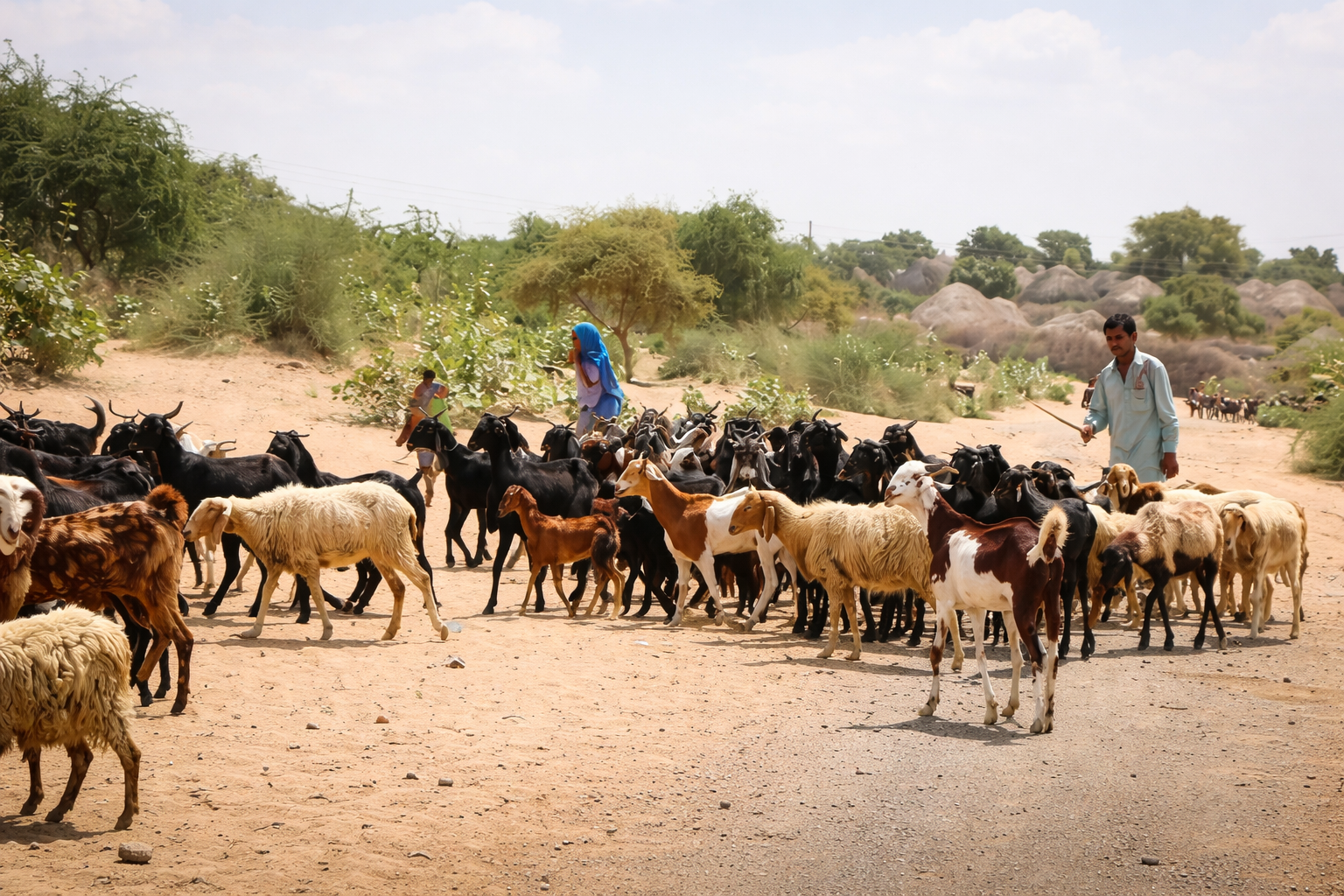
ISLAMABAD — A Rs1.28 billion project has been proposed to strengthen livestock, arid agriculture and ecosystem management in the Thar region, aiming to improve livelihoods and climate resilience in one of Pakistan’s most vulnerable areas.
The five-year initiative, titled Thar Community Actions for the Management of Sustainable Ecosystem, Livestock, Land and Livelihood (THAR CAMELL), will be implemented by the Pakistan Agricultural Research Council at its Arid Zone Research Institute in Umerkot, according to official documents reviewed by Wealth Pakistan.
The project will run from July 2026 to June 2031, covering Umerkot district and 30 union councils in Tharparkar, with a focus on strengthening local agriculture and supporting low-income communities.
Livestock improvement and farmer support
The project centres on improving livestock productivity, strengthening disease control systems and enhancing genetic quality of indigenous breeds. It also aims to train more than 2,000 farmers to support better farming practices and income generation.
Officials say the initiative is designed to reduce poverty by equipping local communities with skills, tools and access to modern agricultural techniques.
Research, infrastructure and land development
Plans include establishing dedicated livestock and horticulture research facilities at the Arid Zone Research Institute in Umerkot. The project will also convert around 180 acres of wasteland into productive land and develop demonstration sites for arid farming practices.
Research activities will cover livestock management, water use, land improvement and crop development suited to desert conditions.
Technology and value-added production
Modern agricultural technologies, including diagnostics, genotyping and tracking systems, will be introduced to improve efficiency and monitoring. The project also includes value addition measures such as processing facilities for dried vegetables and Ber to support exports.
Laboratories for soil, water and plant testing, along with livestock services and biotechnology support, will help guide farmers and improve crop yields.
Climate resilience and sustainability
Environmental measures include afforestation, arid horticulture and rainwater recharge systems to strengthen ecosystem sustainability in desert conditions.
Also read: Punjab launches initiative to promote indigenous livestock breeds
The project aligns with national development frameworks and agricultural growth strategies, aiming to expand digital and research-driven farming solutions while improving long-term food security and rural livelihoods.





 Today's E-Paper