
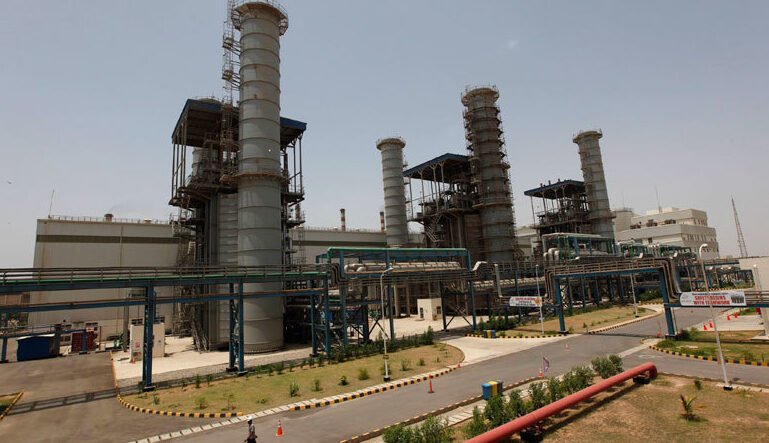
ISLAMABAD: Pakistan’s power sector is facing a growing RLNG supply crunch as tensions in the Middle East disrupt liquefied natural gas availability, sharply reducing fuel supplies to electricity generation plants.
Officials said the country’s power plants currently require around 300 million cubic feet per day (MMCFD) of re-gasified liquefied natural gas (RLNG), but Sui Northern Gas Pipelines Limited (SNGPL) is supplying only about 130 MMCFD. The reduced supply has forced authorities to concentrate the available gas at a single power plant to maintain operations.
Government sources said RLNG availability could decline further in the coming days, potentially dropping to about 85 MMCFD between March 20 and March 30.
Supply disruption linked to regional conflict
Officials attribute the shortage to developments in the Gulf region, where Qatar has reportedly suspended LNG production following attacks on gas fields during the ongoing regional conflict.
Sources said Qatar has declared force majeure on LNG supply contracts, meaning neither side will face financial liability under the existing agreements.
The disruption has created uncertainty for Pakistan’s energy supply, as LNG imports play a key role in fueling several of the country’s most efficient power plants.
Key RLNG power plants affected
Pakistan operates three major combined-cycle power plants that rely on RLNG for electricity generation. These facilities were developed between 2015 and 2018 to address the country’s energy shortages and operate at thermal efficiencies exceeding 61 percent.
The Bhikki Power Plant in Sheikhupura, with a capacity of 1,180 megawatts, began commercial operations in May 2018. The Haveli Bahadur Shah Power Plant in Jhang has a capacity of 1,230 megawatts and also started operations in 2018. The Balloki Power Plant in Kasur, with a capacity of 1,223 megawatts, began commercial operations in July 2018.
Any reduction in RLNG supply affects the operational capacity of these facilities and may require alternative fuel sources.
Also Read: Iran conflict disrupts oil supply, raising energy concerns for Pakistan
Government exploring alternative fuel options
Officials said the government has discussed importing spot LNG cargoes to meet power sector demand. However, current spot market prices of around $17 to $18 per MMBTU make this option financially difficult.
Under such circumstances, authorities may have to rely on alternative fuels such as Residual Furnace Oil (RFO), which could increase electricity generation costs.
On March 11, 2026, the Oil and Gas Regulatory Authority (OGRA) imposed a temporary ban on the export of locally produced furnace oil. The restriction will remain in place until clearance is granted by the Prime Minister’s Committee on Petroleum Prices Monitoring, citing concerns linked to the regional security situation.
Load shedding not planned yet
Despite the supply challenges, officials said the government has not yet decided to implement load shedding.
However, energy sector sources warned that prolonged disruption in RLNG supply could eventually force authorities to impose limited electricity outages if generation capacity declines significantly.
Some officials said consumers might accept short outages, but higher electricity prices resulting from the Fuel Charges Adjustment (FCA) mechanism could face public resistance.
Monitoring of energy supply situation
Data shows that SNGPL supplied around 400 MMCFD RLNG to power plants in January 2026, all of which was consumed.
Electricity generation from RLNG reached 2,002 gigawatt-hours during the month, accounting for about 2.9 percent of total power generation at an average cost of Rs19.93 per unit. This was higher than January 2025, when RLNG generation stood at 1,542 gigawatt-hours.
Officials said a high-level committee headed by Finance Minister Muhammad Aurangzeb is closely monitoring the energy supply situation and regularly briefing the prime minister and relevant authorities.



 Today's E-Paper