
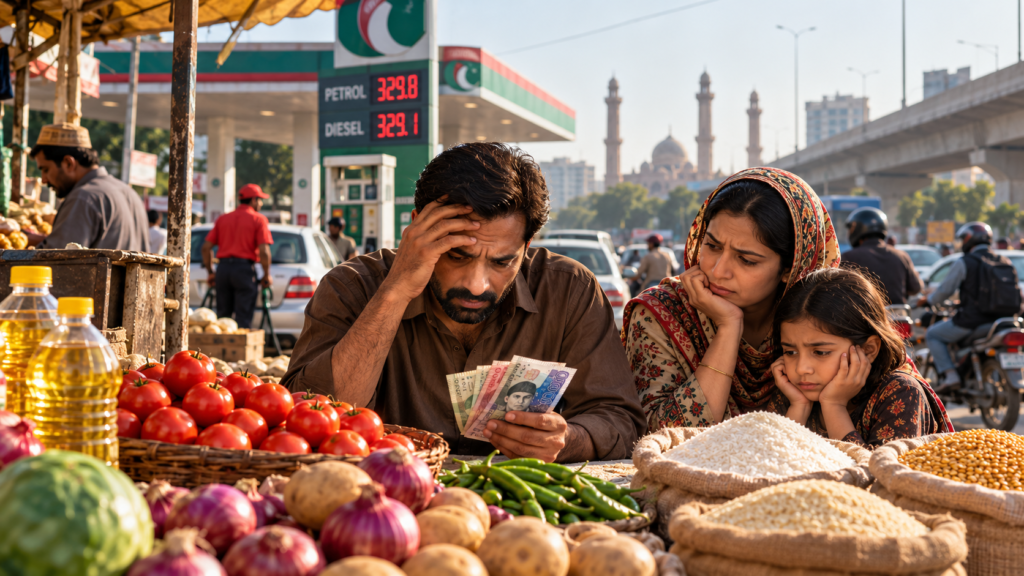
LAHORE, October 25, 2026: Rising fuel prices, increasing food costs and higher transportation expenses have added to the financial difficulties of households across Pakistan, with the prices of essential commodities rising during the first four months of the current fiscal year.
According to official figures, petrol prices increased by 26.11% and high-speed diesel prices by 26.39% between the beginning of fiscal year 2026-27 and October.
Meanwhile, the Sensitive Price Indicator (SPI), which tracks changes in the prices of 51 essential commodities, recorded a cumulative increase of 5.81% between July 2 and October 22, 2026.
The figures highlight growing pressure on salaried employees, daily-wage workers, pensioners and low-income families struggling to manage household expenses.
Higher petroleum prices have also increased transportation costs, affecting passenger services, freight movement and the transportation of agricultural produce.
Essential commodities become more expensive
According to the Pakistan Bureau of Statistics (PBS), the Sensitive Price Indicator stood at 354.24 points on July 2, 2026, before climbing to 374.84 points on October 22.
The increase of 20.60 points represents a 5.81% rise in the index over the period.
The latest weekly figures also showed that inflation measured through the SPI increased by 0.65% during the week ending October 22.
On a year-on-year basis, the indicator was 11.85% higher than during the corresponding week of 2025.
The figures suggest that households continue to face rising costs for essential goods despite variations in the prices of individual food items.
LPG and chicken record sharp weekly increases
The latest PBS data showed that prices of 19 essential commodities increased during the week ending October 22, while 12 items became cheaper and 20 remained unchanged.
Liquefied petroleum gas (LPG) recorded the sharpest increase, with prices rising by 22.44% during the week.
Chicken prices increased by 12.20%, onions became 4.19% more expensive, and flour prices rose by 1%.
However, the increase was not uniform across all food categories. Prices of some vegetables, pulses and eggs declined during the same period.
The mixed price movements indicate that while certain essential goods became cheaper, substantial increases in fuel, LPG and selected food items continued to affect household spending.
Higher transport costs add to financial pressure
The sharp increase in petrol and diesel prices has added to the cost of transportation, creating additional challenges for consumers and businesses.
Higher fuel expenses affect passenger transport and goods movement, including the distribution of agricultural commodities to urban markets.
For households already managing limited incomes, increases in transportation and energy expenses leave less money available for food and other essential needs.
Salaried workers, pensioners and daily-wage earners remain particularly exposed to these pressures because their incomes may not rise at the same pace as living costs.
The latest inflation figures underline the continuing challenge of managing household expenses as Pakistan enters the remaining months of fiscal year 2026-27.