

The unfolding confrontation in the Middle East has entered a dangerous phase, with the United States and Israel pressing ahead in their campaign against Iran under the banner of Operation Epic Fury. What was initially projected as a decisive show of force is increasingly being viewed as a miscalculation, one that has inflicted heavy civilian casualties and destabilised the global economy without achieving its stated objectives. Reports of schoolchildren killed in Minab have shocked the conscience of the international community, underscoring the human cost of a war that appears to lack both clarity of purpose and a viable exit strategy.
Despite the scale of destruction, Iran has shown no inclination to capitulate. Claims of backchannel communication between Washington and Tehran have been firmly denied by Iranian officials, who point to a deep trust deficit after repeated breakdowns in negotiations. The new Iranian leadership has also rejected overtures, signalling that the path to diplomacy is blocked by the very aggression that has defined recent US policy. In this context, the war risks becoming a prolonged stalemate, draining resources and eroding America’s standing among allies.
The reluctance of European governments to join a coalition against Iran illustrates Washington’s isolation. Germany, Britain, Greece, and other EU states have made clear that they do not view this as their war, while the EU’s foreign policy chief has echoed similar reservations. This lack of support leaves the United States with little more than Israel’s enthusiastic backing, a partnership that has historically favoured escalation over restraint. The assassination of senior Iranian figures, including Ayatollah Ali Khamenei and security chief Ali Larijani, has further hardened Tehran’s resolve and diminished prospects for dialogue.
For the Trump administration, the absence of a coherent strategy is glaring. Calls for allies to help end the blockade of the Strait of Hormuz have been met with indifference, while the broader objective of regime change in Tehran appears increasingly unattainable. The longer the conflict drags on, the greater the risk of regional spillover and economic disruption, particularly in energy markets already under strain.
If Washington is serious about ending this war, the first step must be an immediate ceasefire. Without halting hostilities, no diplomatic track can be revived. The credibility gap created by past betrayals of negotiations means that Iran will not engage unless there is a demonstrable shift in US behaviour. Equally important is the need to rein in Israel’s aggressive tactics, which only deepen mistrust and fuel instability.
The international community, particularly Europe, has a role to play in pressing for de-escalation. By urging restraint and highlighting the economic and humanitarian costs of continued conflict, allies can help steer the United States toward a more pragmatic course. Ultimately, the war has become a liability rather than a solution. Ending it is not just a matter of regional stability but of global security and economic well-being. The bitter pill for Washington may be to accept that this campaign cannot deliver its intended results, and that peace, however difficult, is the only viable exit strategy.




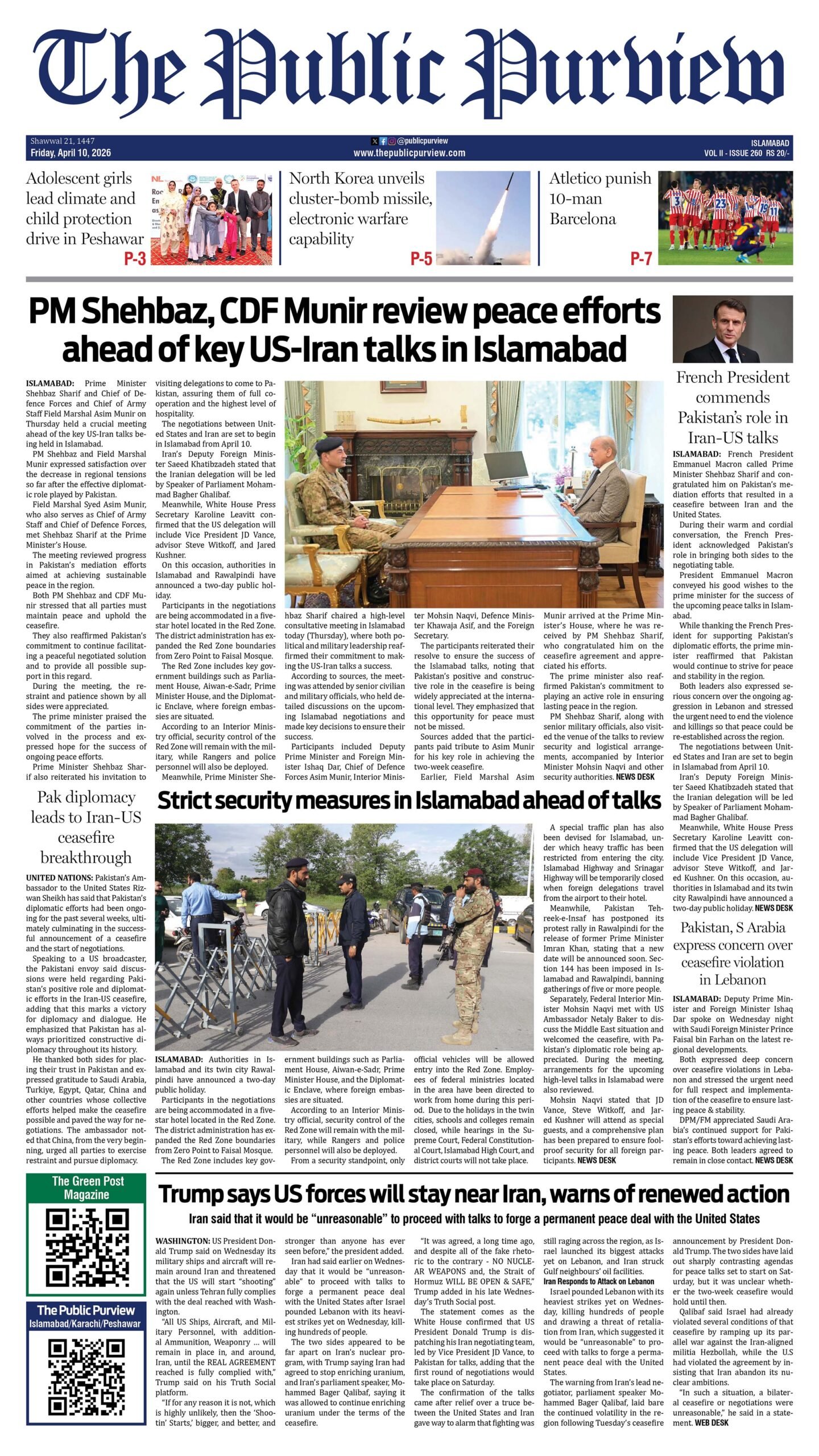 Today's E-Paper