

The Middle East today finds itself at a tense crossroads, with the possibility of renewed American military action against Iran casting a shadow over regional stability. Yet, in a striking development, several of Iran’s neighbours have made clear that they will not allow their territory to be used for aggression against Tehran. This stance is significant, as many of these states host thousands of American troops, and they understand that any involvement in fresh hostilities would make their soil and bases immediate targets for Iranian retaliation.
Saudi Arabia’s Crown Prince Mohammed bin Salman recently held discussions with Iranian President Masoud Pezeshkian, where the latter emphasized that Iran welcomes any initiative that can prevent war. The Saudi leader, in turn, assured that his country’s territory would not be used against Iran. This exchange reflects a growing recognition among regional powers that escalation would bring devastating consequences for all. The United Arab Emirates has also publicly stated that it will not permit its facilities to be used against its Gulf neighbour, reinforcing the collective reluctance to be drawn into confrontation.
Turkey has joined this chorus of caution, with its foreign minister declaring that a new American war would be “wrong” and urging diplomacy as the only viable path forward. These voices highlight a regional consensus: there is no appetite for another destructive conflict, particularly one that could engulf the entire Middle East.
Despite these appeals, the rhetoric from Washington remains combative. President Donald Trump, in remarks delivered on Wednesday, warned that unless Iran agrees to negotiations, “the next attack will be far worse” than last year’s joint US-Israeli military action. Such statements suggest that diplomacy is not currently at the forefront of American policy, raising fears that confrontation may be deliberately pursued.
Iranian officials have repeatedly made clear that any foreign aggression will be met with full force. They have also warned that neighbouring countries allowing their land or airspace to be used for attacks would be treated as hostile parties. This position underscores the risks for regional states, many of whom are already uneasy about the prospect of being dragged into a war not of their choosing.
The reality is that apart from Israel, few in the region appear willing to support another military adventure. The United States, therefore, must reconsider its threatening posture and regime change ambitions, and instead adopt a more conciliatory approach. Iran has signaled its readiness to engage in dialogue, but as its foreign minister recently stated, negotiations “under threat cannot succeed.”
There remains a window of opportunity to avert disaster. If Washington listens to regional voices and approaches Tehran with respect, the possibility of peace still exists. However, influential hardliners within the American establishment continue to push for confrontation. Should their counsel prevail, the consequences could be catastrophic, as Iran would view such aggression as an existential struggle. The region, already burdened by instability, cannot afford another war. The choice before the United States is stark: pursue diplomacy or risk igniting a conflagration that will engulf all.


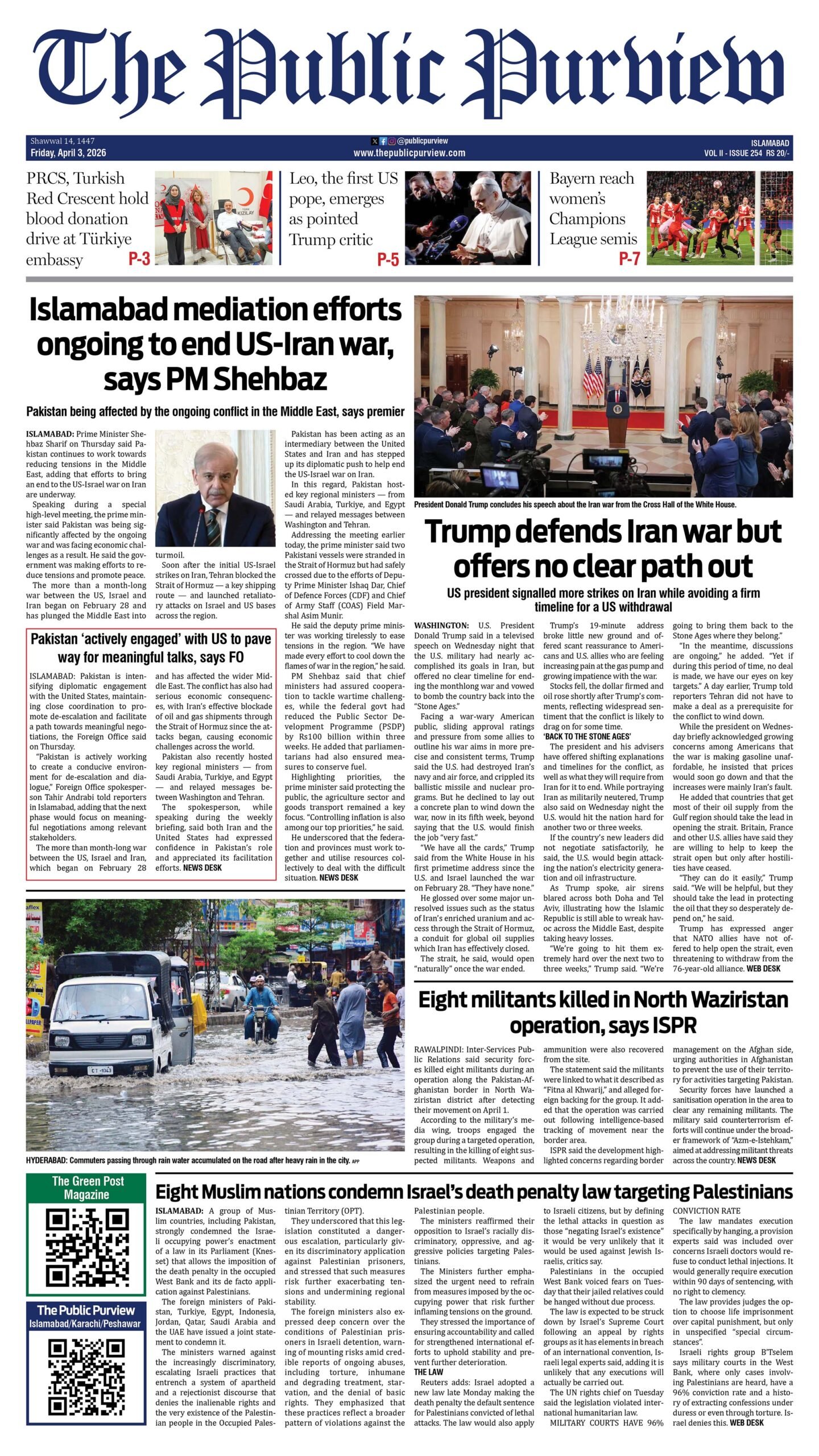 Today's E-Paper