
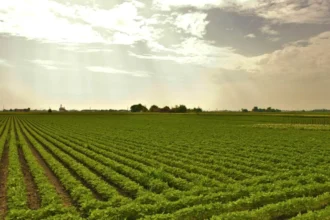
LAHORE: Punjab Kharif crops are on track to deliver a strong harvest this year. Official figures and expert assessments show that only 8 to 10 percent of maize, paddy, and cotton suffered flood damage.
The Provincial Disaster Management Authority (PDMA) said floodwaters hit 1.8 million acres out of 20 million acres of farmland. Twenty-seven districts saw flooding, but experts stress that Punjab’s cropping system displayed resilience.
Dr. Anjum Ali Buttar, Consultant at the Punjab Agriculture Department and former Director General of Agriculture Punjab, explained that timing played a key role. “Only 8 to 10 percent of maize, paddy, and cotton may be lost. Fortunately, most crops survived because they were already at maturity stage,” he said.
By September, the bulk of Punjab Kharif crops reach the harvest stage. This maturity allowed maize, rice, and cotton to endure floodwaters without heavy yield losses. “That is why food and cash crops did not suffer major setbacks,” Dr. Buttar added.
He said high market prices for maize and paddy are balancing reduced yields. “Farmers are unlikely to face serious financial losses this year,” he noted.
Farmers across Punjab are working hard to recover. As floodwaters receded, the provincial government launched a survey to assess damage. “The Punjab government has announced compensation, which will be paid after the survey results,” Dr. Buttar said.
A major post-flood concern is sowing of the Rabi crop, especially wheat. But experts remain confident that wheat sowing will stay on schedule. Dr. Buttar emphasized that the floods will not delay this crucial food crop.
Fresh figures from the Pakistan Cotton Ginners Association (PCGA) support this outlook. Cotton production jumped 40 percent year-on-year, reaching 2.004 million bales by mid-September. Punjab contributed 690,000 bales, a 28 percent rise over last year. Despite local damage, Punjab’s cotton belt has delivered strong output.
Punjab’s rice crop, a key export earner, is also resilient. Dr. Muhammad Akhtar, former Director of the Rice Research Institute (RRI), Kala Shah Kaku, said both Basmati and non-Basmati paddy will see stable yields. “Harvesting of coarse varieties is already underway, while Basmati harvest begins in mid-October,” he said.
Dr. Akhtar noted that only Narowal, Sialkot, and Kasur faced notable damage. Most of Punjab’s rice remained safe. “Rice production will equal, or even surpass, last year’s level,” he stressed.
He expressed hope that Pakistan’s rice exports could exceed $3 billion in 2025. Strong production and international demand support this goal. He also urged farmers to dry-harvest paddy properly to avoid aflatoxin contamination, ensuring export quality.
Read climate-related news here: https://greenpost.com.pk/


 Today's E-Paper