
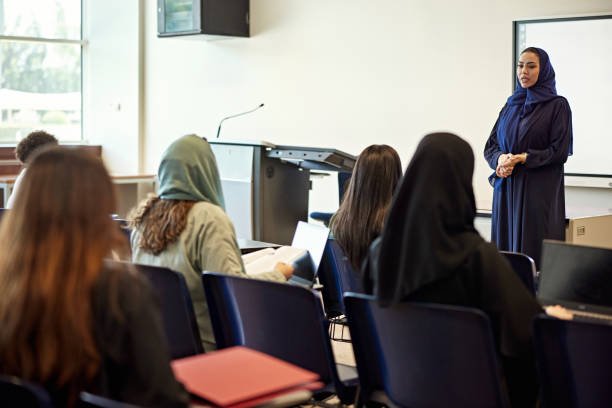
LAHORE — The Punjab government has directed all teachers in public sector schools across the province to wear black gowns during school hours, introducing a standardized dress code aimed at promoting professional identity and uniformity.
A notification issued by the Punjab School Education Department on February 19 stated that the new dress code will take effect from February 23. District Education Authority (DEA) chief executive officers have been instructed to ensure implementation across Punjab.
According to the notification, teaching is a profession that commands respect, authority and moral leadership, and the dignity of educators is reflected in their conduct and appearance. The department stated that a defined dress code would enhance respect for teachers and foster discipline and equality in schools.
Policy details
Under the policy, all teachers — regardless of gender, cadre or district — must wear a black gown during school hours over modest and culturally appropriate attire.
Male teachers are advised to wear shalwar kameez in plain, sober colors or dress pants and a shirt, along with closed shoes or strapped sandals. Female teachers are instructed to wear dignified attire with closed shoes or modest sandals.
Heads of institutions will be responsible for day-to-day compliance, while district authorities will monitor enforcement.
Teachers raise concerns
However, teachers’ representative bodies have criticized the move.
Rana Liaqat, General Secretary of the Punjab Teachers Union (PTU), said many schools lack basic facilities and questioned the practicality of wearing gowns in such environments. He noted that a suitable gown could cost between Rs3,000 and Rs4,000, and that teachers may need more than one.
He suggested that instead of gowns, the government could introduce alternatives such as waistcoats over shalwar kameez or formal shirts and trousers for school-level teachers, while reserving gowns for higher education institutions.
The union also raised concerns about storage, security and financial burden, urging the government to provide financial assistance if the policy is to be implemented.
The Punjab School Education Department termed the directive “most important” and instructed authorities to enforce it in letter and spirit.




 Today's E-Paper