

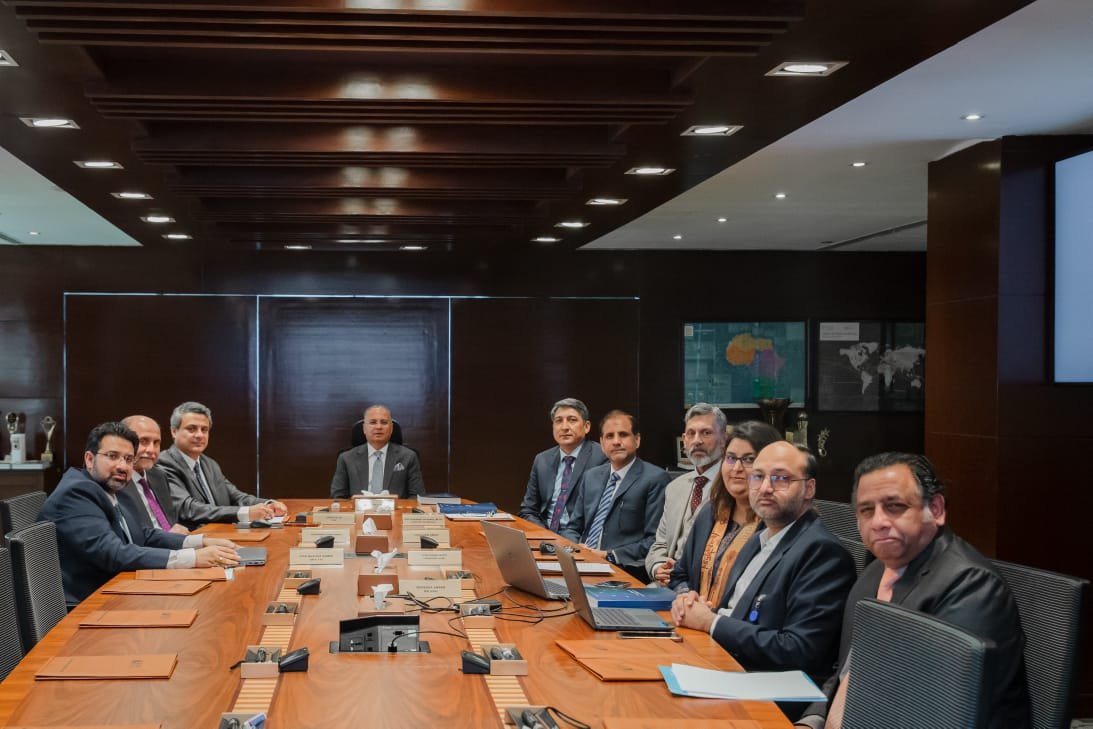
Public service delivery across Khyber Pakhtunkhwa has shown notable improvement as Chief Minister Sohail Afridi chaired the fifth District Service Delivery Conference under the Good Governance Roadmap, reviewing progress, issuing key directives and formally launching District Service Delivery 2.0 to further strengthen governance at the district level.
During the conference, the chief minister directed the Health Department to complete the creation of 700 doctors’ posts for Basic Health Units and Rural Health Centers within one week. He said strengthening primary healthcare facilities is critical to reducing unnecessary pressure on tertiary hospitals and ensuring accessible healthcare at the local level.
Focusing on disaster preparedness, Sohail Afridi instructed all relevant departments to prepare advance flood contingency plans and submit them to district administrations. “We cannot stop natural disasters, but with better planning and coordination, losses can be minimised,” he said, while also ordering the establishment of an effective emergency communication mechanism at tourist destinations to ensure timely responses during emergencies.
Also Read: China tests geotextile blankets to slow glacier melting in targeted areas
Addressing municipal services, the chief minister directed the Local Government Department to complete and activate street lights on major roads within two weeks. He also ordered priority-based appointments of wardens in Dar-ul-Aman shelters to ensure the safety and dignity of vulnerable women. He instructed authorities to complete the Swat Dar-ul-Aman building at the earliest and to prepare separate schemes for permanent buildings for other shelters across the province.
Sohail Afridi stressed that protecting vulnerable segments of society and ensuring access to essential services remain top priorities of the provincial government. Emphasising a humane approach to governance, he directed that public complaints must not remain unresolved for more than two weeks. “Good conduct heals wounded hearts, while poor behaviour causes further harm,” he remarked, urging officials to deal with citizens empathetically.
Officials briefing the conference reported that under the first phase of the District Service Delivery initiative, an overall performance rate of 87 percent was achieved, while the complaint resolution rate improved by 20 percent. So far, 70 percent of complaints have been resolved, with work underway on the remaining cases. The chief minister directed that all pending complaints be addressed without further delay.
Under the first phase, seven sectors covering 19 public service areas were targeted, encompassing more than 1,100 public service facilities across the province. Deputy commissioners conducted around 5,000 visits, while third-party monitors carried out over 4,000 inspections. Administrative secretaries held 30 open courts and visited 94 facilities, while commissioners organised 18 open courts and inspected 49 facilities.
The briefing further revealed that Rs10 billion around 45 percent of the total allocation was released for implementation during the first phase. Of this, Rs4.4 billion was allocated under Maintenance and Repair (M&R) and Rs5.6 billion under the Sustainable Development Initiative (SDI). All districts have submitted their beautification plans, while the creation of 700 doctors’ posts is in its final stages.
The conference also marked the formal launch of District Service Delivery 2.0, under which ten additional public service areas have been included. These include secondary hospitals, colleges, water supply, waste collection, manholes, irrigation canal desilting, sarais, tehsil offices, service delivery centres and district beautification plans. In the second phase, 29 public service areas will be monitored through 285 performance indicators with defined targets and timelines.
Concluding the conference, Chief Minister Sohail Afridi said that while progress in governance is encouraging, sustained focus, accountability and citizen-centric service delivery are essential to achieving long-term improvements across Khyber Pakhtunkhwa.




 Today's E-Paper