
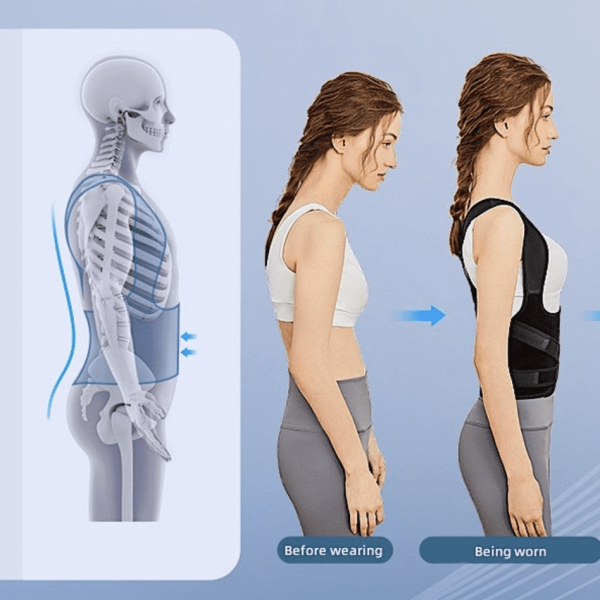
Spending long hours at a computer, looking down at a phone or laptop, and remaining in the same position for extended periods can contribute to poor posture. Posture corrector belts are often marketed as a simple way to keep the shoulders and back aligned, but they are not a permanent solution on their own.
Experts say a posture corrector is better understood as a reminder rather than a treatment. When the shoulders move forward, the straps can create gentle resistance that alerts the wearer to the change in position and encourages them to adjust their posture.
Does a posture corrector permanently improve posture?
Wearing a posture corrector may temporarily help keep the shoulders back and make a person more aware of slouching. However, there is not strong scientific evidence that simply wearing a belt teaches the body to maintain correct posture permanently.
For longer-term improvement, posture awareness needs to be combined with regular movement, appropriate workstation setup and exercises that support strength and mobility.
Changing position is also important
Maintaining one rigid sitting position for hours is not necessary for good posture. Ergonomic guidance from the US Occupational Safety and Health Administration (OSHA) recommends regularly changing position during work, even when the sitting position appears correct.
Taking short movement breaks and avoiding prolonged periods in the same position can help reduce the physical strain associated with desk-based work.
What to look for in a posture corrector
If you choose to use one, a posture corrector should be adjustable and fit the body comfortably. It should provide a gentle reminder when the shoulders begin to round forward rather than force them aggressively backward.
It is generally more appropriate to view the device as a limited-use posture reminder rather than continuous physical support.
Your workstation matters too
Poor posture is not always caused by the body itself. An unsuitable workstation can also encourage a person to lean forward.
A chair should provide adequate support for the lower back. Where necessary, an appropriate lumbar cushion may provide additional support.
The computer screen should be positioned directly in front of the user, with its top generally at or slightly below eye level. A screen positioned too low can encourage repeated forward bending of the neck and upper body.
Exercise can support better posture
External support alone is unlikely to address all factors associated with poor posture. Regular movement, strength exercises and mobility work can form a more comprehensive approach.
People experiencing persistent pain, numbness, weakness or other symptoms should seek advice from a qualified healthcare professional rather than relying solely on a posture corrector.