
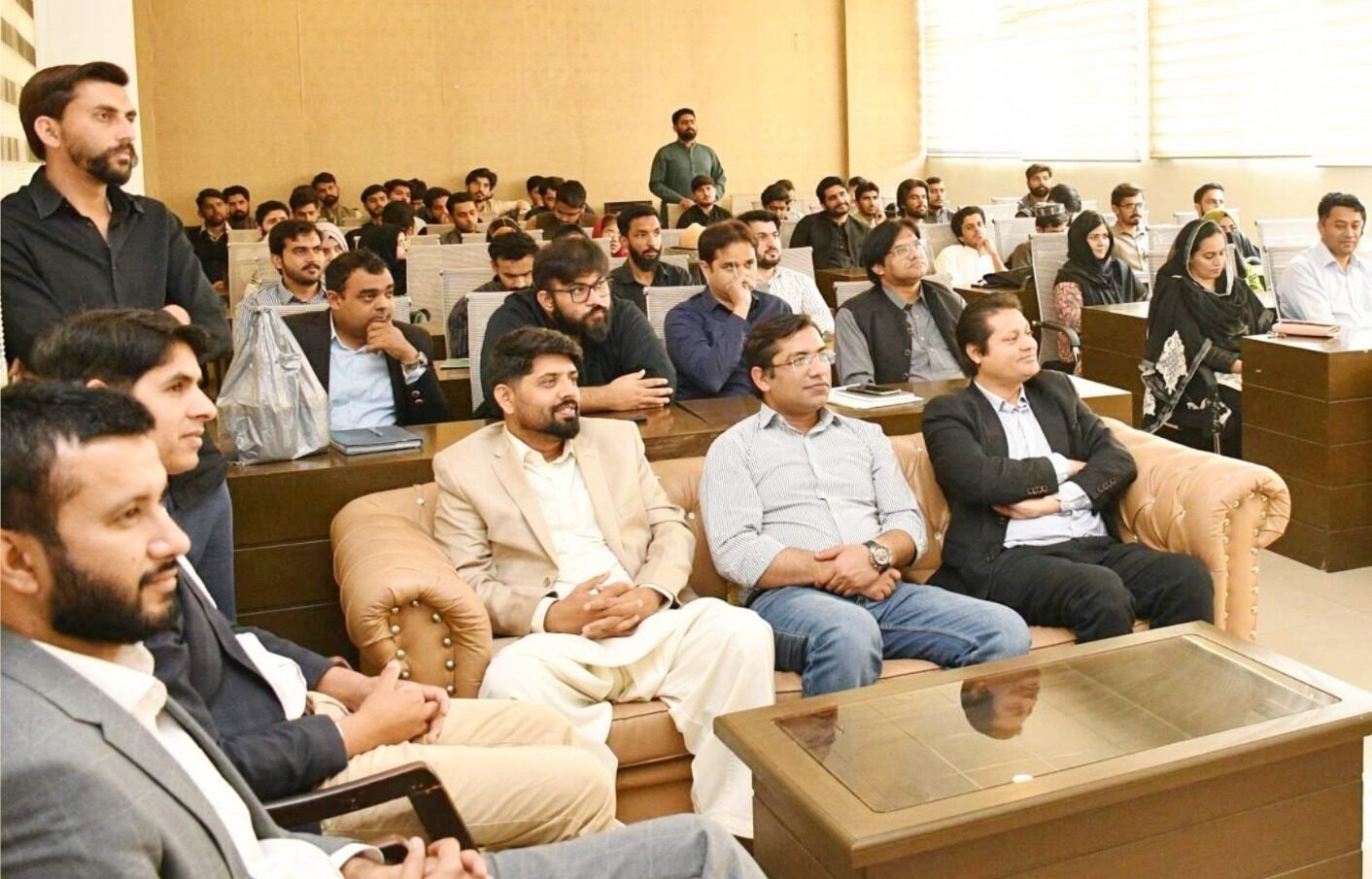
RAWALPINDI — Student-driven research initiatives can help develop innovative and practical solutions for sustainable agriculture, Vice Chancellor of Pir Mehr Ali Shah Arid Agriculture University Rawalpindi (PMAS-AAUR) Prof. Dr. Qamar-uz-Zaman said during an international seminar on climate-smart irrigation and precision agriculture held at the university.
The seminar brought together researchers, faculty members and students to discuss new approaches to water management and agricultural sustainability, particularly in the context of climate change and water scarcity affecting Pakistan’s farming sector.
The event was organized by the Center for Precision Agriculture (C4PA) at PMAS-AAUR under the theme “Supplemental Irrigation through Decision Support System in the Face of Climate Change: A Sustainable Approach.”
Dr. Qamar-uz-Zaman said universities have a key role in addressing agricultural challenges through applied research and innovation. He noted that academic research projects led by students can contribute practical ideas and technologies that benefit farming communities while also strengthening academic learning.
He added that such initiatives could help improve agricultural productivity and support long-term food security in Pakistan.
Focus on climate-smart irrigation
The keynote presentation was delivered by Dr. Saad Javed Cheema, an agricultural engineer from the University of Prince Edward Island in Canada. He highlighted the growing role of digital irrigation monitoring systems in modern agriculture.
Dr. Cheema explained that technologies capable of tracking evapotranspiration and soil moisture in real time can help farmers schedule irrigation more accurately. By applying water only when crops require it, farmers can reduce water waste and improve crop performance.
He said data-driven irrigation systems can support both water conservation and crop resilience in regions increasingly affected by climate variability.
Role of precision agriculture
Speakers at the seminar also discussed the importance of precision agriculture technologies in modern farming systems. These approaches combine digital sensors, satellite data, and data analysis tools to help farmers manage crops more efficiently.
According to participants, such technologies can help reduce input costs, improve resource management, and support sustainable crop production in areas facing environmental and climate pressures.
The Center for Precision Agriculture at PMAS-AAUR is working on research, training, and outreach programs aimed at promoting modern farming technologies and climate-resilient agricultural practices.
University officials said these initiatives are intended to support Pakistan’s agricultural sector by encouraging innovation and strengthening sustainable farming systems.




 Today's E-Paper