
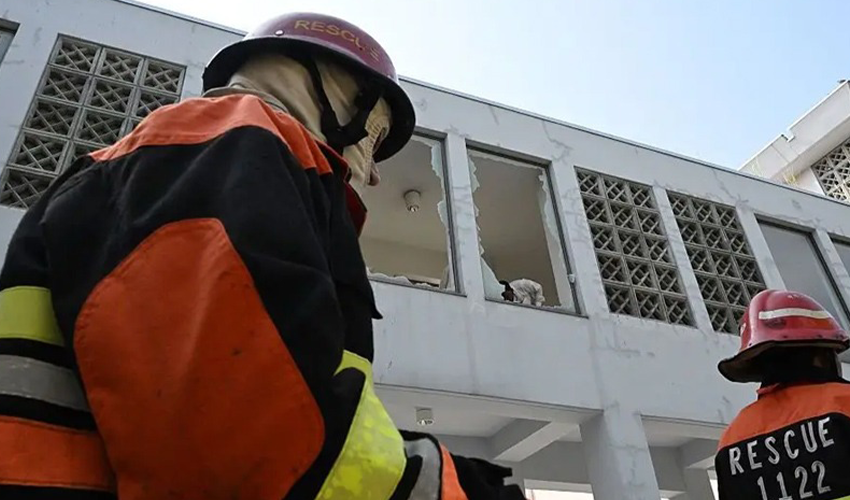
ISLAMABAD: A government inquiry into the fatal fire at the Pakistan Institute of Medical Sciences (PIMS) neonatal nursery has identified an electrical fault as the most likely source of the blaze, while finding that available evidence does not support claims that frontline staff abandoned the newborns during the emergency.
The fire on August 26 killed 14 newborn babies, while one infant survived. The inquiry committee examined the circumstances surrounding the fire, the response by hospital staff and emergency services, and the safety measures in place at the nursery.
Electrical Fault Identified as Most Likely Cause
The inquiry reviewed forensic evidence, CCTV footage, call records, engineering and maintenance documents, medical and incident records, duty rosters and witness statements as part of its investigation.
According to the report, the strongest technical evidence pointed toward an electrical fault involving wiring near an air-conditioning unit. However, earlier official reporting on the inquiry had cautioned that the precise ignition source had not been conclusively established and that forensic examination was still required before identifying a specific appliance or component as the definitive cause.
The report also identified several factors that contributed to the severity of the tragedy, including combustible material, oxygen availability, overcrowding and limited evacuation capacity in the neonatal unit.
The 10-bed unit was treating 15 medically critical newborns when the fire occurred, according to the inquiry.
CCTV Shows Staff Attempted Rescue
CCTV footage reviewed by the committee showed that the emergency developed rapidly, with visible signs of fire emerging at about 6:38:15am. The footage showed frontline staff responding as conditions inside the nursery deteriorated.
Charge Nurse Nasreen Akhtar and Staff Nurse Razia Noreen attempted to rescue the babies, with security guard Maria Saleem also involved in the response. Nurse Razia managed to bring one newborn out of the nursery and subsequently attempted to re-enter the area.
The inquiry found that the available evidence did not support generalized allegations that frontline medical and nursing staff simply abandoned the babies.
Fire Safety and Emergency Preparedness Under Scrutiny
While the committee did not find evidence that frontline staff abandoned the newborns, it identified serious institutional shortcomings in fire safety and emergency preparedness.
The inquiry found that PIMS did not have a detailed, nursery-specific fire and evacuation procedure that had been properly communicated, trained and rehearsed. It also raised concerns about emergency exits, fire detection and alarm systems, evacuation arrangements and emergency notification procedures.
The report said some emergency exits and access routes were reportedly locked or obstructed, while the Capital Emergency Services separately described fire and life-safety arrangements as inadequate and compromised. Firefighters reportedly had to force open certain access points.
The inquiry also noted that an earlier fire-safety review had identified deficiencies before the nursery tragedy, raising questions over whether recommended corrective measures had been adequately implemented.
The findings have led to calls for stronger fire-safety systems, independent technical audits, emergency drills and improved evacuation procedures at high-risk hospital units. The inquiry process has also resulted in action against officials over alleged institutional and administrative failures.