


A Flag Carrier That Once Led the Region
This is the same Pakistan International Airlines that, in its golden years, not only served the region but helped shape global aviation standards. Airlines such as Emirates, now regarded as world leaders, benefited in their formative stages from the expertise and training provided by PIA professionals. There was a time when Pakistan stood as a pioneer in aviation, and PIA was the pride that carried this reputation across continents.
When Pakistani Wings Reached the World
At its peak, PIA operated flights to more than 178 destinations worldwide. Its network was extensive, schedules were reliable, and service quality was considered a benchmark. Pakistani pilots, engineers, and cabin crew were respected internationally, and every takeoff of a PIA aircraft symbolized national competence, confidence, and ambition on the global stage.
A Fleet on Paper Versus Reality
Today, the reality is starkly different. Official records list a fleet of 34 aircraft, yet only 18 are operational. This discrepancy is not a statistical error but the outcome of years of neglect, poor maintenance planning, financial mismanagement, and the steady erosion of institutional discipline. The numbers expose a deeper crisis than mere balance sheets.
An Era Defined by Professional Leadership
Looking back, names such as Air Marshal Noor Khan and Air Marshal Asghar Khan evoke an era when PIA was run with professionalism, merit, and strategic clarity. During those years, the airline was profitable, disciplined, and internationally respected. Decisions were driven by expertise rather than political pressure, making today’s decline appear even more painful by comparison.
Governments That Failed to Deliver Reform
There is little doubt that successive governments failed to restore PIA to its rightful position. Each administration focused on short,term political gains while avoiding difficult structural reforms. When reforms were announced, they were either half,hearted or abandoned altogether, leaving the airline trapped in a cycle of decay.
Political Interference as Institutional Poison
PIA’s downfall cannot be understood without acknowledging persistent political interference. Key positions were filled based on loyalty rather than competence, undermining professionalism and accountability. Over time, the airline drifted away from operational logic and became a tool for personal, political, and bureaucratic interests.
Privatisation and the Question of Moral Authority
One of the most troubling aspects of the privatisation process is the involvement of former prime ministers who later became chairmen of private airlines. The issue is not private sector participation itself, but the moral contradiction it represents. When in power, why was the revival of the national airline not treated as a priority?
Power First, Business Later
This pattern reflects a broader mindset in which national institutions are ignored during periods of authority and later viewed as business opportunities once power is lost. Such behavior severely damages public trust and raises serious questions about sincerity, accountability, and national responsibility.
Interest Without Effective Policy
Former Prime Minister Nawaz Sharif also expressed interest in PIA at various stages, yet no solid, long,term strategy emerged to rescue the airline. The difference between rhetorical concern and decisive action became increasingly evident as opportunities for reform slipped away.
Changing the Name Without Fixing the System
More recently, Punjab Chief Minister Maryam Nawaz suggested purchasing PIA and rebranding it as “Air Punjab.” While this proposal may appear innovative, it avoids the core issue. The crisis is not about branding, it is about governance, accountability, and professional management.
Can a Province Fix a National Failure?
A fundamental question remains unanswered, can a provincial government resolve the deep,rooted problems of a national airline? Without institutional reform, transparency, and independent oversight, changing ownership or name will merely mask the problem rather than solve it.
A State Unable to Protect Its Own Assets
The most alarming aspect of this saga is that a state has failed to protect one of its most important national institutions, yet continues to claim progress and stability. This contradiction erodes credibility and fuels public disillusionment with governance as a whole.
Mismanagement Embedded Over Decades
Unnecessary hiring, political appointments, corruption, and poor planning steadily hollowed out PIA. Instead of addressing these issues, each era compounded them, turning manageable problems into an existential crisis.
The Silent Suffering of Employees
Thousands of PIA employees have paid the heaviest price. Many devoted their entire professional lives to the airline, only to face uncertainty, delayed salaries, damaged reputations, and an unclear future. Their struggle is a human tragedy buried beneath policy debates.
Headlines That Feel Like National Shame
When newspapers report bidding processes and sale negotiations on their front pages, the news feels less like economic reform and more like national humiliation. It signals how far a symbol of pride has fallen.
A Reflection of the Governance Model
PIA’s collapse mirrors the broader governance culture in which institutions become subordinate to individuals, policies lack continuity, and each new administration dismantles the work of the previous one.
The Reforms That Never Happened
Had there been genuine intent to save PIA, the path was clear, transparent accountability, professional leadership, modern restructuring, and gradual recovery. Instead, the easier option of divestment was chosen to escape responsibility
Questions the Public Has Every Right to Ask
Citizens are justified in asking that if a national airline could not be saved, what hope remains for other public institutions? The strength of a state lies in its institutions, and when they weaken, national claims of progress ring hollow.
A Failure Beyond Parties and Personalities
This crisis cannot be blamed on one political party or individual. It is the result of decades of flawed priorities, poor decisions, and collective neglect. Without acknowledging this shared failure, meaningful reform remains impossible.
From Silence to Public Accountability
The moment demands that citizens move beyond silence. Transparency must be demanded, accountability enforced, and national assets protected through public pressure. History consistently shows that silence accelerates decline.
A Precedent That Could Haunt the Future
If PIA is allowed to slip away, it will set a dangerous precedent for other national institutions. What will remain are statements, regrets, and memories. Saving national pride requires courageous, principled action, not slogans, otherwise history will remember us as a nation that auctioned its own legacy.
Read more expert opinions here: https://thepublicpurview.com/blog/
For more stories and insights, visit The Green Post




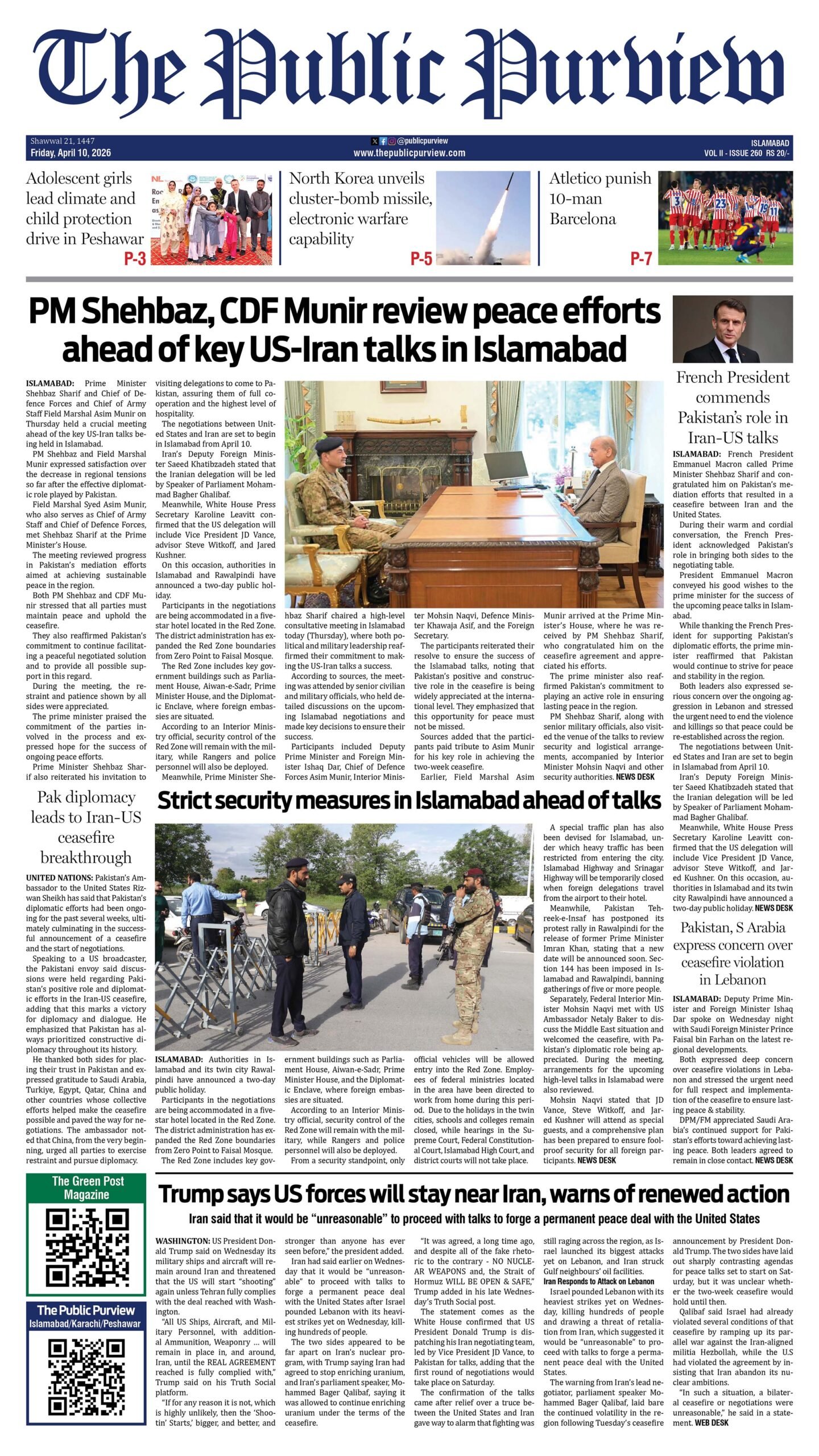 Today's E-Paper