

The government’s abrupt decision to slash petrol prices by Rs80 per litre, reversing an increase announced only a day earlier, has been hailed by some as a relief measure but in reality reflects a deeper weakness in economic governance. This rollback, presented as a populist gesture, underscores the administration’s tendency to react to public pressure rather than pursue consistent and principled policymaking. While the move may temporarily ease the burden on households, it does little to address the structural challenges that continue to fuel inflation and fiscal instability.
The prime minister’s intervention came amid widespread public anger over the earlier hike, which had raised petrol prices by 43 percent and diesel by 55 percent. That increase was undeniably inflationary, feeding directly into transport costs, food prices, and broader expectations of rising living expenses. Yet the reversal is no less destabilising. It distorts market signals, discourages energy conservation, and injects uncertainty into fiscal planning at a time when Pakistan’s economic position is already fragile.
The government’s reliance on blanket relief measures, rather than targeted support for vulnerable groups, is fiscally costly and economically inefficient. Fuel consumption is disproportionately higher among wealthier households, meaning that a significant portion of this subsidy benefits those least in need of assistance. In a country with limited fiscal space, such across-the-board measures risk misallocating scarce resources and undermining the credibility of economic management.
The fiscal consequences are stark. The failure to fully pass on the surge in global energy prices, triggered by the US-Israel war on Iran, has already cost the exchequer Rs129 billion. Reports suggest that the development budget has absorbed a hit of nearly Rs100 billion, diverting funds away from projects critical to growth and public welfare. This reality highlights the unsustainable nature of subsidising fuel: the fiscal gap does not vanish, it merely shifts, ultimately leaving low- and middle-income households to bear the burden through higher taxes, reduced public spending, or renewed inflationary pressures.
Reactive policymaking also sends troubling signals to investors and international partners. It raises doubts about Pakistan’s ability to maintain fiscal discipline and implement coherent reforms. The uncertainty surrounding fuel pricing complicates budgetary planning and undermines confidence in the government’s economic strategy. At a time when Pakistan needs stability to attract investment and sustain growth, such abrupt reversals erode credibility.
If the government is genuinely committed to providing lasting relief, it must move beyond short-term fixes and embrace meaningful reforms. Tax policy needs to be broadened and rationalised to ensure fairness and efficiency. Expenditure must be restructured to prioritise essential services and development projects. Energy pricing should be managed transparently, with targeted subsidies directed toward those most affected by inflation. Only through such measures can Pakistan build a stable and predictable economic framework that protects citizens from future shocks.
The rollback of petrol prices may win temporary applause, but it is no substitute for sound economic management. Relief that is reactive and indiscriminate cannot shield the public from the next wave of inflation. What Pakistan requires is a principled approach that balances fiscal responsibility with social protection, ensuring that scarce resources are used wisely and sustainably.

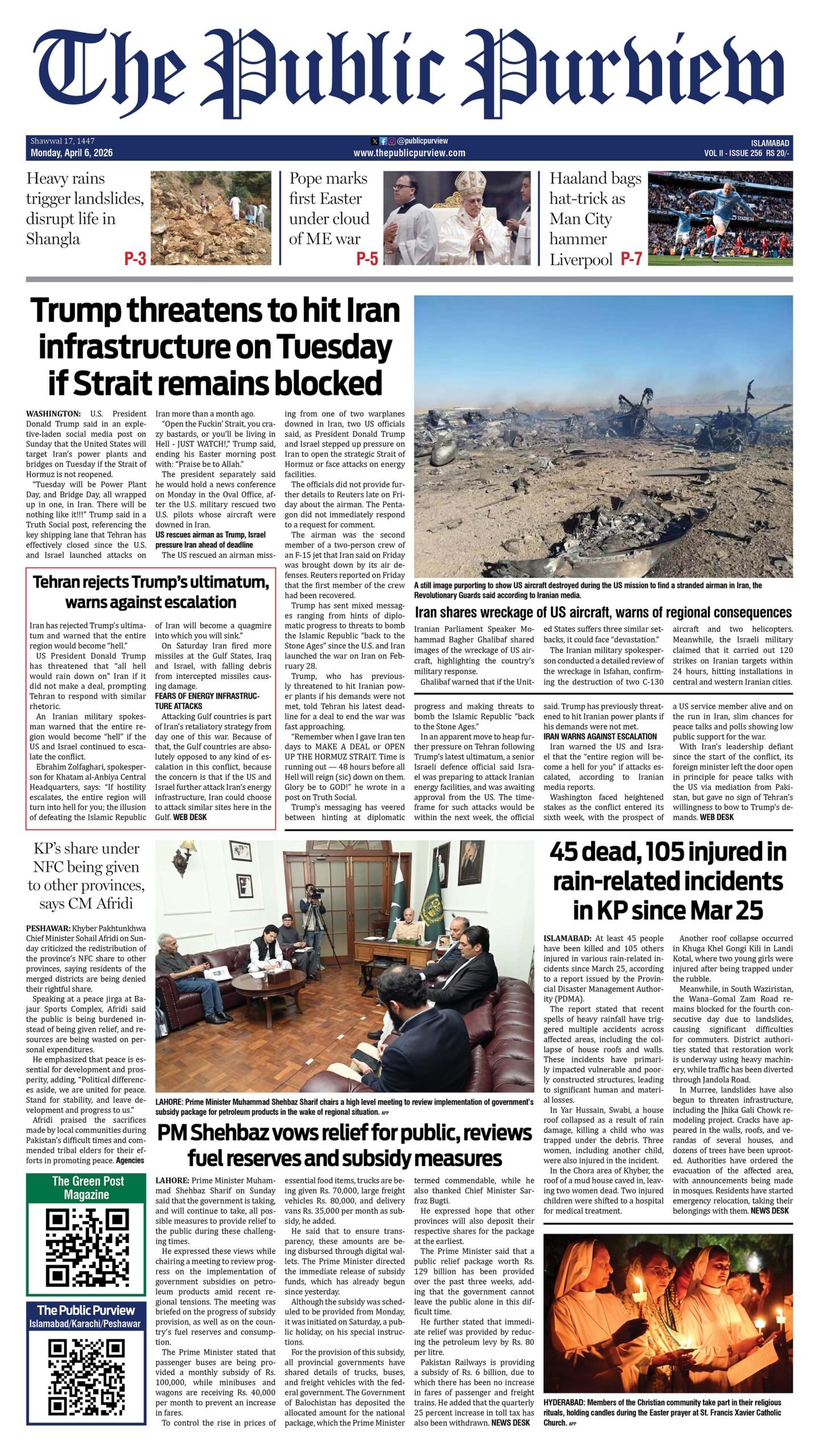 Today's E-Paper