

The Pentagon’s announcement regarding the comprehensive and decisive integration of artificial intelligence into the military structure is not merely a technological advancement; it signals a profound and far-reaching shift in the global balance of power. According to Pentagon Chief Pete Hegseth, the U.S. military is now entering a phase in which algorithms, autonomous systems, and intelligent machines will play a central role in decision-making and in shaping the battlefield, alongside traditional military force. He emphasizes that if the United States is to maintain its military superiority, it must accelerate experimentation, research, and investment, while dismantling bureaucratic obstacles that delay the practical deployment of advanced technologies.
Evolution of warfare and the role of AI
Over the past two decades, the very concept of warfare has gradually evolved. Where military strength once depended primarily on numbers, weaponry, and territorial control, it is now information, speed, and accurate decision-making that have become decisive. Artificial intelligence embodies this transformation, extending the limits of the human mind by delivering analyses in moments that might otherwise take humans hours or even days. The Pentagon’s new strategy acknowledges this reality: future wars will not be fought solely with guns and tanks, but with data, sensors, satellites, and intelligent software.
Integration across military branches
Hegseth’s statement places particular emphasis on integrating AI across all branches of the military. From planning and logistics to intelligence and direct combat, artificial intelligence is expected to make decisions more effective, faster, and more cost-efficient at every level. In logistics, for example, AI can optimize supply chains so that weapons, fuel, and food reach the right place at precisely the right time, reducing waste and delays. Similarly, in the intelligence domain, this technology can analyze millions of images, signals, and reports to identify hidden threats with unprecedented speed and accuracy.
Global competition and ethical concerns
This announcement comes at a time when major global powers increasingly view artificial intelligence as a key instrument for gaining military advantage. China, Russia, and other countries are rapidly developing AI-based defense systems, autonomous drones, and cyber capabilities. In such an environment, the U.S. initiative sends a clear message: America cannot afford to fall behind in this race. However, this competition is accompanied by serious ethical, legal, and humanitarian questions that cannot be ignored without risking grave consequences in the future.
Inching towards Armageddon: shifting world order and global conflict
While AI-driven warfare promises enhanced efficiency and precision, it also raises fundamental concerns about human control and accountability. If autonomous systems are authorized to engage targets, who bears responsibility in the event of an error? Is it safe for humanity to delegate critical decision-making entirely to machines? Pentagon leadership insists that human oversight will be maintained, yet achieving this balance in practice may prove to be a formidable challenge.
Bureaucratic inertia and innovation
Another significant aspect of the announcement is the pledge to eliminate bureaucratic inertia—an implicit admission that traditional governmental structures often fail to keep pace with rapid technological change. In the defense sector, slow decision-making and complex regulations frequently confine innovation to paperwork for years. Should the Pentagon succeed in removing these barriers, it could mark a milestone not only for AI adoption but also for the advancement of other emerging technologies.
Implications for global politics
This development will also have deep implications for global politics. As military power becomes increasingly dependent on intelligent systems, traditional alliances and measures of strength are likely to shift. Smaller states, even with limited resources, may gain the ability to exert disproportionate influence through advanced technology, potentially increasing global instability. In this context, the Pentagon’s strategy is not merely a defense plan but part of a broader geostrategic narrative.
Debate within American society
Within American society, the announcement has sparked vigorous debate. Some view it as an essential step for national security, while others see it as yet another move toward the dehumanization of war. Technology critics argue that when machines begin making decisions, the human conscience that restrains the horrors of war is weakened, increasing the risk of reckless use of force. Hence, it is imperative that transparency, ethical principles, and international law remain central to policy-making.
The future of warfare and human conscience
Ultimately, it can be said that the Pentagon’s new strategy outlines the contours of future warfare, where artificial intelligence will not merely serve as an auxiliary tool but as a decisive factor. This transformation is as inevitable as it is sensitive and complex. If pursued with wisdom, responsibility, and global cooperation, it could help protect human lives and reduce the intensity of conflicts. But if its ethical dimensions are ignored in the pursuit of power, the same technology could become a source of instability and destruction. It is at this very juncture that the true test of modern warfare and human conscience begins.





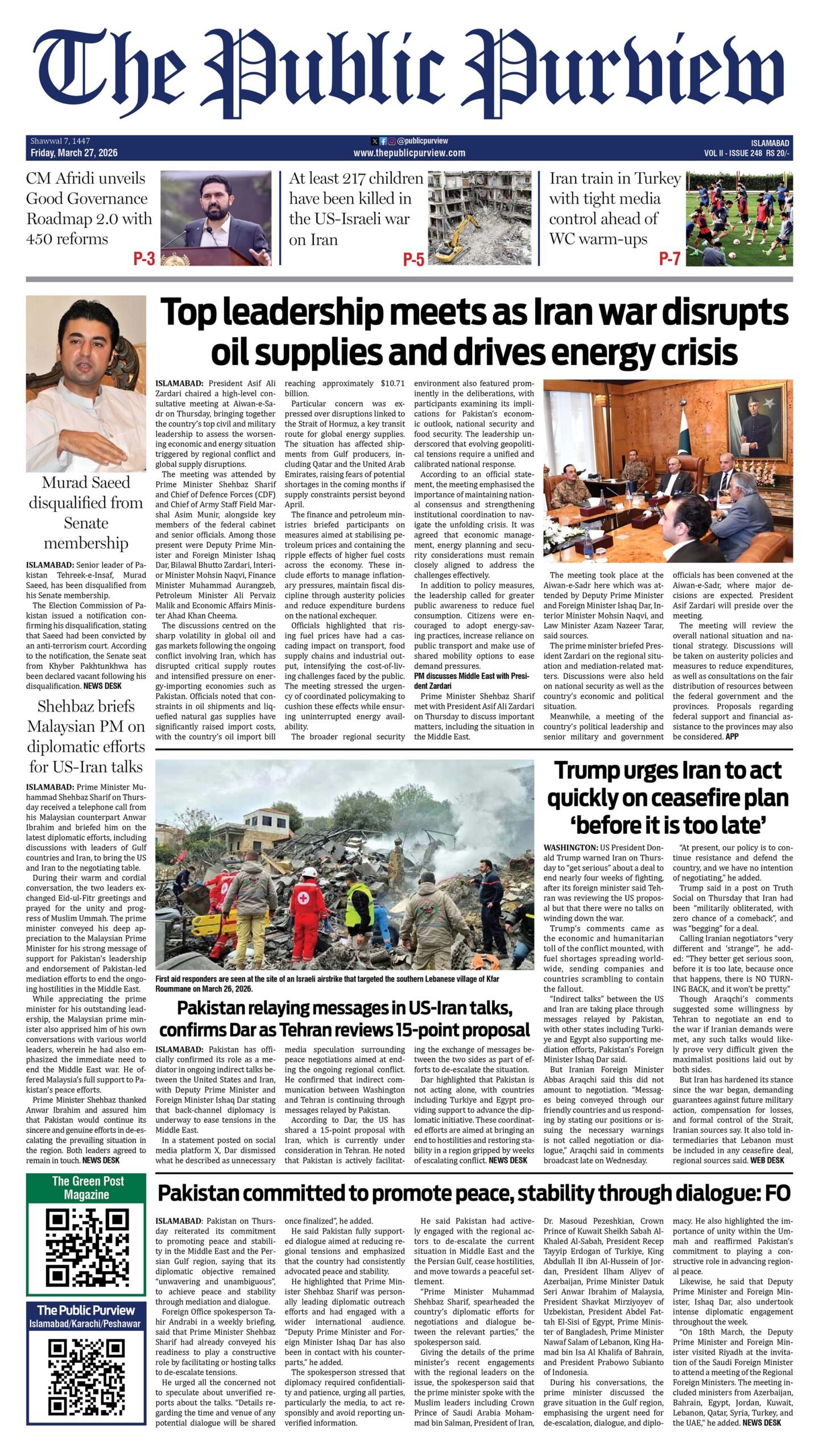 Today's E-Paper