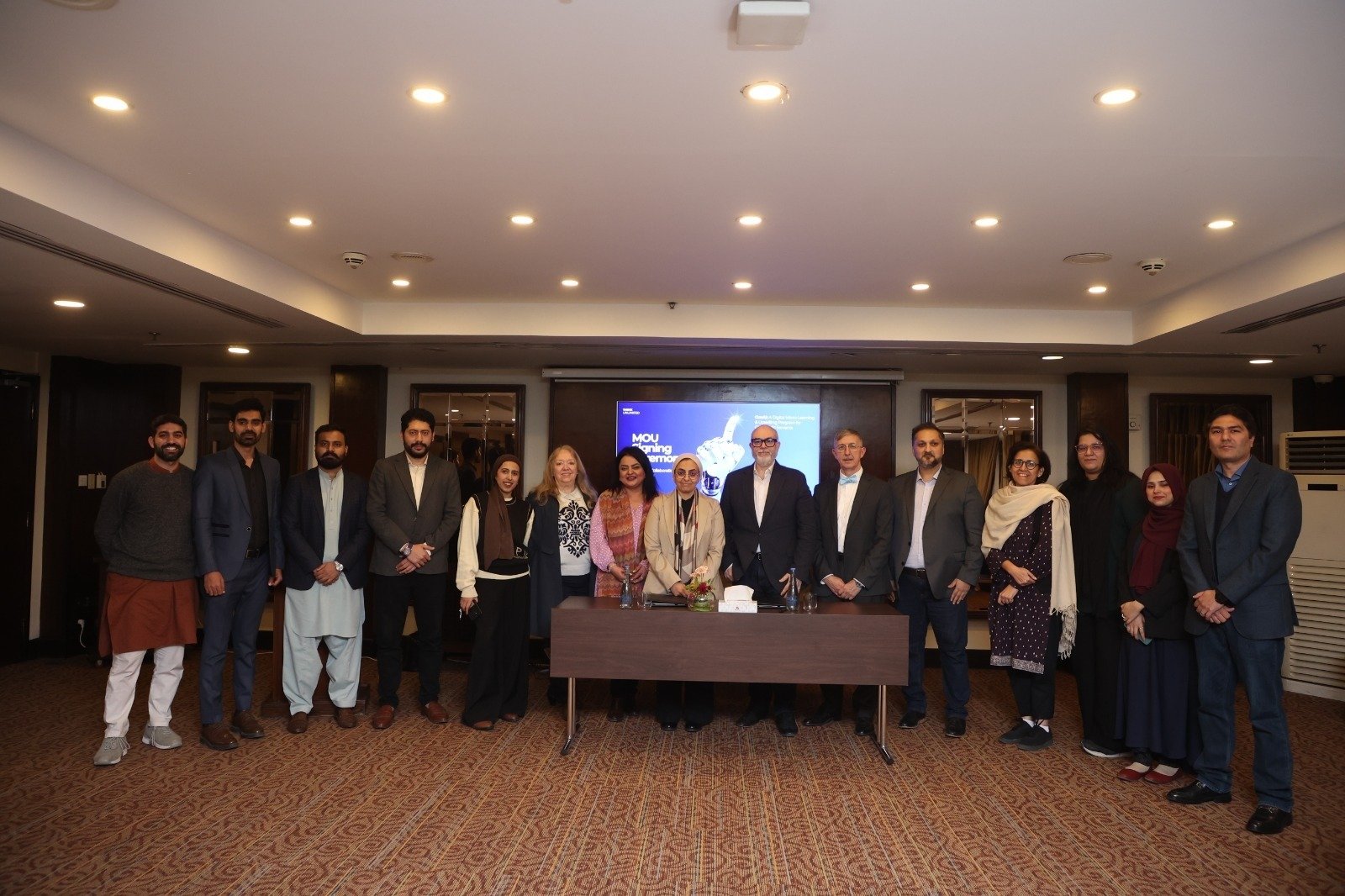
Islamabad: The Pakistan Digital Authority (PDA) and the United Nations University (UNU) have signed a memorandum of understanding to advance Project GovAI, a scalable AI training model aimed at upskilling civil and public servants in Pakistan and potentially beyond.
The agreement, signed during Indus AI Week 2026 in Islamabad, establishes a collaboration focused on developing and testing a digital micro-learning and upskilling programme for government officials. The initiative is designed to help train more than one million Pakistani civil servants in artificial intelligence tools and governance practices by 2028.
Under the MoU, the programme will be coordinated by UNU’s Operating Unit on Policy-Driven Electronic Governance (UNU-EGOV). It will also draw expertise from other UNU institutes, including UNU-IAS in Tokyo, UNU-MERIT in Maastricht, and the UNU Institute in Macao.
Pilot phase and programme design
The partnership includes a time-bound discovery and testing phase to assess curriculum design, learning architecture and digital platform options. Early pilots — such as micro-trainings, webinars and e-learning modules — will be conducted to evaluate localisation, engagement and impact measurement.
The two institutions plan to produce an evidence-based decision package and sustainability model to guide potential nationwide scaling of the programme. Officials said the project aligns with Pakistan’s five-year Digital Master Plan, which prioritises institutional capability to deliver secure and efficient digital public services.
Broader economic context
The collaboration comes amid growing global focus on artificial intelligence and economic transformation. The International Monetary Fund has stated that AI could significantly improve productivity and economic growth. Separate industry analyses estimate generative AI could contribute between $2.6 trillion and $4.4 trillion annually to the global economy and potentially increase global GDP by around 7% over time.
Officials from both sides said the longer-term goal is to assess whether GovAI can evolve into a reusable digital public good. This could include modular learning pathways, implementation playbooks and governance frameworks that other countries may adapt for responsible AI capacity building in government institutions.
Shaza Fatima Khawaja, Federal Minister for Information Technology and Telecommunication, said the initiative aims to strengthen practical AI skills across Pakistan’s public sector to improve service delivery and support economic development.
Mohammad J. Sear, Vice Chairperson of the PDA, said the programme would help equip the civil service with technical and governance capabilities needed to implement digital reforms.
Tshilidzi Marwala, Rector of UNU, said building public sector capacity to use AI responsibly is important for advancing the Sustainable Development Goals and strengthening global cooperation.
Delfina Soares, Director of UNU-EGOV, said sustainable digital transformation depends on governance structures and institutional capacity, not technology alone.




 Today's E-Paper