
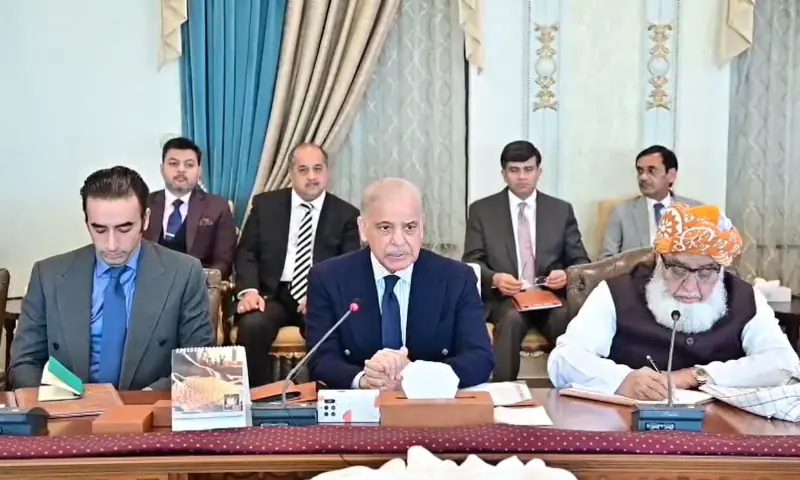
ISLAMABAD: Leaders of Pakistan’s parliamentary parties were given an in-camera briefing on the regional security situation on Wednesday, with participants emphasizing the need for national unity and political consensus amid evolving challenges in the region.
The briefing, chaired by Prime Minister Shehbaz Sharif at the Prime Minister House, focused on developments along the Pakistan-Afghanistan border, ongoing security operations, and the broader Middle East conflict involving Iran and regional powers.
The meeting began shortly after 11:30 a.m. and lasted more than two hours. According to a statement from the Prime Minister’s Office (PMO), participants were briefed on the Pakistan-Afghanistan situation, hostilities in Iran, the Middle East and the Gulf region, as well as Pakistan’s diplomatic engagements.
Parliamentary leaders representing various political parties shared their views during the session. The PMO said attendees underscored the importance of maintaining unity and a coordinated national approach in response to the current regional environment.
Participants also appreciated Pakistan’s diplomatic efforts aimed at promoting peace and stability and suggested further steps for future policy coordination.
The statement said all participants reaffirmed their commitment to the eradication of terrorism in Pakistan and welcomed the government’s initiative to consult the broader political leadership on national security issues.
Focus on security operations and regional tensions
Discussions during the briefing also included the ongoing Operation Ghazab-ul-Haq, which targets militant hideouts along the Pakistan-Afghanistan border.
Officials provided updates on counterterrorism efforts and the broader security landscape as Pakistan continues operations aimed at disrupting cross-border militant networks.
The session also addressed the implications of rising tensions in the Middle East, particularly the hostilities involving Iran and their potential impact on regional stability.
Political leadership attends briefing
Prominent political figures present at the meeting included Pakistan Peoples Party Chairman Bilawal Bhutto-Zardari and Jamiat Ulema-i-Islam (F) chief Maulana Fazlur Rehman.
Leaders from several other parties also attended, including Khalid Maqbool Siddiqui of the Muttahida Qaumi Movement-Pakistan, Abdul Aleem Khan of the Istehkam-i-Pakistan Party, Khalid Hussain Magsi of the Balochistan Awami Party and Chaudhry Salik Hussain of the Pakistan Muslim League-Quaid.
The briefing was also attended by senior parliamentary officeholders including Senate Chairman Yousaf Raza Gilani, National Assembly Speaker Sardar Ayaz Sadiq, Senate Deputy Chairman Syedal Khan Nasar and National Assembly Deputy Speaker Ghulam Mustafa Shah.
Cabinet members present included Deputy Prime Minister and Foreign Minister Ishaq Dar, Information Minister Attaullah Tarar, Law Minister Azam Nazeer Tarar, Planning Minister Ahsan Iqbal and Parliamentary Affairs Minister Tariq Fazal Chaudhry.
Pakistan pursuing diplomatic engagement on Iran conflict
Following the meeting, Prime Minister’s Adviser on Political Affairs Rana Sanaullah shared details of the discussions during a television interview.
He said Pakistan’s diplomatic efforts are focused on encouraging dialogue that could lead to an agreement to end the conflict involving Iran.
According to Sanaullah, Pakistan has been engaging regional actors and encouraging restraint, including efforts to prevent further escalation involving Gulf countries.
He added that if attacks on Gulf states stop and regional countries support efforts for de-escalation, there could be a greater possibility of reaching an agreement to end hostilities.
Officials indicated that consultations and diplomatic outreach would continue as Pakistan monitors developments across the region.

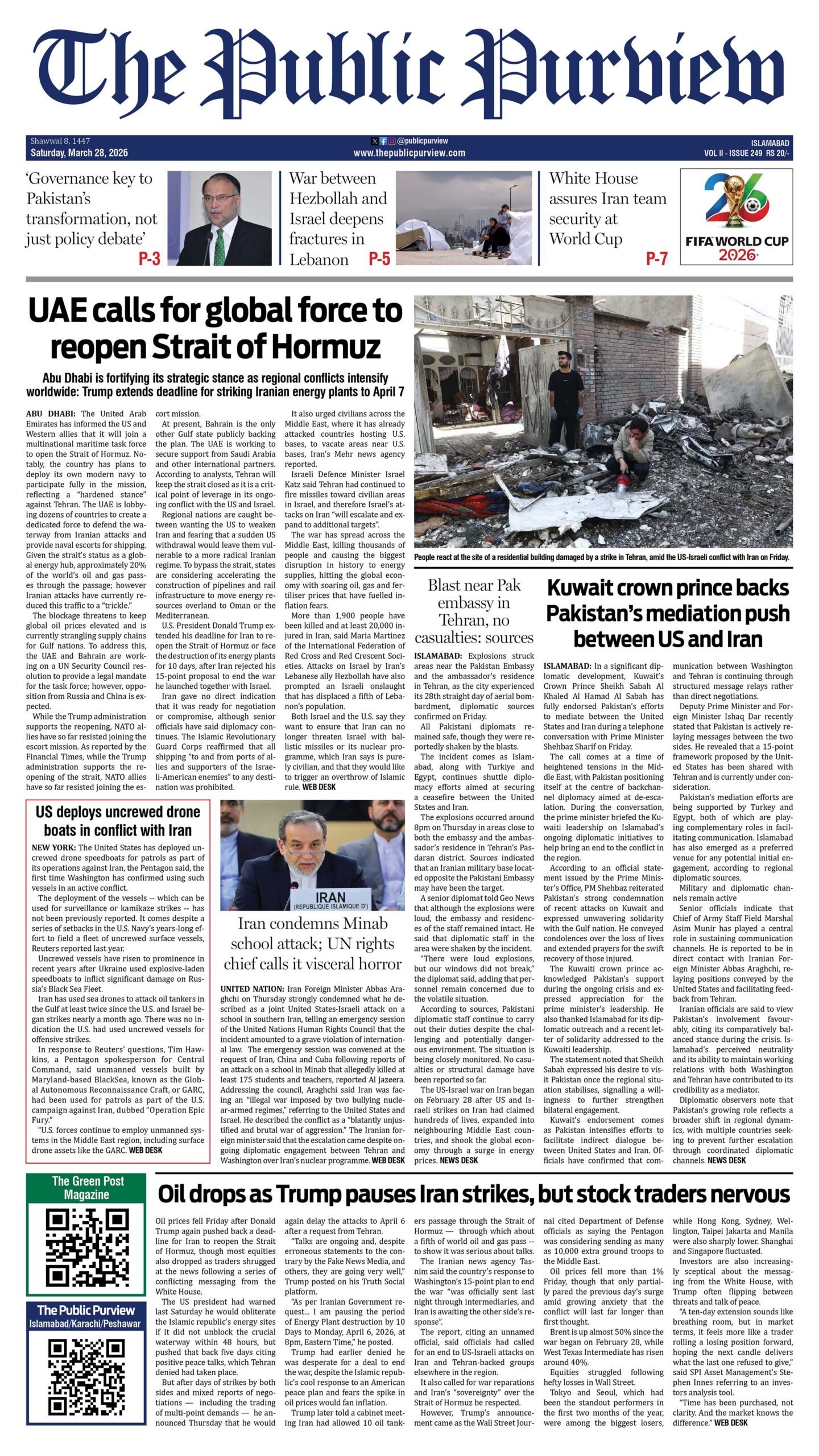 Today's E-Paper