
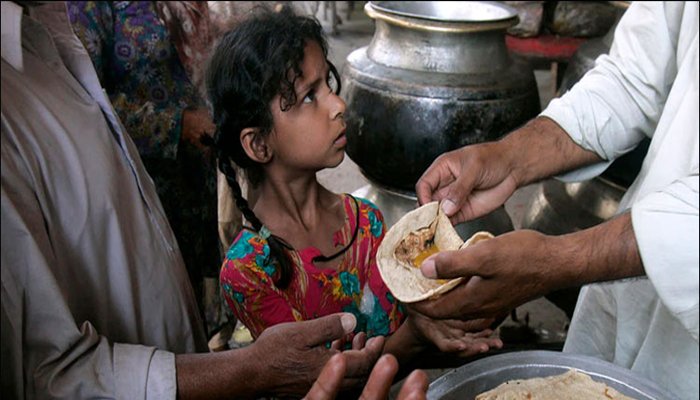
ISLAMABAD: Poverty, hunger and food insecurity have once again come into focus in Pakistan on the occasion of the International Day for the Eradication of Poverty, as rising living costs and limited household incomes continue to make basic necessities increasingly difficult to afford for low-income families.
Inflation and the growing cost of essential goods have placed additional pressure on vulnerable households, affecting their ability to access food, education and healthcare.
Observed annually on October 17, the International Day for the Eradication of Poverty aims to highlight the challenges faced by people living in poverty and underline the need to address social and economic inequalities.
Food insecurity remains a major socioeconomic challenge in Pakistan. Unemployment, economic difficulties, climate-related disasters and rising food prices disproportionately affect poor and low-income communities, making it harder for families to meet their nutritional needs.
According to a recent report cited in the source, Pakistan is among the 10 countries most severely affected by the hunger crisis in 2026. An estimated 10.6 million people in the country are expected to require humanitarian assistance this year.
The report identifies climate-related disasters, economic hardship, displacement and limited funding for humanitarian assistance among the key factors contributing to food insecurity.
Experts stress that reducing poverty and hunger requires more than short-term financial assistance. They point to the importance of expanding employment opportunities, improving access to quality education and healthcare, strengthening social protection programmes and introducing sustainable measures to ensure food security.
The International Day for the Eradication of Poverty serves as a reminder that lasting progress depends on fairer access to economic opportunities, the provision of essential services and consistent, long-term policies to support vulnerable communities.
Addressing the country’s poverty and hunger challenges will require sustained efforts to protect low-income families and improve their access to essential resources and services.