
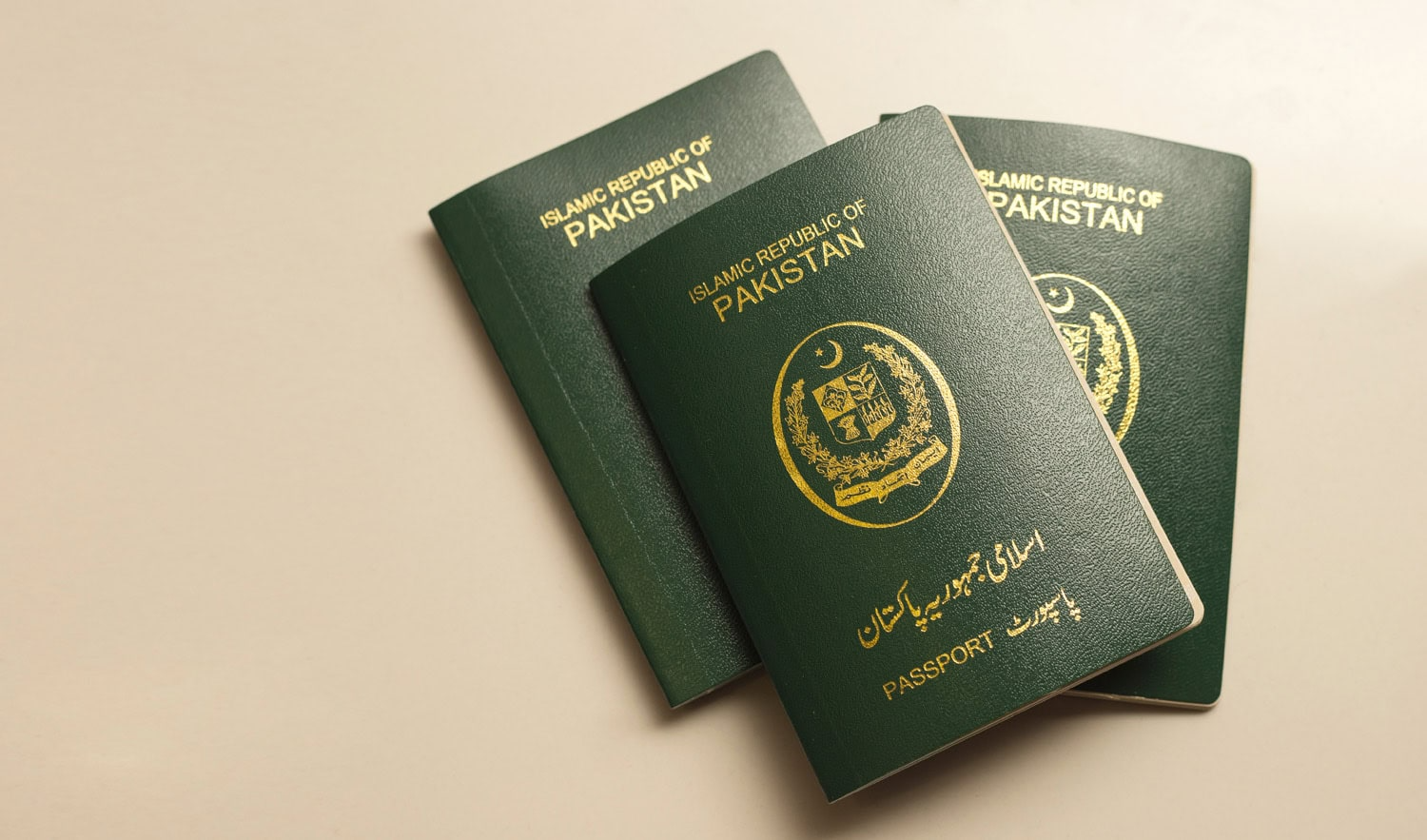
Islamabad — The Pakistani passport has slipped to 103rd place in the latest Henley Passport Index, marking a significant decline in global mobility for Pakistani citizens. This drop places Pakistan alongside Yemen, down from its previous ranking of 96th.
As a result of this shift, Pakistanis can now travel visa-free to only 31 countries, a decrease from 32 destinations last year. The Henley Passport Index ranks passports annually based on the number of countries their holders can enter without a visa. Pakistan’s fall reflects rising regional competition and limited diplomatic outreach.
Despite the decline, Pakistan still ranks above Afghanistan (106th, 24 countries), Syria (105th, 26 countries), and Iraq (104th, 29 countries). However, it remains among the lowest-ranked passports globally, underscoring persistent challenges in international mobility and foreign policy influence.
India’s passport also experienced a setback, dropping to 85th position—equal to Mauritania. Indian citizens now enjoy visa-free access to 57 countries, down from 59 earlier this year when India held the 77th spot.
At the top of the index, Singapore continues to dominate as the world’s most powerful passport for the fourth consecutive year. Singaporean citizens enjoy visa-free access to 193 countries. South Korea and Japan follow closely, with access to 190 and 189 countries, respectively.
Meanwhile, the United States has fallen out of the top 10, now ranking 12th. The United Kingdom has dropped to 8th place, its lowest position in history. These shifts reflect changing global dynamics and the impact of geopolitical tensions on travel freedom.
China, however, has shown notable improvement. It has climbed from 94th in 2015 to 64th in 2025, gaining visa-free access to 37 additional countries. Recent diplomatic agreements, particularly with Russia and Gulf nations, have contributed to this rise.
The Pakistani passport continues to face limitations in global access, highlighting the need for stronger bilateral agreements and regional diplomacy. As global mobility becomes increasingly tied to international relations, Pakistan’s ranking serves as a reminder of the importance of strategic engagement in the global arena.



 Today's E-Paper