

Pakistan’s mounting unemployment challenge has moved beyond being a demographic concern and is now directly constraining economic growth. World Bank president Ajay Banga recently warned that job creation will remain a “binding constraint on growth” for the country, stressing that Pakistan must generate around 30 million jobs over the next decade to sustain development. His remarks underline the urgency of addressing employment as a central policy priority rather than a deferred issue.
The scale of the problem is evident in current economic trends. Between 2022 and 2025, Pakistan’s GDP grew at an average of just 1.7 percent annually, while inflation remained persistently high. This combination has eroded real incomes and weakened demand for labor. Sectors that traditionally absorb the majority of the workforce—agriculture, manufacturing, construction, and wholesale and retail trade—have all experienced contraction. As these industries shrink, the economy’s ability to generate jobs diminishes, even as millions of young people enter the labor market each year.
The consequences are stark. The latest Labour Force Survey reports unemployment at 7.1 percent in FY25, the highest in over two decades. Other estimates paint an even bleaker picture, with the 2023 Population and Housing Census suggesting unemployment could be as high as 22 percent. This disparity in figures highlights methodological differences, but the underlying reality is clear: job creation is failing to keep pace with the rapid expansion of the labor force. With the workforce growing by nearly 3 percent annually, Pakistan requires sustained growth of at least 5 percent or more to stabilize employment conditions.
The mismatch between labor supply and demand is already producing social stress. Outward migration has surged, with record numbers of skilled professionals leaving the country in search of opportunities abroad. This trend demonstrates that the employment crisis is not confined to low-skilled workers; it is also affecting highly trained human capital, undermining Pakistan’s ability to retain talent essential for innovation and competitiveness.
Equally troubling is the erosion of real incomes. Inflation has consistently outpaced wage growth, leading to a decline in household purchasing power and rising poverty risks. Inequality has widened, with limited growth disproportionately benefiting certain groups while leaving others behind. When economic expansion is both slow and uneven, the labor market becomes the primary channel through which hardship spreads across society.
The warning from the World Bank underscores that employment must be treated as Pakistan’s “North Star” policy challenge. Without rapid and inclusive job creation, the demographic dividend risks turning into a liability, fueling outward migration, social unrest, and economic stagnation. The country’s future stability depends on aligning growth strategies with labor market realities, ensuring that opportunities are created across sectors and skill levels.
Pakistan’s resilience lies in its ability to transform this challenge into an opportunity. By prioritizing employment generation, strengthening key industries, and investing in human capital, the nation can turn the spectre of joblessness into a pathway for sustainable growth and social cohesion.




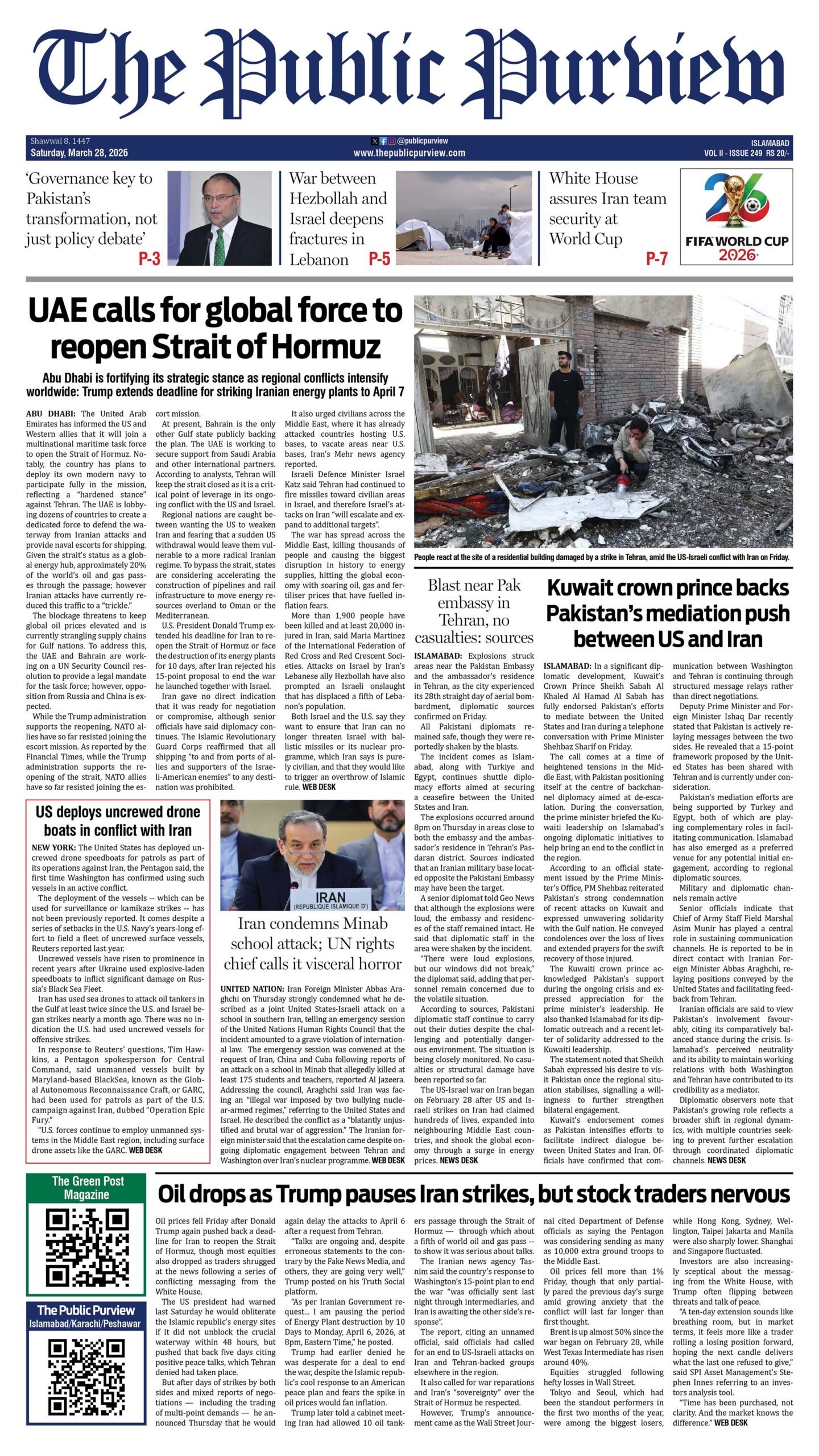 Today's E-Paper