

Pakistan has said it will stand by Saudi Arabia if the kingdom faces security threats, as tensions in the Middle East continue to escalate following the conflict involving the United States, Israel and Iran.
Prime Minister’s spokesperson for foreign media Mohsarraf Zaidi said Pakistan’s support for Saudi Arabia is not in question, emphasizing the longstanding strategic partnership between the two countries.
Speaking to Bloomberg TV, Zaidi said Islamabad and Riyadh have historically operated on the principle of supporting each other during difficult periods. His remarks came as regional tensions intensified after US and Israeli strikes on Iran in late February and subsequent retaliatory attacks by Tehran targeting military installations across the Gulf region.
Iran has said it would target facilities used to launch attacks against its territory, though Iranian President Masoud Pezeshkian has expressed regret over strikes affecting neighbouring countries.
Strategic defence ties between Pakistan and Saudi Arabia
Pakistan and Saudi Arabia signed a Strategic Mutual Defence Agreement in September last year, which treats an attack on either country as aggression against both.
The issue of regional security was also discussed during a recent visit by Pakistan’s Chief of Defence Forces Field Marshal Asim Munir to Saudi Arabia, where he met Saudi Defence Minister Prince Khalid bin Salman.
Officials from both countries reviewed the evolving security situation in the Middle East and the implications of Iranian attacks within the framework of the bilateral defence agreement.
Diplomatic efforts to reduce tensions
Pakistani officials say Islamabad is also working through diplomatic channels to prevent further escalation in the region.
Prime Minister’s Adviser on Political Affairs Rana Sanaullah said Pakistan has remained in contact with Iranian authorities to help reduce misunderstandings and discourage attacks on Gulf states.
Deputy Prime Minister and Foreign Minister Ishaq Dar has held several discussions with Iranian Foreign Minister Abbas Araghchi, according to officials familiar with the talks.
Sanaullah said Iranian officials indicated they would not target Saudi Arabia if Riyadh ensured its territory would not be used for attacks against Iran.
Oil supply routes adjusted amid regional conflict
The conflict has also affected global energy supply routes after Iran moved to close the Strait of Hormuz, one of the world’s most important oil shipping corridors.
Shipping and government sources said Pakistan has started importing crude oil through the Red Sea route as an alternative supply line.
A Pakistan National Shipping Corporation vessel has reached Yanbu port in Saudi Arabia and is expected to depart for Karachi carrying around 73,000 tonnes of crude oil.
Another PNSC vessel, Shalamar, has also loaded oil at Fujairah port and is currently heading toward Karachi.
Shipping sources said several vessels have faced disruptions due to the situation in the Strait of Hormuz, with some ships delayed near Karachi and other ports.





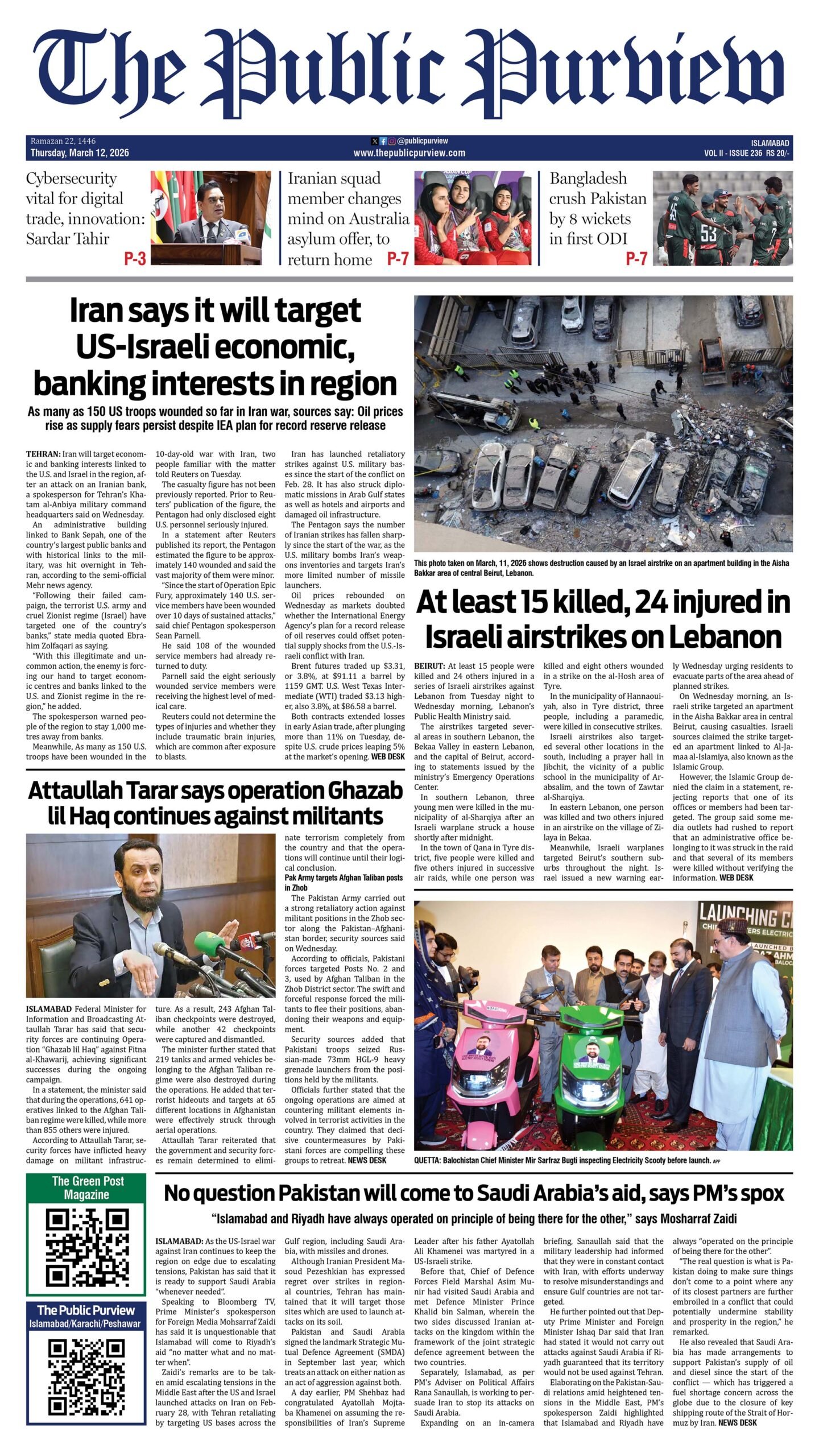 Today's E-Paper