
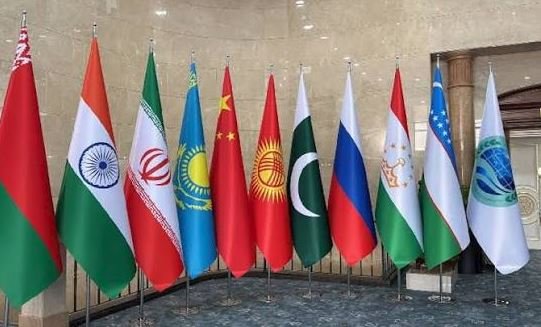
BEIJING: Pakistan has called for stronger cooperation among Shanghai Cooperation Organisation (SCO) and Organisation of Islamic Cooperation (OIC) member countries in traditional medicine, emphasising joint scientific research, healthcare training, herbal medicine development and international industrial collaboration.
Pakistan’s Ambassador to China, Dr Syed Ali Asad Gilani, made the call at a seminar in Beijing organised to promote cooperation between the SCO Traditional Medicine Industry Alliance and the OIC Standing Committee on Scientific and Technological Cooperation (COMSTECH).
According to a China Economic Net report carried on Thursday, the ambassador said Pakistan valued China’s experience and technological advancements in traditional medicine and looked forward to expanding cooperation by combining Chinese expertise with Pakistan’s medicinal resources and traditional knowledge.
The seminar focused on developing traditional medicine industries across SCO and OIC member states, covering market opportunities, registration and regulatory policies, research and development, clinical evaluation, production standards and international cooperation.
More than 20 traditional medicine experts and scholars from China, Iran, Portugal, the United Arab Emirates, Pakistan and Uzbekistan attended the event, alongside over 100 representatives from Chinese research institutes, traditional Chinese medicine hospitals and enterprises.
Addressing the gathering, Gilani praised China’s achievements in science, technology, industrial development and healthcare, describing cooperation in traditional medicine as an important opportunity for participating countries.
“As countries seek sustainable and accessible healthcare solutions, traditional medicine offers significant opportunities for research, innovation, industrial development and international collaboration,” he said.
The ambassador highlighted the relevance of traditional Chinese medicine, Unani medicine and traditional Arab medicine, saying these systems demonstrated the potential for combining traditional knowledge with modern scientific research, advanced manufacturing and quality-control systems.
Pakistan highlights existing research partnerships with China
Gilani said Pakistan had already taken practical steps to strengthen cooperation with China in traditional medicine through joint academic and scientific initiatives.
He identified the Sino-Pakistan Center for Traditional Chinese Medicine at the University of Karachi and the Pakistan-Zhejiang Joint Laboratory for Research and Development of Herbal Medicine at Ningbo University as two important platforms supporting bilateral collaboration.
According to the ambassador, these institutions provide a foundation for cooperation among universities, research organisations, hospitals and enterprises.
However, he stressed that the next priority should be translating existing partnerships into measurable outcomes, including joint research projects, training programmes for doctors and researchers, academic exchanges and scientific evaluation of medicinal plants and herbal formulations.
“We should now focus on translating these institutional arrangements into measurable outcomes through joint research, training of doctors and researchers, academic exchanges, scientific evaluation of medicinal plants and herbal formulations, and the development of quality-assured traditional medicine products,” Gilani said.
SCO-OIC collaboration to expand beyond academic exchanges
The ambassador urged SCO and OIC partners to broaden traditional medicine cooperation beyond institutional and academic engagement towards practical industrial development.
He said collaboration should cover the entire traditional medicine value chain, from research and cultivation of medicinal plants to scientific validation, production, quality assurance and responsible commercialisation.
The discussions also highlighted the importance of regulatory cooperation and internationally recognised quality standards in supporting the development and marketing of traditional medicine products.
Gilani reaffirmed Pakistan’s readiness to work with China, COMSTECH, the SCO Traditional Medicine Industry Alliance and other participating countries to advance joint initiatives.
He said stronger cooperation between SCO and OIC member states could create opportunities for scientific innovation, professional training and industrial partnerships while supporting the development of accessible healthcare solutions.
The seminar provided a platform for participating countries to explore closer coordination in traditional medicine research, regulation and industrial development, with Pakistan seeking to build on its existing partnerships with China through wider SCO-OIC cooperation.