
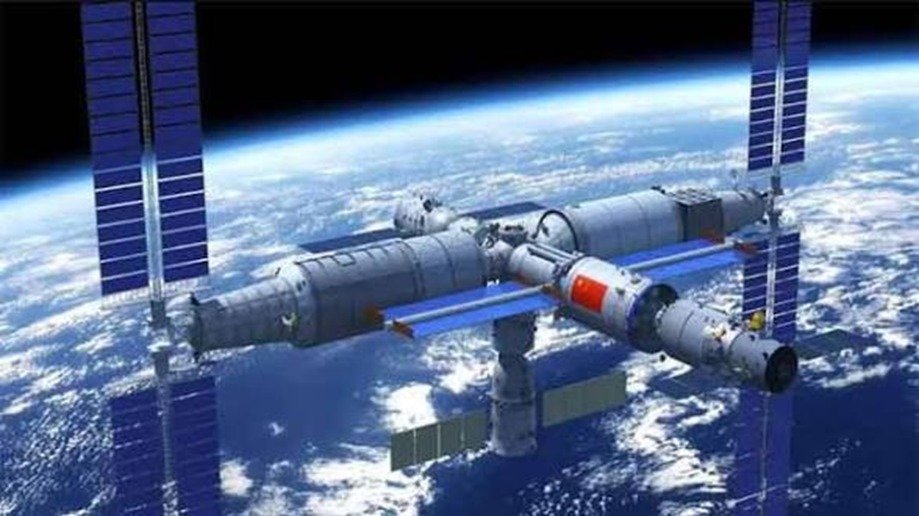
ISLAMABAD: Pakistan is moving forward with a proposed Rs37.13 billion Pakistan Space Center aimed at strengthening national capabilities in space science, technology and research, while supporting innovation, skills development and the wider space sector.
According to the Ministry of Planning, Development and Special Initiatives’ Monthly Development Update – September 2026, the revised Pakistan Space Center project has been recommended by the Central Development Working Party (CDWP) to the Executive Committee of the National Economic Council (ECNEC).
The project is sponsored by the Space and Upper Atmosphere Research Commission (SUPARCO) and is designed to establish a state-of-the-art facility for advancing Pakistan’s capacity in space-related research and technology.
The Planning Ministry said the project would also support human-resource development, innovation and technical skills, placing capacity-building alongside investment in physical and technological infrastructure.
The Space Center was among the major development proposals reviewed by the CDWP during August 2026.
Two CDWP meetings were held during the month, during which 19 agenda items were considered, including 14 projects, four position papers and one policy paper proposal.
Seven projects worth Rs25.4 billion and two position papers were approved by the CDWP, while five projects with a combined cost of Rs283.9 billion, along with one position paper, were recommended to ECNEC.
Two projects, one policy paper and one position paper were deferred.
The proposed Pakistan Space Center accounts for around 13% of the combined value of the five projects recommended to ECNEC.
Space Project Linked to Wider Technology Push
The recommendation comes as the government seeks to direct development spending towards projects designed to strengthen productive capacity, technology and long-term economic growth.
The federal Public Sector Development Programme for FY2026-27 has been set at Rs1 trillion, including Rs255 billion as foreign-loan rupee cover.
The government has said development resources are being prioritised for high-impact and fast-moving ongoing projects amid fiscal constraints.
Science, technology and human-capital development also featured prominently in other projects considered during the August development cycle.
The CDWP approved the establishment of a National Defence University Faculty of Contemporary Studies campus at the Defence Complex Islamabad at a cost of Rs2.753 billion.
According to the Planning Ministry, the project is intended to strengthen higher education, research and strategic studies, improve professional capacity and support national security and defence policy formulation.
Four higher education projects with a combined cost of Rs13.6 billion were also approved, focusing on academic infrastructure, teaching and research facilities and the development of skilled human resources in technology, management and veterinary sciences.
New Criteria for Development Projects
The Planning Ministry has also finalised the Public Investment Procedure and Parameters (PIPP), a scorecard-based mechanism for assessing development projects.
Under the framework, projects will be evaluated against national priorities, economic viability, technical readiness, climate resilience, social impact, sustainability, private-sector participation and measurable outcomes.
The government intends to use the mechanism to move the PSDP towards a more priority-driven investment portfolio, with greater emphasis on fewer, better-prepared and investment-ready projects.
For the Pakistan Space Center, however, the key development at this stage is its recommendation by the CDWP to ECNEC. The Planning Ministry’s report does not state that ECNEC has given final approval, meaning the Rs37.13 billion project remains a proposed scheme awaiting the next level of consideration.