
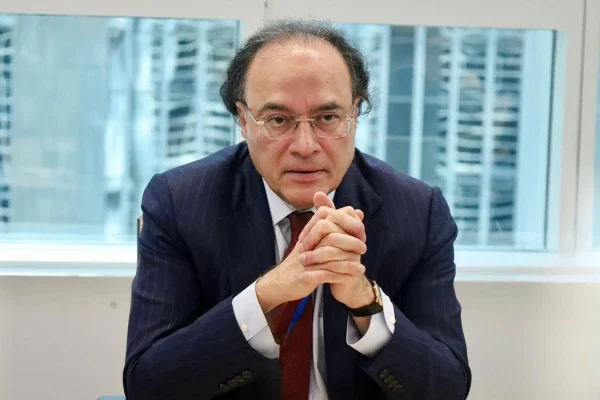
ISLAMABAD, November 2, 2026: Pakistan’s workers’ remittances are expected to exceed $44 billion during the current fiscal year, Finance Minister Muhammad Aurangzeb said on Monday, as the government explores tokenisation of existing Eurobond debt and wider use of digital financial technologies.
Addressing a dialogue on digital assets and the future of banking, organised by the Pakistan Banks Association (PBA), the finance minister said encouraging remittance figures during the first quarter of the fiscal year supported expectations of stronger inflows by year-end.
Speaking virtually at the event, Aurangzeb said Pakistan was examining the possibility of tokenising its existing Eurobond obligations, with consultations underway to assess the potential application of blockchain-based financial instruments.
He identified Roshan Digital Accounts and remittance services as potential areas where tokenisation could improve efficiency and expand access to financial services.
The finance minister stressed that Pakistan needed financial innovation capable of reducing the cost of doing business and bringing more individuals and enterprises into the formal economy.
He said digital assets must demonstrate their value through measurable economic outcomes rather than technological innovation alone.
Aurangzeb noted that Pakistan was transitioning from economic stabilisation towards sustainable growth, a process requiring continued fiscal discipline, stronger exports and increased private-sector investment.
He said digital financial services could support this transition by improving access to banking, facilitating business transactions and reducing operational costs.
Highlighting international developments, the minister referred to JPMorgan’s use of deposit tokens for institutional payments through blockchain networks.
He also cited Project Agorá, an initiative involving the Bank for International Settlements (BIS), which is examining how tokenised commercial bank deposits and central bank reserves could improve cross-border payments.
Aurangzeb said different categories of digital assets carried distinct risks and characteristics, requiring regulatory approaches tailored to their underlying financial activities.
He noted that Pakistan had established a legal and regulatory framework through the Virtual Assets Act 2026, assigning the Pakistan Virtual Assets Regulatory Authority (PVARA) responsibility for licensing and supervising virtual asset service providers.
The minister emphasised that effective implementation would require vigilant supervision and coordination among financial regulators.
He said the State Bank of Pakistan had established a pathway for banks to provide services to PVARA-licensed entities under specified conditions, including customer due diligence and segregation of client funds.
However, accounts maintained by entities holding no-objection certificates remain subject to restrictions, while banks must continue complying with foreign exchange regulations and other applicable laws.
Aurangzeb clarified that banks were not permitted to invest in, trade or hold virtual assets using their own funds or customer deposits.
He described the regulatory developments as important steps towards bringing virtual asset activities within a legally supervised financial system.
The finance minister acknowledged the roles of the State Bank of Pakistan and the Securities and Exchange Commission of Pakistan in advancing the regulatory framework.
Referring to international engagement, Aurangzeb said Pakistan had co-hosted a discussion on blockchain and a tokenised future during the United Nations Digital Cooperation Day in New York in September.
He said the discussions highlighted the importance of ensuring emerging technologies address genuine economic needs while maintaining appropriate safeguards.
Pakistan’s assumption of the G24 chairmanship would also provide an opportunity to represent the priorities of developing economies in international financial policy discussions, he added.
The minister urged banking institutions to develop practical proposals for digital assets, invest in technological expertise and work closely with regulators to pursue permissible financial activities.
He placed particular emphasis on cybersecurity, warning that financial institutions faced increasing threats from both state and non-state actors.
Aurangzeb said banks must strengthen their cybersecurity systems and coordinate with the State Bank to identify and respond to emerging risks.
He stressed that continuous vigilance was essential as digital financial services expanded and cyber threats became increasingly sophisticated.
The finance minister also highlighted Pakistan’s planned 5G spectrum auction, the Raast digital payment system and broader digital infrastructure development as important foundations for financial innovation.
He said these initiatives could improve the accessibility and efficiency of financial services while supporting greater participation in the formal economy.
Concluding his address, Aurangzeb thanked the Pakistan Banks Association, LUMS leadership and representatives of the banking industry, expressing hope that the dialogue would produce practical recommendations for the future of digital banking in Pakistan.