
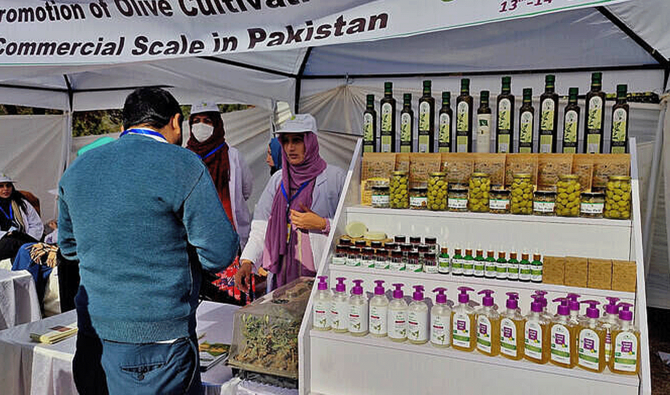
ISLAMABAD (APP): Pakistan has recorded the registration of 144 olive startups under a long-term government programme aimed at developing the country’s olive sector, reflecting steady growth over the past decade.
The progress was shared by Dr Muhammad Tariq, National Project Director of the Olive Promotional Programme, who said the initiative had evolved from a small pilot effort into a growing agro-industry backed by sustained public sector support.
Growth of Olive Startups Over the Past Decade
Dr Tariq said the programme began nearly ten years ago with only a single entrepreneur involved in olive cultivation and processing. Since then, the number of registered startups has increased to 144, indicating rising interest from farmers and private investors.
He attributed the growth primarily to consistent policy support and institutional backing, which helped establish olives as a viable crop in several regions of the country.
Steps Toward International Recognition
According to Dr Tariq, the federal government is also working to strengthen the sector’s international standing. He said efforts are under way to secure Pakistan’s full membership in the International Olive Council, a move expected to enhance market access, technical cooperation, and global recognition of local production.
He added that discussions with the Planning Commission are ongoing to explore further measures for long-term sector development.
Shift From Imports to Local Production
Dr Tariq noted a significant change in the supply chain, with Pakistan no longer relying on imported olive plants. Local nurseries are now producing certified saplings, reducing dependency on foreign sources and improving domestic self-sufficiency.
This transition, he said, has played a role in lowering oil imports in recent years, as consumers increasingly turn to locally produced alternatives.
Quality and Certification Challenges
Despite the expansion, Dr Tariq acknowledged that the sector still faces gaps in bottling, packaging, labeling, and certification. He said work is under way to strengthen quality control by developing accredited laboratories and ISO-certified facilities to standardise production and improve market confidence.
Need for Technical Support and Diversification
He also pointed out that technical support has struggled to keep pace with the sector’s geographic expansion. While international partners continue to provide assistance, extension services are under pressure as olive cultivation spreads to new areas.
Looking ahead, Dr Tariq said future growth depends on diversifying beyond olive oil. He identified areas such as pomace oil, virgin and lampante oil, pellets, and nutraceutical products as untapped segments with strong potential to increase farmer income and value addition.
Read related news here: https://thepublicpurview.com/business/
For more stories and insights, visit The Green Post

 Today's E-Paper