
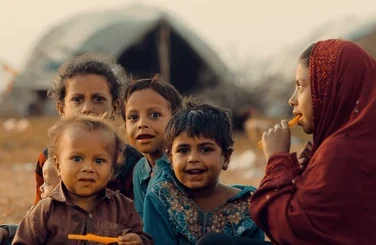
Pakistan’s poverty rate has climbed to 29%, the highest level in 11 years, with around 70 million people now living below the official monthly poverty line of Rs8,484, according to a preliminary government survey released by Planning Minister Ahsan Iqbal.
The report for fiscal year 2024–25 shows a sharp increase in hardship across both urban and rural areas, alongside widening income inequality and weak job growth. Officials said the reversal marks the first time in 13 years that the country’s poverty reduction trend has gone into reverse.
According to the Planning Ministry’s findings, the poverty ratio stood at 21.9% in 2019. It has since risen to 28.9%, the highest level since 2014, when it was recorded at 29.5%. The survey estimates a 32% increase in poverty since 2018-19, the year of the last comprehensive assessment.
Income inequality has also worsened, reaching 32.7 — the highest level in 27 years. The previous peak was recorded in 1998 at 31.1. The unemployment rate stands at 7.1%, the highest in 21 years, further reflecting stress in the labor market.
Rural areas hit hardest
The data show poverty rising disproportionately in rural communities, where the rate increased from 28.2% to 36.2%. Urban poverty also climbed, from 11% to 17.4%.
Provincial disparities have widened. In Punjab, poverty rose from 16.5% to 23.3% over seven years. Sindh recorded an increase from 24.5% to 32.6%. In Khyber Pakhtunkhwa, the rate moved from 28.7% to 35.3%. Balochistan remains the most affected province, with poverty increasing from 42% to 47%, meaning nearly half the population lives below the poverty threshold.
The report attributes higher poverty in Khyber Pakhtunkhwa and Balochistan partly to security challenges, which disrupt livelihoods and limit access to markets and essential services.
Real incomes decline amid inflation
The survey highlights a sustained decline in real household incomes. Average real monthly household income fell from Rs35,454 in 2019 to Rs31,127 in 2024-25, a drop of 12% in seven years. Real monthly household expenditures also decreased by 5.4% over the same period.
Although nominal incomes rose, inflation outpaced earnings growth. The report cites historically high inflation, energy price adjustments, exchange rate depreciation, higher indirect taxation, and the withdrawal of subsidies under the International Monetary Fund (IMF) stabilization programme as key factors reducing purchasing power.
Large Scale Manufacturing has remained below pre-COVID levels, limiting formal employment recovery. The ministry said recent economic growth has been largely output-driven rather than employment-intensive, constraining income gains for households.
Policy response and outlook
Ahsan Iqbal acknowledged that macroeconomic stabilization measures contributed to rising poverty but said they were necessary to restore fiscal stability. He ruled out an early exit from the IMF programme, adding that the government still has policy space to promote growth in agriculture and information technology.
He said cash transfers under the Benazir Income Support Programme alone would not be sufficient to address rising poverty, stressing the need for sustained economic growth and job creation.
The Planning Ministry stated that future reductions in poverty will depend on employment growth, recovery in real incomes, and expanded social protection coverage.




 Today's E-Paper