
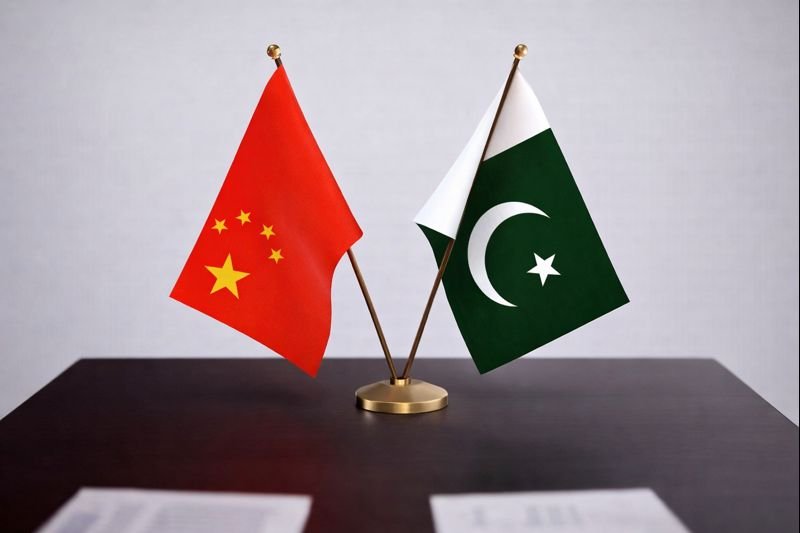
ISLAMABAD: Pakistan and China have entered a new stage of economic partnership, placing mineral development at the center of the China-Pakistan Economic Corridor (CPEC) Phase-II. Federal Minister for Planning, Development and Special Initiatives Ahsan Iqbal said the shift marks a transition from infrastructure-led cooperation to productivity, exports, and sustainable growth.
Speaking at the launch of the China-Pakistan Mineral Cooperation Forum on Wednesday, Iqbal said the two countries are repositioning their strategic partnership toward minerals-led industrialisation, with Gwadar emerging as a gateway to connect Pakistan’s resource-rich regions with regional and global markets. He noted the initiative comes as the two nations approach the 75th anniversary of diplomatic relations.
The minister highlighted achievements under CPEC Phase-I, including more than 8,000 megawatts added to the national grid, over 1,000 kilometers of upgraded road infrastructure, and modernization of Gwadar. He said the China-built international airport in Gwadar has positioned the port city for a central role in Pakistan’s next phase of growth, serving both as a smart port and a hub for the mining industry.
Shehbaz, Li Qiang Vow to Accelerate CPEC 2.0 in ‘Most Productive’ Beijing Talks
Iqbal stressed that Phase-II of CPEC is designed to address Pakistan’s structural weaknesses, particularly its narrow export base. “Infrastructure for its own sake is not enough. Our goal is to convert connectivity into productivity, productivity into exports, and exports into jobs and sustainable growth,” he said.
Underscoring Pakistan’s mineral potential, the minister said the country has 92 known minerals, with 52 currently being extracted, nearly 5,000 operational mines, and annual production of about 68.5 million metric tons. Despite this scale, mineral exports account for only 2–3 percent of GDP, largely due to limited value addition. He noted that more than 90 percent of exports are raw or semi-processed, while only 40 percent of land has been geologically mapped.
Referring to extensive marble and granite reserves from Turbat to Chitral, Iqbal said outdated extraction techniques were reducing value. He invited Chinese enterprises to invest in modern cutting and processing technologies, adding that Pakistan could become a global hub for high-quality marble and generate billions of dollars in revenue.


 Today's E-Paper