
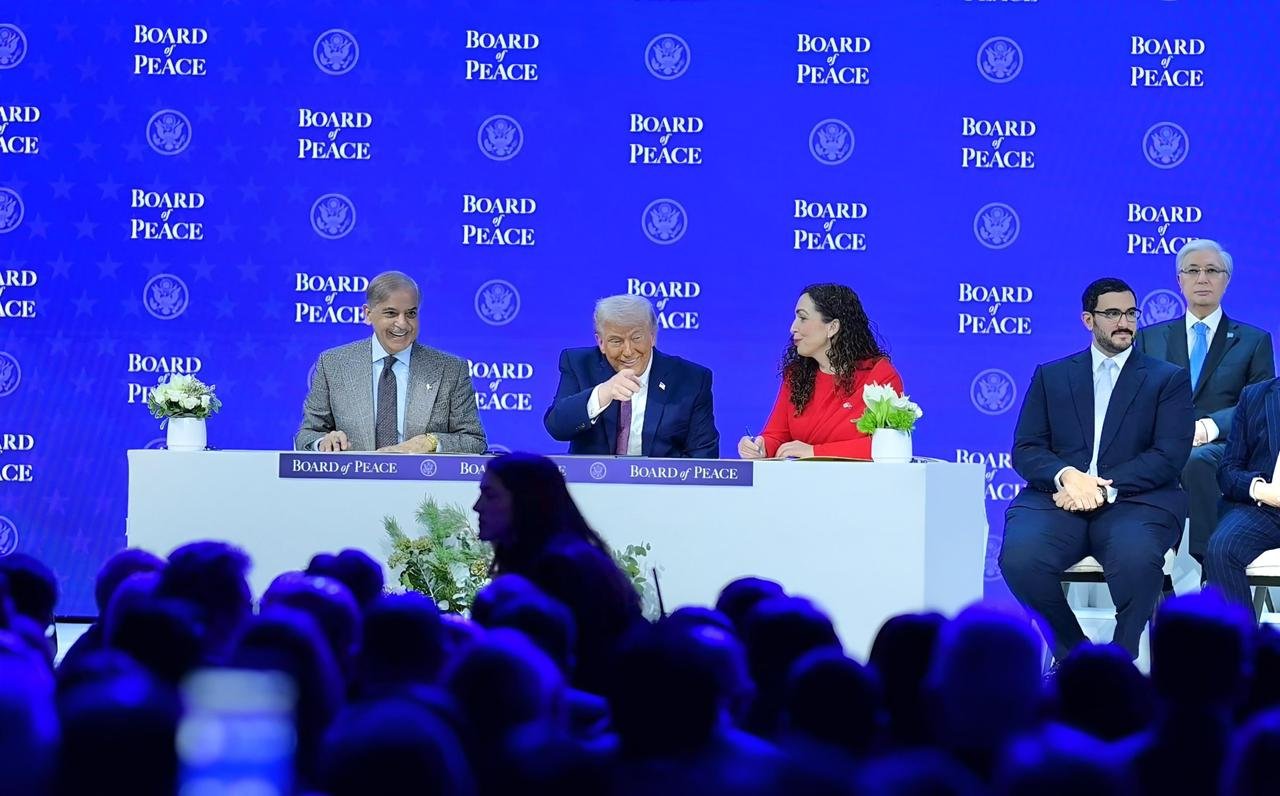
Pakistan’s decision to join the Board of Peace at the 2026 World Economic Forum (WEF) in Davos places the country at the centre of a new international initiative aimed at ending the conflict in Gaza and supporting long-term reconstruction in Palestine.
Pakistan joined the Board on the invitation of U.S. President Donald J. Trump, with officials saying the move aligns with Islamabad’s long-standing position on Palestine and its support for peace efforts grounded in international law and United Nations Security Council resolutions.
The initiative focuses on achieving a permanent ceasefire in Gaza and rebuilding Palestinian infrastructure, including homes, hospitals, schools, water and electricity systems, while restoring livelihoods and dignity for affected civilians. Pakistani officials say participation ensures that discussions on Gaza’s future include representation from the Muslim world and remain anchored in internationally recognised principles.
Pakistan joined the Board alongside Saudi Arabia, Türkiye, Egypt, Jordan, Qatar, the United Arab Emirates, Indonesia, Bahrain, Morocco, Argentina, Hungary and the United States. The presence of multiple Muslim-majority countries is seen by Islamabad as a safeguard to keep Palestinian rights, statehood and self-determination central to the process.
Pakistan’s stated position on Palestine remains unchanged: support for an independent Palestinian state based on pre-1967 borders, with Al-Quds Al-Sharif as its capital, and rejection of occupation and collective punishment.
According to officials, during a meeting held a day earlier, the Palestinian Prime Minister personally thanked Prime Minister Shehbaz Sharif for Pakistan’s consistent support for Gaza, its stance against civilian suffering, and its advocacy for Palestinian rights at international forums.
A moment of recognition at Davos
During the signing ceremony, Prime Minister Shehbaz Sharif exchanged brief pleasantries with President Trump. Officials also noted a symbolic moment when Trump gestured toward Pakistan’s Chief of Army Staff and Chief of Defence Force, Syed Asim Munir, which was interpreted by Pakistani officials as a sign of international recognition of Pakistan’s institutions and leadership.
Pakistan’s role going forward
Officials stress that Pakistan’s participation is aimed at shaping outcomes rather than remaining on the sidelines. Islamabad maintains strategic autonomy, avoids bloc politics, and continues to engage with major powers without compromising its core principles.
The government has clarified that joining the Board of Peace does not imply automatic military involvement or participation in any stabilisation force. Any future security role, officials say, would only be considered under a United Nations mandate, in line with Pakistan’s national interest and the wishes of the Palestinian people.


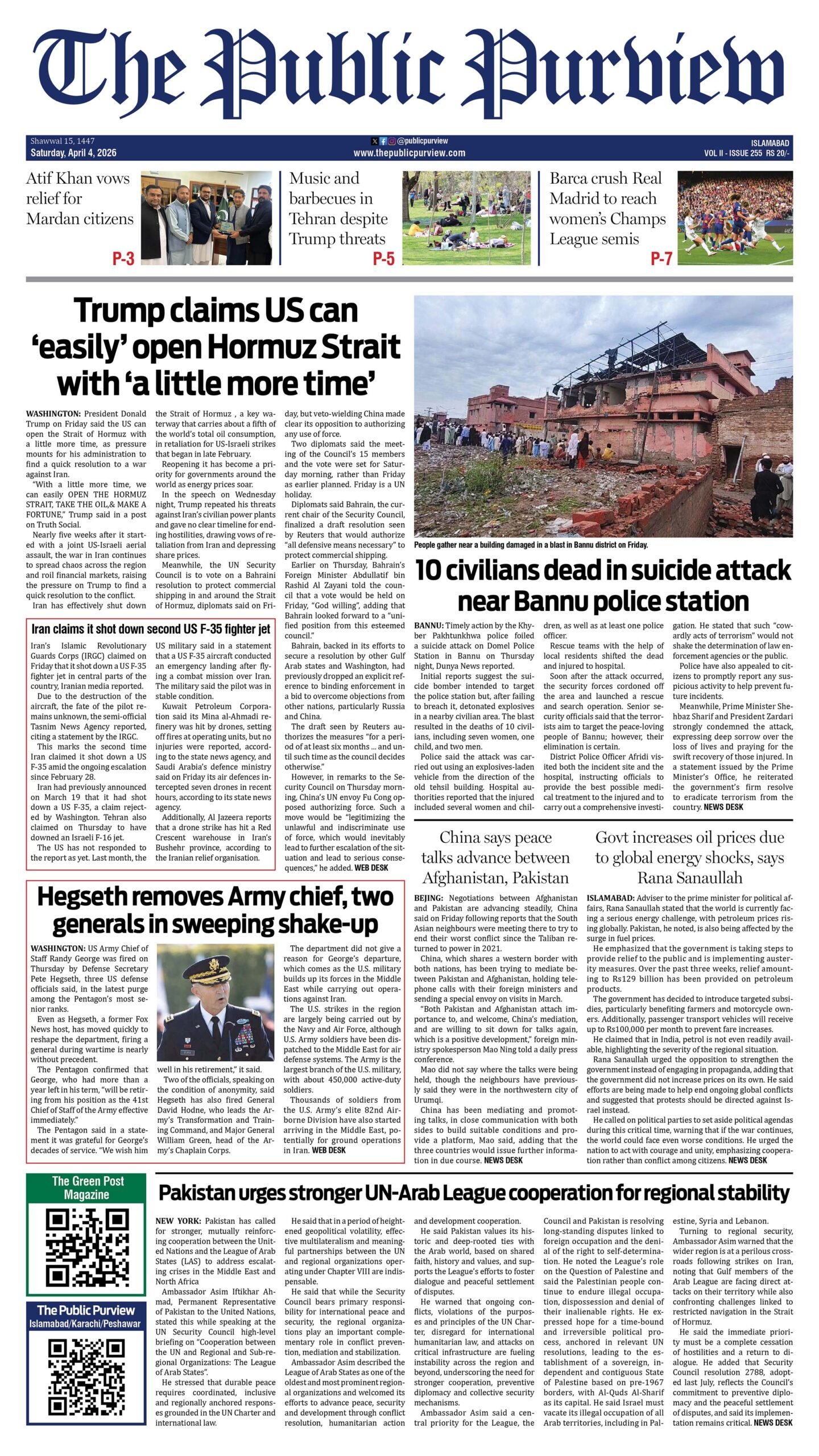 Today's E-Paper