
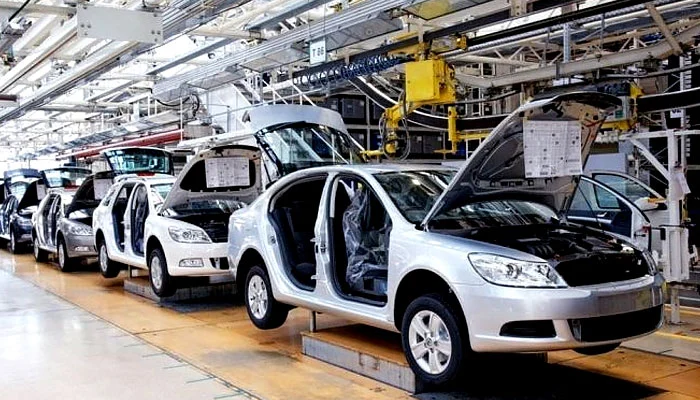
ISLAMABAD: Prime Minister Shehbaz Sharif has approved Pakistan’s Automotive Policy 2026–31, setting a $6 billion vehicle export target and introducing major reforms aimed at reducing import duties, making electric vehicles more affordable and increasing competition in the country’s automobile industry.
According to the policy document released on Tuesday, October 20, the government plans to gradually reduce automotive tariffs, introduce export targets for vehicle manufacturers and offer incentives to companies that increase local production and overseas sales.
The policy, which is awaiting federal cabinet approval, also proposes changes to electric vehicle financing, taxation, safety standards and consumer protection measures.
Electric vehicle taxes and financing to be reduced
Under the new policy, import duties on vehicles will be reduced in phases, with automotive tariffs targeted to fall to 15 percent by 2030–31 to encourage competition.
The government has also approved proposals to gradually reduce sales tax on electric vehicles (EVs), bringing the rate to 1 percent by 2030–31.
Range-extended electric vehicles will attract a proposed 6 percent sales tax, while plug-in hybrid vehicles will be subject to a proposed 9 percent rate.
Lower import tariffs have also been proposed for small electric vehicles priced below $15,000, with the aim of making them more accessible to lower-income consumers.
In another significant measure, the proposed maximum financing limit for electric vehicles will increase from Rs3 million to Rs10 million.
The financing repayment period will also be extended from three to five years, potentially making electric vehicle purchases more manageable for buyers.
Automakers face mandatory export targets
The policy sets an ambitious target of increasing vehicle exports to $6 billion while raising automotive parts exports to $1.2 billion by 2030–31.
Automobile manufacturers will be required to meet specified export targets, with financial incentives proposed for companies that expand their overseas sales.
Under the proposed framework, manufacturers could receive incentives equivalent to 5 percent of their export value, along with an additional 10 percent incentive on exports exceeding the previous year’s level.
Companies failing to achieve their export targets could face financial penalties.
The policy also proposes cancelling manufacturing certificates if companies fail to meet export targets for two consecutive years.
New localisation targets will be introduced to encourage domestic production of automotive components. Manufacturers failing to meet these requirements could lose government incentives.
New levy on vehicles above 1,000cc
The government plans to introduce an Automotive Development Levy on vehicles with engine capacities exceeding 1,000cc.
The levy is projected to generate more than Rs232 billion over five years, with proceeds intended to finance export incentives and industrial development programmes.
The policy document also proposes allocating funds to help local automotive parts manufacturers upgrade their technology and improve production capabilities.
Legislation required to implement the Automotive Development Levy is targeted for completion by December 2026.
Vehicle safety standards and consumer protection
The new policy proposes establishing a Pakistan Automotive Testing Institute to strengthen vehicle testing, certification and compliance monitoring.
International safety regulations are expected to be applied to both locally manufactured and imported vehicles.
The policy also includes consumer protection provisions in agreements between automobile manufacturers and buyers.
To improve transparency, the government has proposed conducting audits twice a year, including independent third-party reviews of localisation performance and export incentive payments.
Funding has also been proposed for automotive research, certification, independent inspections and workforce training.
The policy aims to make Pakistan’s automobile industry more competitive by encouraging exports, expanding domestic manufacturing and reducing reliance on prolonged tariff protection.
However, the proposed measures will require the necessary cabinet, legislative and regulatory approvals before they can be fully implemented.