
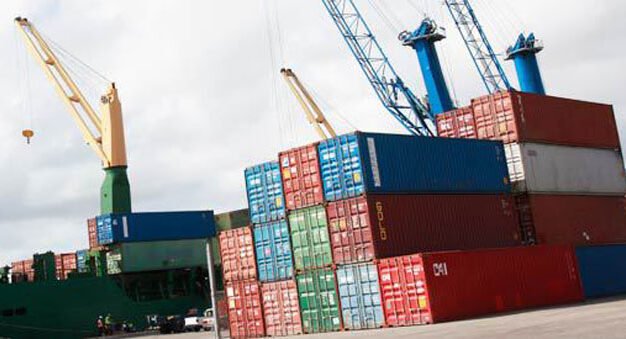
ISLAMABAD — Experts have called on Pakistan and Austria to deepen economic cooperation by launching joint ventures in textiles, technology outsourcing and green energy, following notable growth in bilateral trade in 2024.
Analysts say expanding collaboration in key industries could help both countries diversify trade and strengthen long-term economic ties. The call comes as Pakistan and Austria seek to build on rising trade volumes and explore new areas for investment and industrial cooperation.
According to Dr Zafar Mahmood, Principal and Dean of the School of Social Sciences and Humanities at the National University of Sciences and Technology (NUST), bilateral trade between Pakistan and Austria increased by more than 30% in 2024.
He told Wealth Pakistan that goods trade has remained strongly in Pakistan’s favour. Pakistan exports apparel and textiles worth about €300 million annually to Austria, while imports from Austria — including machinery, fibres and chemical products — total roughly €100 million.
Mahmood said Pakistan could further expand exports by shifting toward higher-value textile products and increasing the use of advanced machinery and chemicals sourced from Austria.
He also highlighted opportunities in services and hospitality, noting that improvements in tourism infrastructure could support broader economic engagement between the two countries.
Potential for collaboration in technology and services
Experts say the technology sector offers significant potential for cooperation, particularly in IT services and manufacturing outsourcing.
Mahmood said collaboration in outsourcing activities could benefit both industries, but added that improved trade facilitation and lower tariffs would be necessary to unlock that potential.
He also cautioned that Pakistan should focus on strengthening its competitive industries rather than relying heavily on preferential trade schemes such as the European Union’s GSP+ status.
Institutional cooperation seen as key
Recent efforts to strengthen economic ties include the Pakistan-Austria Business Forum held in Vienna, where Pakistan’s leadership promoted investment opportunities in renewable energy, value-added agriculture, mining and tourism.
Austria’s Federal Economic Chamber also highlighted potential cooperation in hydropower development, rail infrastructure and digital transformation.
Taimur Khan, Research Associate for Europe and Russia at the Institute of Strategic Studies Islamabad (ISSI), said sustained progress will require stronger institutional engagement between the two countries.
He suggested establishing regular trade consultations or a joint economic commission to identify priority sectors and ensure follow-up on investment initiatives.
Khan also recommended organizing sector-specific business forums in Vienna and major Pakistani commercial centres to directly connect companies and encourage partnerships.
Focus on value-added exports
Experts say Pakistan can further expand exports to Austria and the broader European market by focusing on high-value products such as textiles, surgical instruments, sports goods and selected agricultural items.
They also stressed the importance of improving certification systems and compliance with European Union environmental and technical standards to support long-term export growth.
Analysts note that moving from dialogue to concrete business agreements will require addressing regulatory complexity, bureaucratic delays and concerns related to policy continuity and macroeconomic stability.


 Today's E-Paper