
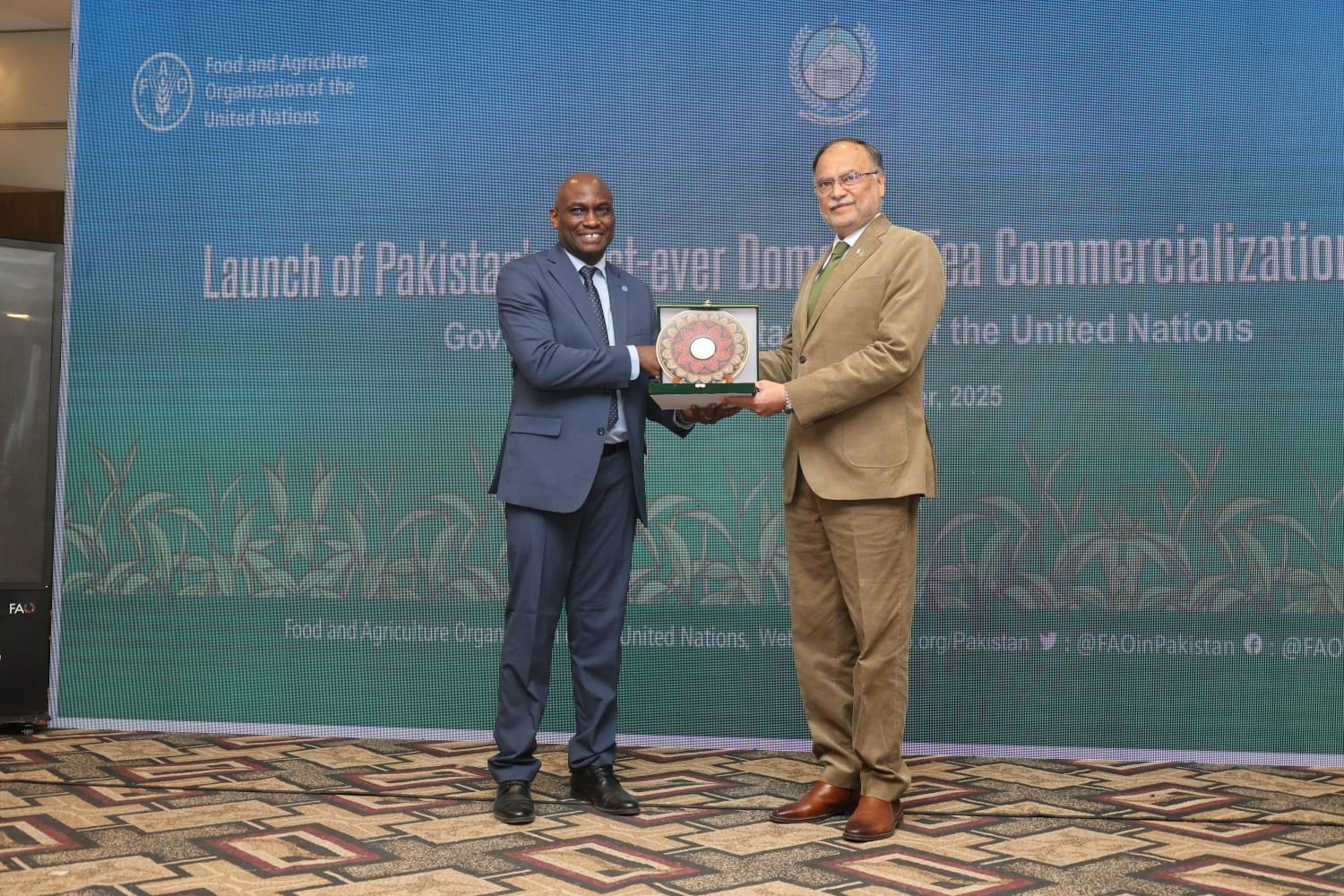
Islamabad (T.M Awan): Pakistan took a major step toward reducing its heavy reliance on imported tea on Thursday with the launch of the country’s first Domestic Tea Commercialization Strategy, developed jointly by the Government of Pakistan and the Food and Agriculture Organization (FAO) of the United Nations.
Domestic Tea Commercialization Strategy signals shift toward local tea production
The initiative, unveiled at a ceremony in Islamabad, brings together federal and provincial officials, development partners, technical experts, tea growers, and private-sector representatives, signalling a national commitment to building a homegrown tea industry through the Domestic Tea Commercialization Strategy.
Pakistan spends more than USD 600 million annually on tea imports. Supported by FAO’s Tea Technical Cooperation Programme, the new strategy outlines a roadmap for climate-smart, locally produced tea beginning in the northern districts of Khyber Pakhtunkhwa.
First phase of the Domestic Tea Commercialization Strategy focuses on plantations and farmer training
Under the first phase, 600 acres in Mansehra will be planted with 2.4 million nursery-grown tea plants , with FAO providing farmer training on modern cultivation techniques. Small-scale processing units will be established near plantations to maintain quality and reduce losses, while interest-free financing will enable farmers to adopt tea as a long-term, sustainable crop.
By 2030, the area is expected to yield 2,500 metric tons of green leaf annually and create over 2,000 jobs. The wider industry could benefit more than 70,000 rural residents by 2040 under the Domestic Tea Commercialization Strategy.
Officials highlight national potential for tea industry development
Speaking at the event, Federal Minister for Planning Ahsan Iqbal said Pakistan has a “unique opportunity to build a tea industry from scratch,” one that embeds climate resilience, environmental conservation, women’s economic empowerment, and prospects for eco-tourism and local tea branding under the Domestic Tea Commercialization Strategy.
FAO Acting Representative James Okoth highlighted the strong FAO–Government partnership, bringing together federal ministries, the KP government, research institutions like NTHRI, the private sector, and local communities. He said the strategy aligns with national priorities in the government’s broader development agenda.
FAO experts underline capacity-building within the Domestic Tea Commercialization Strategy
FAO’s Head of Office in KP, Ms. Kiyal Akmatbek, reaffirmed continued support through technical expertise, farmer training, research collaboration, and investor engagement. She said Pakistan’s agroclimatic conditions make it well-positioned to transition from a tea-importing to a tea-producing nation.
Joining online from Canada, FAO International Consultant John Snell noted Pakistan’s strong potential for producing high-quality orthodox tea. He said global consumer shifts could help the country reduce foreign exchange outflows while improving rural livelihoods under the Domestic Tea Commercialization Strategy.
Strategy expected to reshape Pakistan’s tea future
With the launch of the Domestic Tea Commercialization Strategy, officials say Pakistan has entered a new phase in which locally produced tea contributes to rural development, climate-smart agriculture, and reduced dependence on imported tea.
Read related news here: https://thepublicpurview.com/category/business-news/
For more stories and insights, visit The Green Post



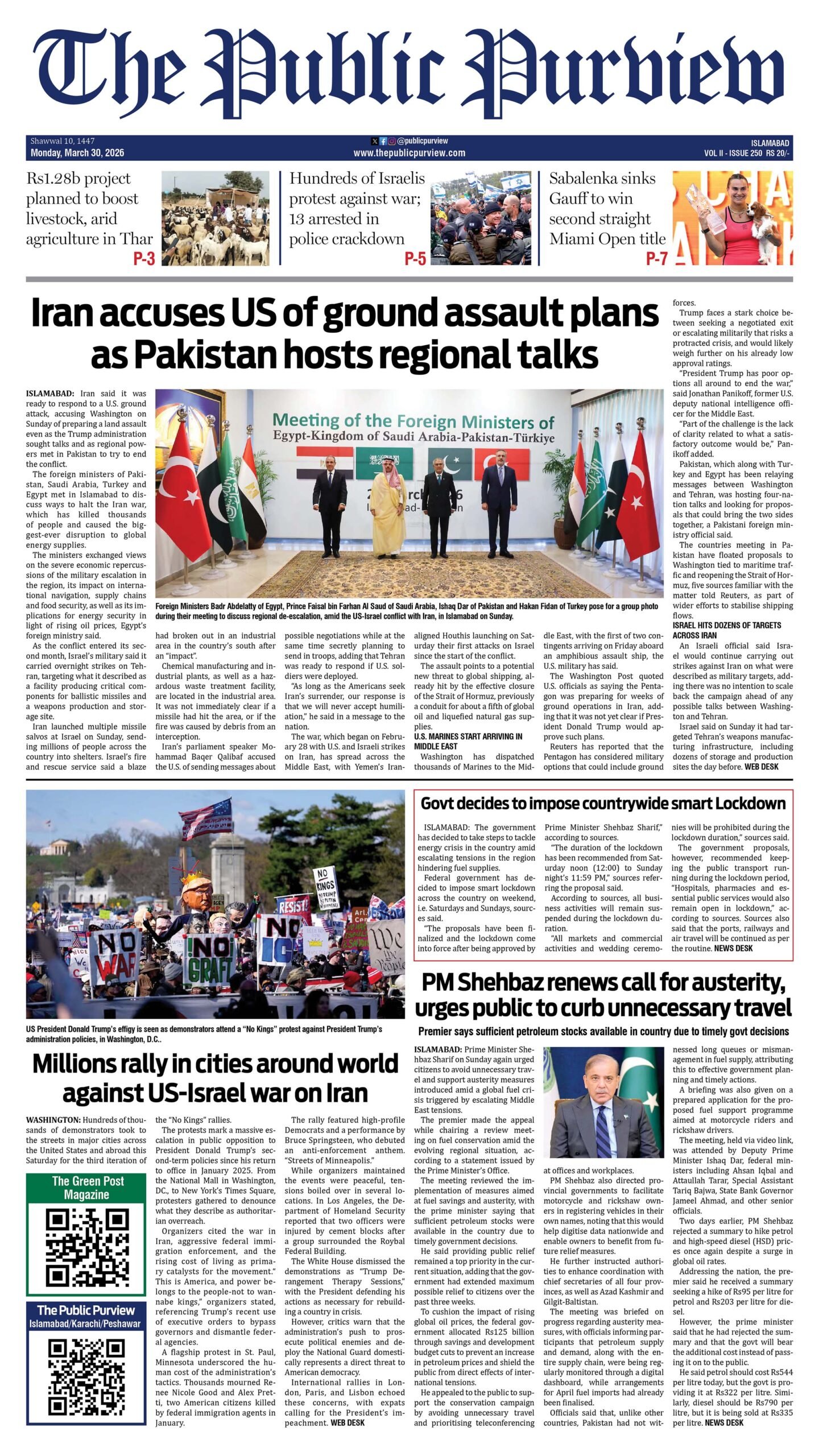 Today's E-Paper