
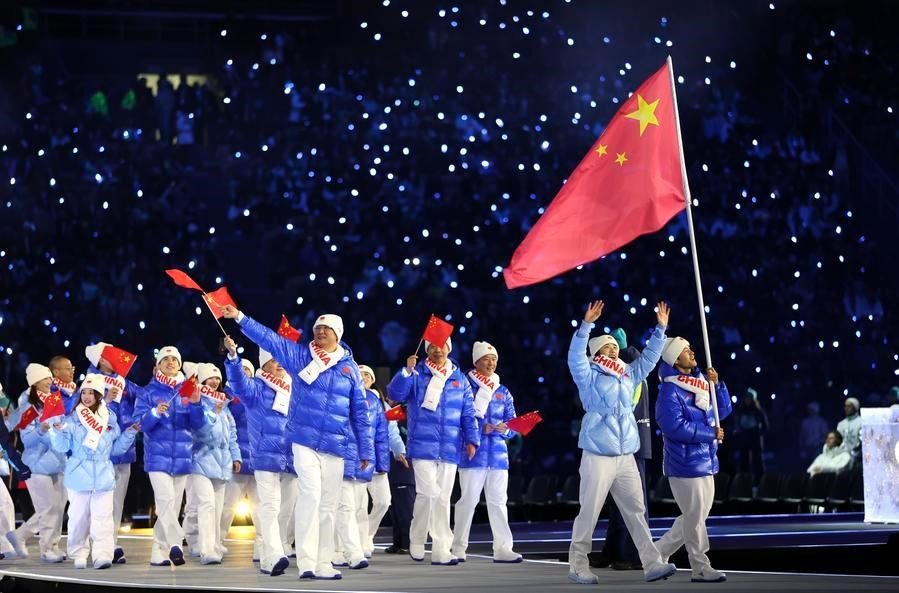
Beijing, Feb 8, 2026 — As the Milan-Cortina 2026 Winter Olympics get under way in Italy, Chinese athletes and fans are watching closely, reflecting how the Olympic movement has reshaped winter sports participation and performance across China since the Beijing 2022 Winter Olympics.
For many young athletes, the change has been personal. Fifteen-year-old ice hockey player Chen Keyu followed the opening competitions from Shenzhen, having discovered the sport when new ice rinks appeared near her home during China’s Olympic preparations. Now part of a professional club, she recently helped China win gold at the U18 Women’s World Championship Division I Group B, illustrating a broader expansion of winter sports pathways for youth.
China’s presence on the international stage has also strengthened. Snowboarder Su Yiming, the defending Olympic big air champion, advanced to the Milan finals after strong qualifying runs, while freestyle skier Gu Ailing recently secured a World Cup slopestyle title. Other Chinese athletes have claimed World Cup victories across aerials, skeleton and speed skating, underlining steady progress across multiple disciplines.
Officials say this momentum is reflected in the size and scope of China’s Olympic delegation. The Milan team is the country’s largest overseas Winter Games contingent to date, with athletes competing in a significantly higher share of medal events compared with previous Olympics. Veterans from Beijing 2022 are joined by a growing cohort of younger competitors, signalling continuity as well as renewal.
Participation spreads beyond traditional winter regions
The Olympic legacy has extended well beyond elite sport. In cities such as Wuhan, where winter conditions are rare, indoor ski resorts and ice rinks have become popular destinations. Local authorities and operators report sharp increases in visitor numbers, driven by expanded facilities, promotional programmes and easier access to winter sports.
Nationally, the General Administration of Sport has said that more than 300 million people have taken part in winter sports since the conclusion of the Beijing Games. Southern and western regions have seen the fastest growth, supported by new infrastructure and school-based initiatives aimed at introducing children to ice and snow activities.
Industry growth and long-term impact
The rise in participation has fuelled rapid expansion of China’s ice and snow industry. Official reports show the sector has nearly tripled in size since the mid-2010s and is expected to exceed one trillion yuan in annual value, spanning equipment manufacturing, tourism and training services.
International Olympic Committee officials have acknowledged the scale of the change. Thomas Bach has previously said the Beijing Games marked a turning point for winter sports in China, with participation levels adding a new dimension to the global Olympic movement.
As competition unfolds in Milan, Chinese athletes’ performances and the growing domestic interest underline how successive Olympic cycles have helped embed winter sports into China’s sporting culture, from grassroots participation to the world’s biggest stages.





 Today's E-Paper