

SINGAPORE: Global oil prices surged more than 7% on Monday, climbing above $100 per barrel, after the United States announced plans to blockade Iranian maritime traffic, raising concerns over potential disruptions to global energy supplies.
Brent crude futures rose by $6.71, or 7.05%, to $101.91 per barrel by 0104 GMT, while U.S. West Texas Intermediate (WTI) crude gained $7.59, or 7.86%, to trade at $104.16 per barrel. The sharp increase reflects heightened geopolitical tensions and fears of restricted Iranian oil exports through the strategically vital Strait of Hormuz.
The escalation follows the failure of diplomatic talks between Washington and Tehran to reach an agreement to end the ongoing conflict. According to the U.S. Central Command, U.S. forces began implementing a blockade of maritime traffic entering and exiting Iranian ports at 10 a.m. ET (1400 GMT) on Monday. The measure is intended to limit Iran’s ability to export oil while maintaining freedom of navigation for vessels transiting the Strait of Hormuz to and from non-Iranian ports.
Strategic impact on global oil supply
The Strait of Hormuz is one of the world’s most critical energy chokepoints, with a significant portion of global oil shipments passing through it each day. Market analysts warned that the blockade could restrict up to two million barrels per day of Iranian-linked oil flows, intensifying supply concerns and driving price volatility.
Energy analyst Saul Kavonic of MST Marquee noted that market conditions have effectively returned to pre-ceasefire levels, with the blockade likely to exert additional upward pressure on prices. Similarly, IG market analyst Tony Sycamore said the move could significantly curtail Iranian oil exports, potentially compelling Tehran’s allies and customers to seek a reopening of the waterway.
Rising geopolitical tensions
U.S. President Donald Trump stated that oil and gasoline prices may remain elevated through the November midterm elections, acknowledging the potential domestic economic impact of the decision. The announcement comes after marathon negotiations failed to produce a lasting settlement, jeopardizing a fragile two-week ceasefire.
In response, Iran’s Islamic Revolutionary Guard Corps warned that any military vessels approaching the Strait of Hormuz would be considered a violation of the ceasefire and would face a decisive response, further escalating regional tensions.
Shipping and regional energy developments
Despite the heightened risks, shipping data indicated that three fully laden supertankers transited the Strait of Hormuz on Saturday, marking some of the first departures since the ceasefire. However, other tankers have reportedly begun avoiding the route in anticipation of the blockade.
Meanwhile, Saudi Arabia announced the restoration of full oil pumping capacity through its East-West pipeline, reaching approximately seven million barrels per day. The development is expected to partially offset potential supply disruptions by providing an alternative export route that bypasses the Strait of Hormuz.
Implications for global markets
The surge in oil prices underscores the sensitivity of energy markets to geopolitical developments in the Middle East. The blockade strengthens concerns about supply security, inflationary pressures, and broader economic stability, particularly for oil-importing countries.



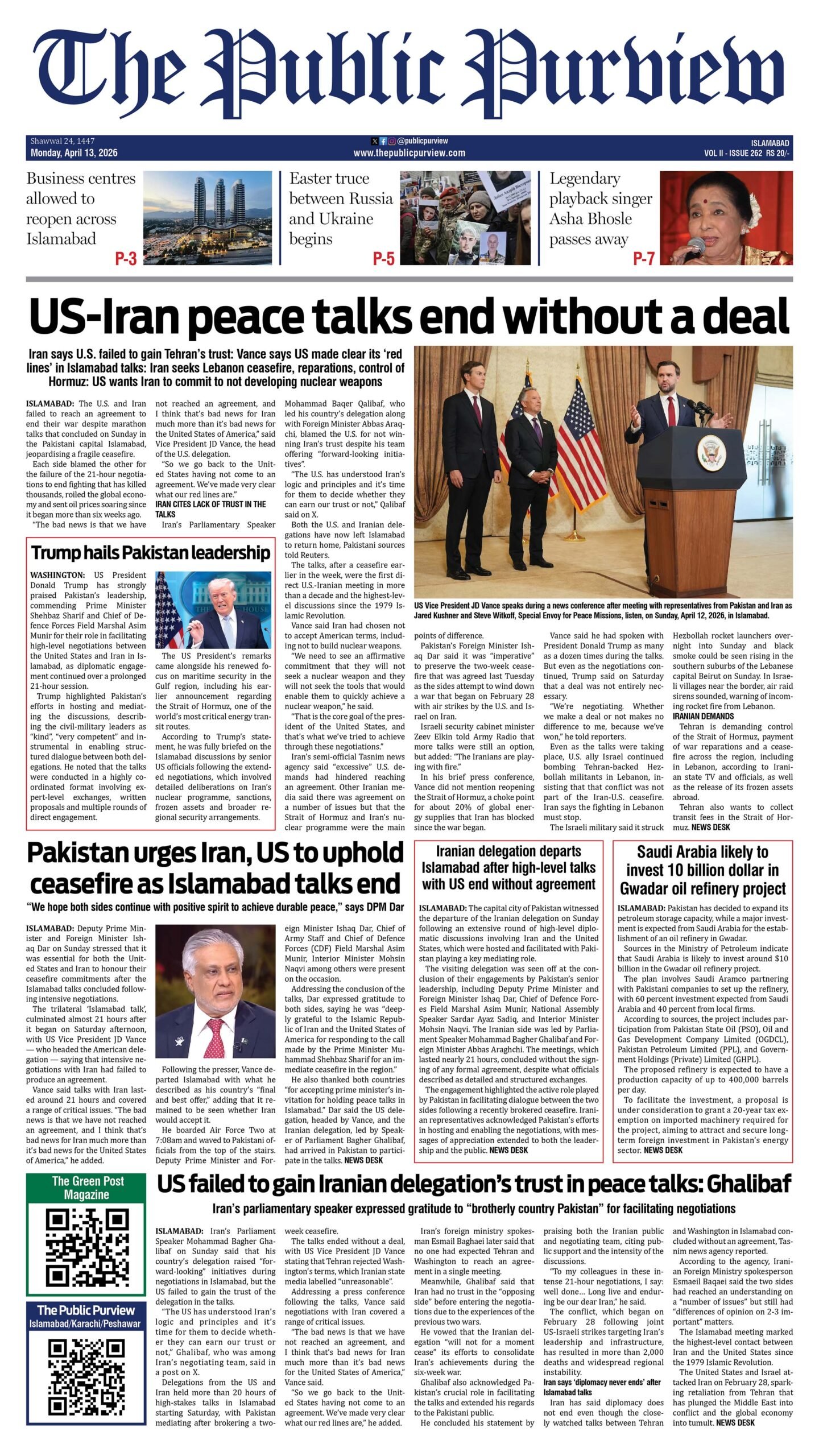 Today's E-Paper