
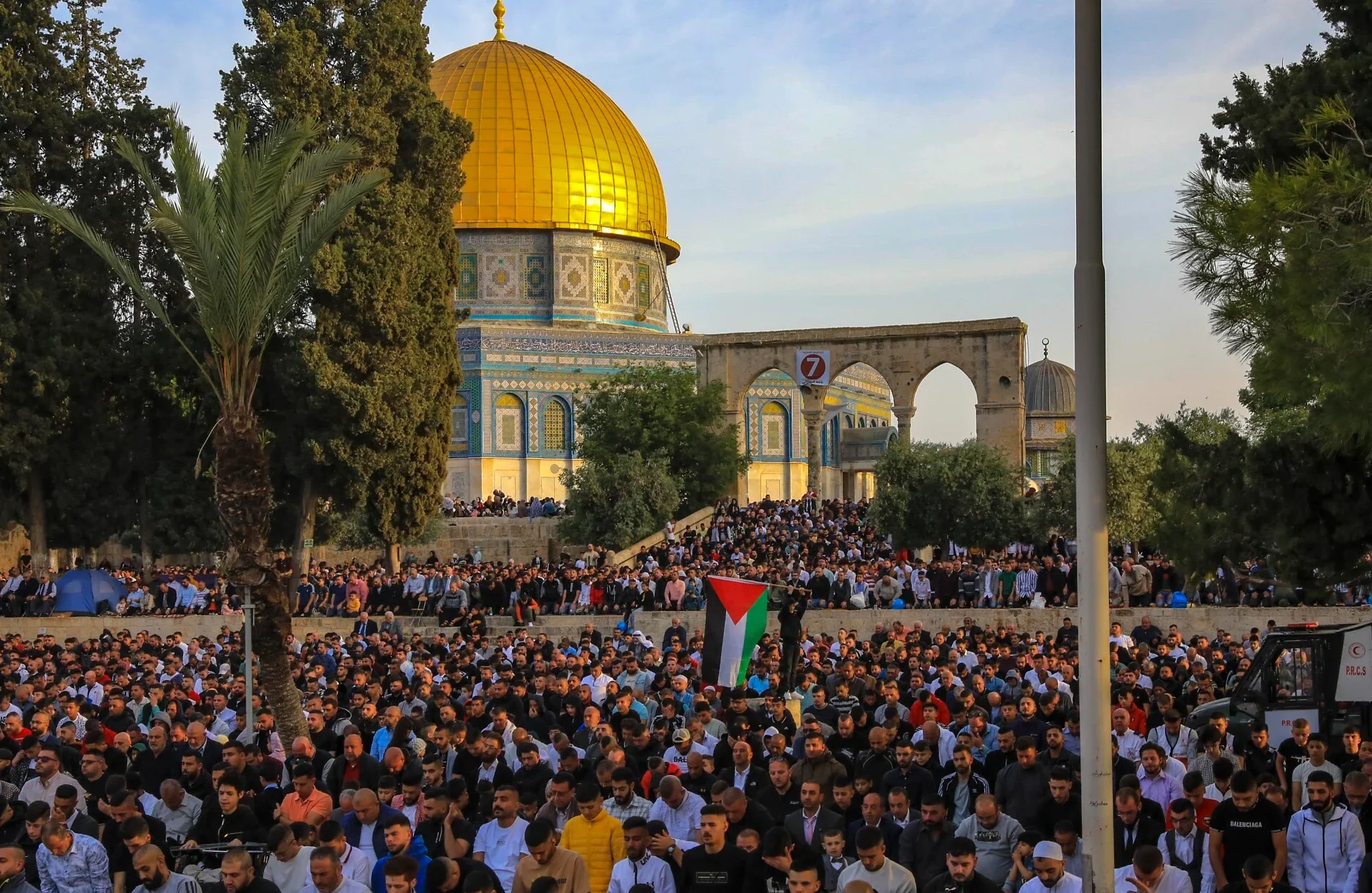
RAWALPIND — Eid al-Fitr prayers were not held at the Al-Aqsa Mosque compound in occupied East Jerusalem in 2026, marking the first time since 1967 that worshippers were prevented from gathering at the site for the occasion.
Israeli authorities imposed restrictions citing security concerns linked to the ongoing regional conflict involving Iran, blocking access to the compound during one of the most significant days in the Islamic calendar. The move affected thousands of Palestinians who traditionally gather at Al-Aqsa to mark the end of Ramadan.
Palestinian groups urged worshippers to offer Eid prayers as close to the Old City as possible after access to the mosque was denied. In previous instances, Israeli police have used force, including tear gas and sound grenades, to disperse Palestinians attempting to pray outside restricted areas.
Old City unusually quiet during Eid
The Old City, typically crowded ahead of Eid, remained subdued, with limited movement and commercial activity. Residents described the atmosphere as markedly different from previous years, with fewer visitors and heightened security presence.
Israeli authorities enforced assembly restrictions and prevented most shops from opening, allowing only essential services such as pharmacies and food outlets. Palestinian traders said the measures caused significant financial losses during what is usually a peak business period.
Also Read: Israel restricts Palestinian access to Al-Aqsa for first Friday prayers of Ramadan
The absence of Eid prayers at Al-Aqsa Mosque underscores heightened tensions in East Jerusalem, where access to religious sites remains a central and sensitive issue amid the broader regional situation.



 Today's E-Paper