
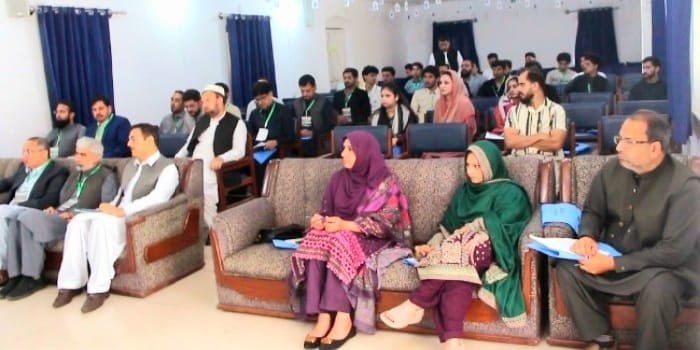
UPPER DIR: The 4th National Social Work Conference opened at Bara Gali on September 7, bringing together academics, researchers, social workers and development professionals to examine the growing impact of climate change on vulnerable communities in mountainous areas.
Jointly organized by Shaheed Benazir Bhutto University Sheringal (SBBU) and the Department of Social Work at the University of Peshawar, the three-day conference will continue until September 9. Its central theme is “Power of Collaboration and Partnership: Intersecting Climate Change with Emergent Human Vulnerabilities in Mountainous Landscapes.”
The inaugural ceremony was attended by Vice Chancellor Professor Dr Sardar Khan, Associate Professor Dr Shakeel Ahmed of the University of Peshawar, Associate Professor Dr Ayesha Shaukat of Bahawalpur University, Malakand University Dean of Social Sciences Professor Dr Arab Naz, Associate Professor Dr Sania Umer of Punjab University, SBBU Registrar Dr Badshah Hussain and KP Child Protection and Welfare Commission Chief Ijaz Muhammad Khan.
Representatives of universities, welfare organizations and international development agencies, including Dr Ehsan Danish, Dr Fazal Aziz, Nasir Munir of Dosti Welfare Organization and Bushra Ajmal of UNICEF, also participated.
Climate change and mountain communities in focus
Addressing the inaugural session, Vice Chancellor Professor Dr Sardar Khan said academic gatherings of this nature help researchers and students better understand environmental challenges while exposing them to practical research and field experiences.
He noted that climate change is directly affecting daily life, agriculture, water resources and economic activities in mountainous regions. He said the discussions could provide useful guidance to policymakers and those responsible for implementing development programmes.
The vice chancellor also appreciated the organizers and said students would benefit from research papers, workshops and panel discussions being held during the conference.
Researchers to explore emerging vulnerabilities
Chief Organizer Dr Amir Alam and Co-organizer Dr Shakeel Ahmed welcomed participants and outlined the objectives of the conference.
They said students, researchers, faculty members and administrative officials from universities across Pakistan were taking part. Research papers and practical experiences presented during the sessions are expected to contribute to new approaches for addressing challenges faced by communities affected by climate change.
Conference Secretary Dr Sameer Alkhaliq Jan said several prominent speakers were participating in the event, giving attendees an opportunity to learn from their research findings and professional experiences.
Sessions to address water, migration and public health
The three-day conference will feature detailed discussions on water scarcity, agricultural challenges, migration, public health and economic stability.
Participants will exchange research findings and perspectives on how climate-related pressures are creating new vulnerabilities in mountainous communities.
On the final day, organizers plan to compile practical recommendations that could serve as guidance for future policies and development plans.
Participants also thanked the conference’s sponsors and supporters and expressed hope that the research and recommendations emerging from the event would translate into practical measures to improve conditions for vulnerable populations living in mountainous areas.